Quick Answer
To care for your leather bullwhip, wipe it clean after each use, condition it every few months with a leather conditioner, and store it in a cool, dry place away from direct sunlight. Avoid over-conditioning and never use saddle soap on the braided overlay.
Why Regular Care Matters for Your Bullwhip
A leather bullwhip is a precision tool. The multiple layers of cowhide leather—including the core, bolsters, braided bellies, and the outer 12-plait overlay—work together to transfer energy down the thong. If one layer dries out or gets dirty, the whip loses its crack and can develop cracks in the leather.
The vegetable-tanned cowhide leather used in many bullwhips is durable but still needs moisture and protection. Skipping care can lead to stiff leather, broken strands, and a shorter lifespan. A few minutes of maintenance after each session will keep your whip cracking cleanly for years.
Common Mistakes to Avoid
One of the biggest mistakes is using saddle soap or neatsfoot oil on the braided overlay. Saddle soap can leave a residue that attracts dirt, and neatsfoot oil can soften the leather too much, causing the braid to loosen. Stick to a light leather conditioner designed for braided whips.
Another common error is storing the whip coiled tightly or hanging it by the handle. This can deform the thong or put stress on the steel rod inside the handle. Always hang the whip by the loop at the end of the fall, or lay it flat on a shelf.
Step-by-Step Bullwhip Care Routine
- Step 1: Wipe Down After Each Use: Use a clean, dry microfiber cloth to gently wipe the entire whip, including the handle, thong, and fall. This removes dirt, sweat, and moisture that can degrade the leather over time. Don't use a wet cloth—excess moisture can seep into the braid and cause the leather to rot or the steel rod to rust.
- Step 2: Condition Every 3–4 Months (or When Dry): Apply a small amount of leather conditioner (like Lexol or Bickmore) to a soft cloth and rub it lightly into the braided overlay and fall. Let it absorb for 15–20 minutes, then buff off any excess with a clean cloth. Less is more. Over-conditioning can soften the braid and reduce the whip's crack. If the leather feels tacky after conditioning, you used too much.
- Step 3: Store Properly: Hang the whip by the loop at the end of the fall in a cool, dry place away from direct sunlight and heat sources. If you don't have a hook, lay it flat on a shelf. Never store it coiled tightly or in a plastic bag. A coiled whip can develop permanent kinks. A plastic bag traps moisture and promotes mold growth. Use a breathable cotton bag if you need dust protection.
Product Spotlight
-
Bull Whip 6, 8, 10, 12, 14 & 16 Feet long 12 Strands Cowhide Leather Equestrian Bullwhip Indiana Jones: This bullwhip uses vegetable-tanned cowhide leather with a 12-plait braided overlay, two cowhide leather bolsters, and a steel rod inside the handle. The multiple leather layers and steel rod make the whip durable but also require careful conditioning to prevent the outer braid from drying out and the handle from rusting if moisture gets inside.
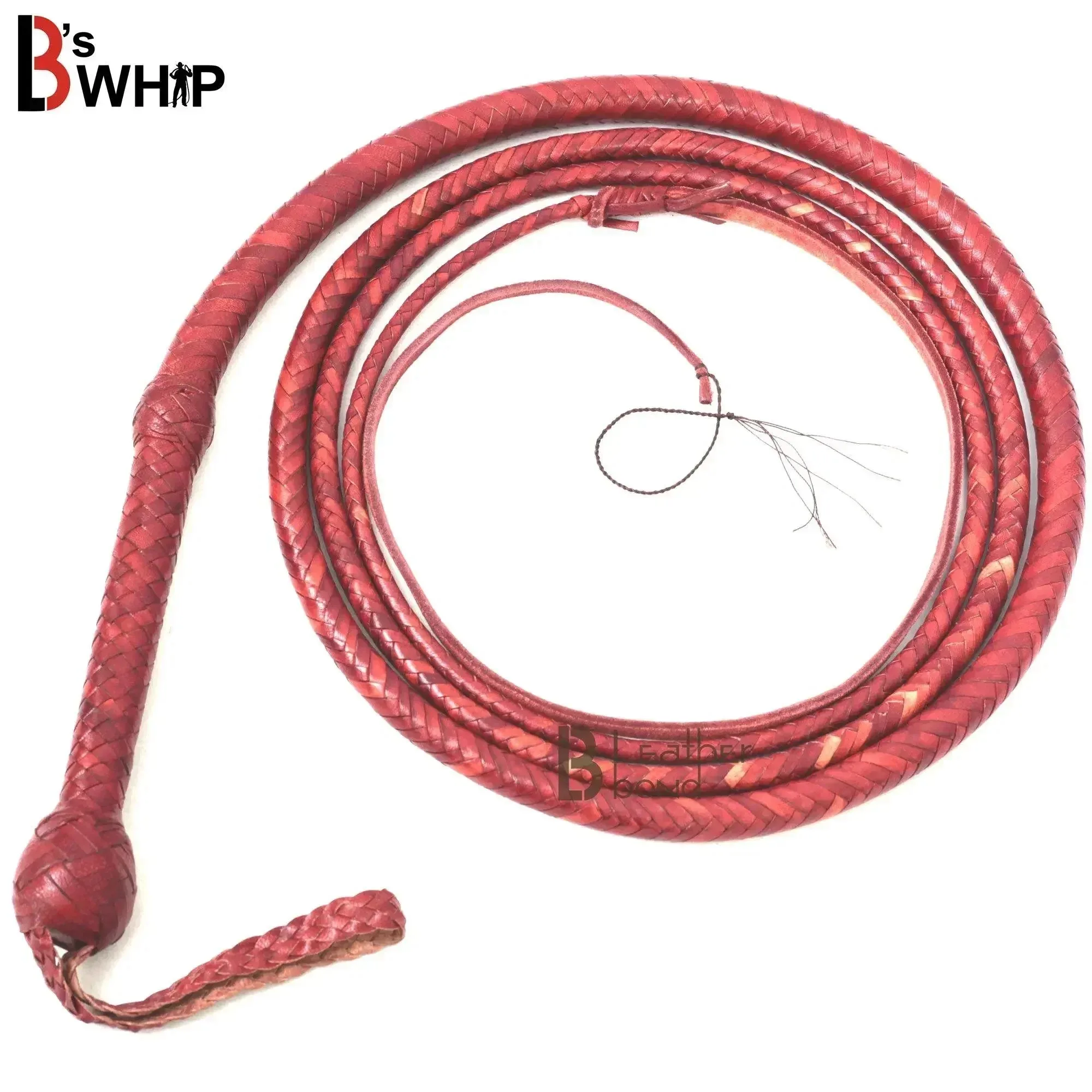
Bull Whip 6, 8, 10, 12, 14 & 16 Feet long 12 Strands Cowhide Leather Equestrian Bullwhip Indiana Jones