Quick answer
Treat your phone away bag like a favorite jacket: spot clean it with mild soap and a damp cloth, never soak it or put it in a washing machine, air dry it completely away from direct heat, and store it loosely so the fabric and closure keep their shape. That routine takes about five minutes a week and prevents the two most common failures — a stretched or scratched pouch and a weakened closure.
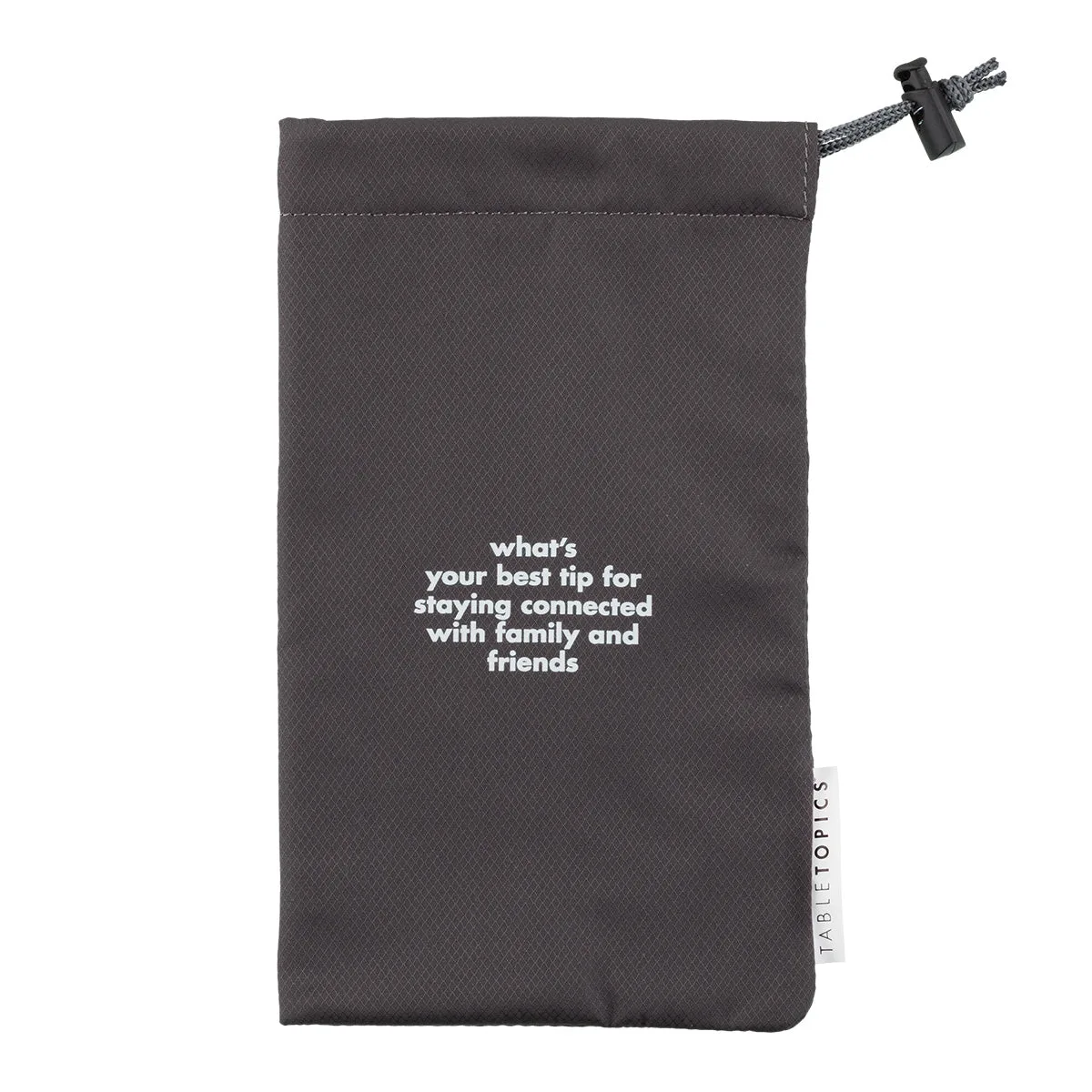
phone away bag
Why phone away bags wear out faster than you expect
A phone away bag lives a harder life than most accessories. It gets pulled in and out of pockets, tossed into backpacks, handled with sunscreen-covered hands, and left on restaurant tables. The main wear points are the fabric itself, the closure (whether drawstring, snap, or zipper), and any seams where the bag flexes. Most damage does not come from one big event — it comes from repeated small stresses: overstuffing, abrasive surfaces, and moisture that never fully dries.
What you need before you start
Gather a soft microfiber cloth or an old clean t-shirt, a second cloth for drying, mild liquid soap (dish soap works, but baby shampoo or castile soap is gentler), a small soft-bristle brush like an old toothbrush, and a drying rack or a clean towel. Avoid paper towels, which leave lint and can pill fabric, and skip bleach, fabric softener, and alcohol-based cleaners unless the bag’s care label specifically allows them.
How often to clean and when to just spot-treat
You do not need a full clean every week. Spot-treat marks as they happen, and do a deeper clean once a month if the bag is used daily, or once a season if it is used occasionally. If the bag smells musty or feels stiff, that is a sign it was stored damp or over-cleaned — not that it needs more soap. Over-washing is a common mistake that fades fabric and weakens coatings, so clean less often than you think you should.
Your phone away bag care routine, step by step
- Empty and shake out the bag: Turn the bag upside down over a trash can and shake gently to remove crumbs, sand, and lint. Check the corners and the closure area — that is where grit collects and slowly abrades fabric. Common mistake: skipping this step and rubbing grit deeper into the weave during cleaning. Checkpoint: no visible debris falls out when you shake it a second time.
- Spot clean with mild soap and a damp cloth: Mix a drop of mild soap in a cup of cool water. Dip your cloth, wring it out so it is damp — not dripping — and wipe the fabric in the direction of the weave. For textured spots, use a soft brush in small circles. Common mistake: soaking the bag or scrubbing hard, which can distort the shape and push dirt further in. Checkpoint: the cloth picks up the mark, not just water.
- Wipe away soap residue with a clean damp cloth: Soap left in fabric attracts dirt and can leave a stiff, dull patch. Rinse your cloth with plain water, wring it out, and wipe the whole bag again. If the bag has a coated or water-resistant lining, do this step twice. Common mistake: assuming the soap evaporates — it does not. Checkpoint: no slippery feel or visible suds remain.
- Air dry completely, away from heat: Lay the bag flat on a clean towel or hang it open on a drying rack. Keep it out of direct sun and away from radiators, hair dryers, and car dashboards. Heat can shrink fabric and warp plastic closures. Common mistake: putting the bag away while the seams are still damp, which leads to musty odors and weakened stitching. Checkpoint: the closure area and seams feel dry to the touch, not cool or clammy.
- Store it loosely so it keeps its shape: Once dry, store the bag unzipped or open in a drawer or on a shelf, not compressed under heavy items. If you stack bags, put the lightest one on top. For long storage, place a dry sachet or a clean dry cloth inside to absorb any lingering moisture. Common mistake: folding or crushing the bag, which creases fabric and can bend zipper tracks or snap hardware. Checkpoint: the bag holds its shape when you pick it up, with no deep creases.
- Do a monthly hardware and seam check: Once a month, run your fingers along the seams and test the closure a few times. Look for loose threads, fraying near the opening, or a zipper that catches. Tighten or trim loose threads with small scissors — do not pull them. Common mistake: ignoring a small fray until it becomes a hole. Next step: if the closure fails, contact the seller before attempting a repair that could void the warranty.
Products in the same family
- Do-It-Yourself Therapy Conversation Cards: Do-It-Yourself Therapy Conversation Cards are a Tabletop Set for adults and close friends, with sample questions like “When was the last time you tried to push someone’s buttons?” If your phone away bag is part of a screen-free game night, these cards give the group something to do instead of reaching for phones, so the bag stays closed longer.
- Kids To Go Conversation Cards: Kids To Go Conversation Cards are a To Go Set for families and young children, with 40 open-ended questions and a Creative Child Magazine Product of the Year award. A To Go Set fits in the same bag pocket or car console as a phone away pouch, which makes it easy to swap the phone for a question card during waits and commutes.