Quick answer
Treat the first few days after a professional treatment like a barrier reset, not a time to push results. Use a gentle cleanser, a bland moisturizer, and daily sunscreen, and leave exfoliating acids, scrubs, and strong actives out until redness and tightness settle. If your skin is raw, blistered, or painful, stop self-treating and call the provider who performed the treatment.
Why your skin reacts after a professional treatment
Professional treatments create controlled stress in the skin, whether that is exfoliation, heat, or micro-injury. The visible result is a temporary barrier disruption: moisture escapes faster, irritants sting more easily, and redness lingers longer than usual. That is why the same serum that felt fine last week can suddenly burn.
This is also why aftercare is not about doing more. Your skin is already in repair mode. The job of your routine is to remove obstacles, mainly harsh cleansing, unprotected sun exposure, and unnecessary actives, so the barrier can rebuild on its own schedule.
The first 72 hours: keep it boring
For the first three days, use lukewarm water, a gentle non-foaming cleanser, and a simple moisturizer. Skip hot showers, saunas, steam, and intense workouts that leave your face flushed. If your provider gave you specific instructions, those override any general advice here.
Sunscreen matters more now than at any other point in your routine. UV exposure on freshly treated skin can deepen redness and cause uneven tone. A mineral or gentle mineral-hybrid sunscreen is usually the easiest to tolerate, and reapplying every two hours outdoors is worth the effort.
- Cleanse once or twice daily with lukewarm water and your hands, not a brush or cloth.
- Apply moisturizer while skin is still slightly damp to reduce water loss.
- Use sunscreen every morning, even if you are mostly indoors near windows.
- Avoid makeup on broken or freshly resurfaced skin until your provider clears it.
How to add products back without triggering a setback
Once redness and tightness are gone for a full day, reintroduce one product at a time, every three to four days. Start with the product you miss most, usually a moisturizer with more body or a hydrating serum, and patch test it on your jawline before applying it to your full face.
Retinol and vitamin C are usually the last products to return, because they are the most likely to sting on a barrier that is still recovering. When you do restart them, begin at half your previous frequency and build up only if your skin stays comfortable. If a product stings for more than a few seconds, rinse it off and wait another week.
What to do when redness or flaking lingers
Some flaking and pinkness is normal for a few days after exfoliating or resurfacing treatments. What is not normal is increasing pain, swelling, oozing, or a rash that spreads. Those signs mean you should stop your routine and contact your provider rather than trying another product.
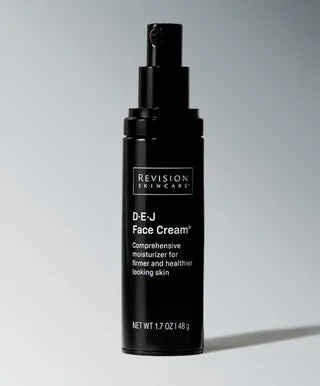
If your skin is simply dry and dull after the acute phase, a richer moisturizer can help without adding active ingredients. Products such as .D·E·J Face Cream® are designed for daily facial care and can sit in a recovery routine where you want moisture support without extra exfoliation. Keep the rest of the routine minimal until the flaking stops.
Symptom checker: what your skin is telling you
- Tightness and dull flaking: This usually means water loss from a temporarily weakened barrier, not a need for more exfoliation. Correct it with a gentle cleanser and a richer moisturizer. Do not scrub the flakes off.
- Stinging when you apply products: A stinging sensation within seconds of application suggests your barrier is still compromised or the product contains an active your skin cannot tolerate yet. Rinse with lukewarm water, return to a bland moisturizer, and wait several days before trying that product again.
- Redness that is spreading or worsening: Escalating redness, swelling, pain, or oozing is not a normal part of recovery and may need medical attention. Stop your routine and contact the provider who performed your treatment. Do not try to fix it with another product.
Products that fit a recovery routine
- .D·E·J Face Cream®: .D·E·J Face Cream® is a facial care product formulated with carefully selected ingredients designed to work together for optimal results, and it is suitable for daily use as part of a facial care regimen. A daily moisturizer like this can carry the hydration load while you pause stronger actives, so your barrier has support without extra irritation.
- D·E·J Face Cream®: D·E·J Face Cream® is part of the Revisionskincare line, known for professional-grade skincare, and is formulated to support your daily skincare routine. If you want a moisturizer that fits a professional aftercare plan, this one is positioned for daily use rather than as a treatment step.