Quick Answer
To make your swimwear last longer, rinse it in cold water immediately after swimming, hand wash with a gentle detergent, and lay it flat to dry in the shade. Avoid wringing, machine washing, and direct sunlight to prevent fabric damage and color fading.
Your favorite bikini or swimsuit works hard all summer, but chlorine, salt, sun, and sand can take a toll. With a few simple habits, you can keep the colors bright and the fabric snug for many seasons. Here’s a straightforward swimwear care routine that fits into any beach day.
Whether you’ve just bought a new set or want to revive an old favorite, these steps focus on gentle handling and smart storage. No fancy products needed—just a little consistency.
Why Swimwear Needs Special Care
Swimwear fabrics—like the nylon and elastane blends used in many Miss Mandalay styles—are designed to stretch and move with you, but they’re also delicate. Chlorine and salt water break down elastane over time, causing sagging and loss of shape. Sunscreen, oils, and sand can also cause discoloration and abrasion.
The good news: most damage is preventable. A quick rinse after each wear and a proper wash once in a while can dramatically extend the life of your swimwear. Think of it as a small investment in your next beach vacation.
- Chlorine is the biggest culprit for fading and fabric breakdown.
- Sunscreen can cause yellowing if left on fabric for long periods.
- Heat and rough handling are your swimwear’s enemies.
The Right Way to Wash Your Swimsuit
Hand washing is always the safest option. Fill a basin with cold water and a small amount of mild detergent—one free of bleach or fabric softeners. Swish the suit gently for a few minutes, then rinse thoroughly. Avoid scrubbing or twisting the fabric.
If you must use a washing machine, place the swimsuit in a mesh laundry bag and use a gentle cycle with cold water. But even then, the agitation can stretch the fabric over time. For most people, hand washing is the best way to keep that like-new fit.
- Use a detergent made for delicates or a mild soap like baby shampoo.
- Never use hot water—it can break down elastane.
- Skip the fabric softener; it can damage the water-repellent finish.
Drying and Storing: The Final Steps
After washing, gently press out excess water with a towel—don’t wring or twist. Lay the swimsuit flat on a clean, dry towel in a shaded area. Direct sunlight can fade colors and degrade the fabric, so indoor drying is best. Avoid using a dryer, as the heat will ruin the elasticity.
Once dry, store your swimwear flat or rolled in a drawer. Avoid folding over the elastic or hanging it by the straps, which can stretch them out. If you’re packing for a trip, place it in a separate pouch to protect it from snags.
For swimwear with delicate details—like the gold rings on some fuller-bust tops—extra care is needed. Always hand wash these and avoid rough surfaces that could scratch or bend the hardware.
- Hanging a wet swimsuit can cause it to stretch under its own weight.
- Rolling your swimsuit helps maintain its shape during travel.
- Keep swimwear away from rough surfaces that can snag the fabric.
How to Handle Chlorine and Salt Water
Chlorine is particularly harsh on swimwear. It can cause colors to fade and weaken the fabric fibers. To minimize damage, rinse your swimsuit in fresh, cold water as soon as you get out of the pool. If you can, give it a proper wash after a heavy swim session.
Salt water can also be drying, but it’s less damaging than chlorine. Still, salt crystals can irritate the skin and leave marks on the fabric, so a rinse is essential. For both, the key is to not let them dry into the fabric.
If you swim frequently, consider rotating between two or three swimsuits so each gets time to rest and recover. This simple habit can extend the life of each piece.
- Rinse your swimsuit in cold water immediately after swimming.
- For heavy chlorine exposure, wash with a gentle detergent sooner rather than later.
- Rotate your swimwear to reduce wear on a single piece.
Step-by-Step Swimwear Care Routine
- Rinse immediately: After swimming in a pool, ocean, or lake, rinse your swimsuit in cold fresh water. This removes chlorine, salt, and sand before they set in. Check: the water runs clear and no sand remains.
- Hand wash gently: Use a mild detergent and cold water. Swish the suit gently for a few minutes, then rinse thoroughly. Don't wring or twist. Check: no soap residue remains—this can cause irritation.
- Dry flat in the shade: Press out excess water with a towel, then lay the swimsuit flat on a dry towel in a shaded area. Avoid direct sunlight and dryers. Check: the fabric is no longer dripping but still slightly damp.
- Store properly: Once fully dry, fold or roll your swimsuit and store it in a drawer. Don't hang it by the straps or fold over the elastic. Check: no creases or stretched areas are visible.
Swimwear Care by Fabric and Style
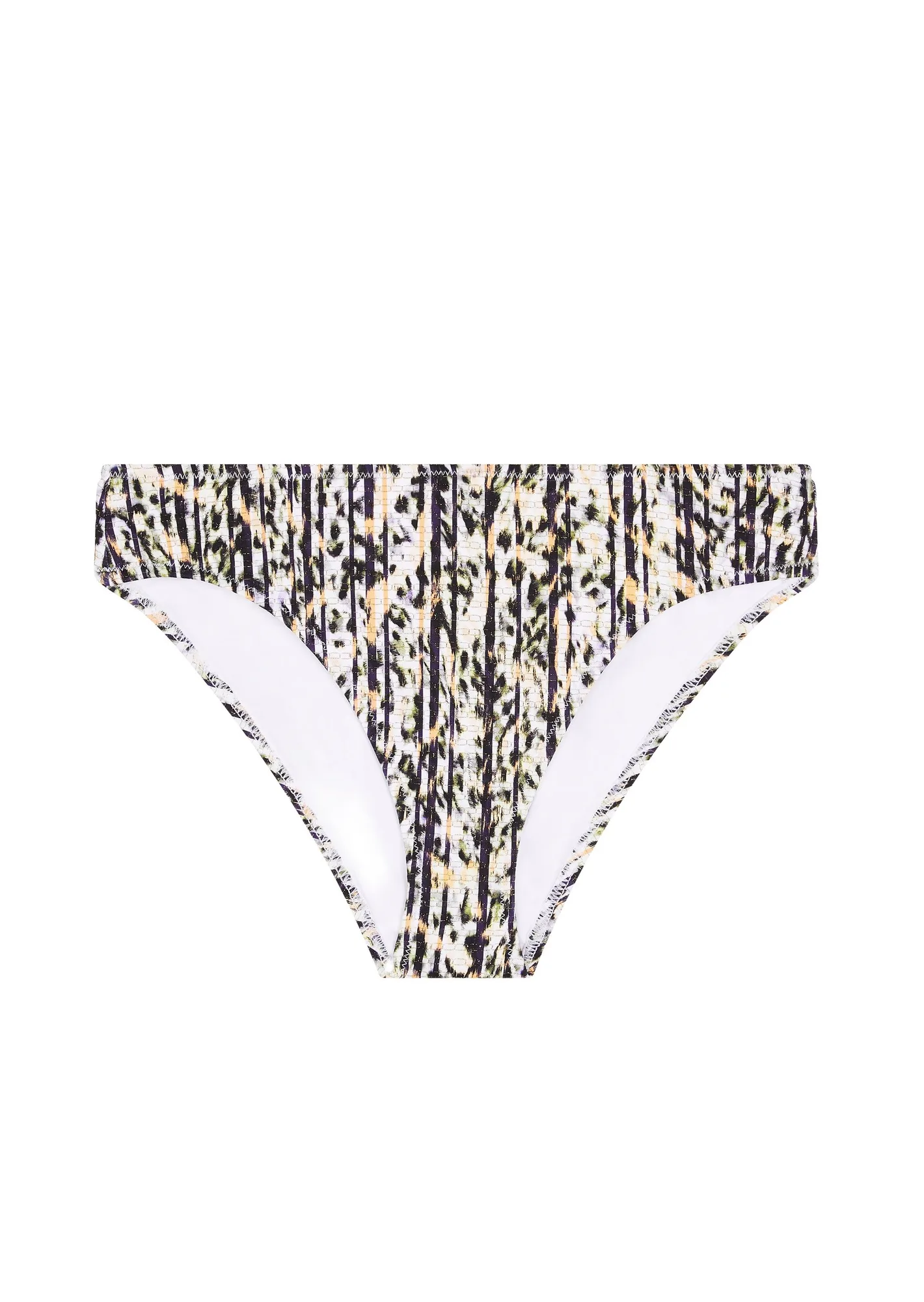
- Vegas Animal Print Deep Bikini Brief: 83% Nylon, 17% Elastane This high elastane content gives a snug fit, but it’s also prone to losing stretch if exposed to heat or harsh washing. Hand washing in cold water keeps it supportive.
- Azura Tieside Bikini Brief: 88% Nylon (polyamide), 12% Elastane The tieside design means extra care around the ties—avoid pulling them too hard when wet, and lay flat to dry to prevent stretching.
With these simple steps, you can keep your swimwear looking vibrant and fitting well for many beach days. Remember, a little care goes a long way—your favorite bikini will thank you.