Quick Answer
To safely change a #11 surgical scalpel blade, always use a hemostat or blade remover to grip the dull blade, then slide it off the handle without touching the edge. Attach the new blade by sliding it onto the handle until it clicks into place.
Why Safety Matters with #11 Blades
The #11 surgical scalpel blade has a sharp, triangular point designed for precise stab incisions. Its razor edge can easily cut skin, so a careful swap routine is essential to avoid injury. Even dull blades can cause nicks if handled improperly.
When to Replace Your Blade
Replace the blade as soon as it starts to drag or tear material instead of cutting cleanly. A dull blade requires more force, increasing the risk of slipping and cutting yourself. For most craft projects, a blade lasts through several cutting sessions, but swap it at the first sign of resistance.
Step-by-Step Blade Change Process
- Step 1: Prepare Your Workspace: Clear your cutting area. Have a hemostat or blade remover, a small container for the old blade, and a new #11 blade ready. Ensure good lighting so you can see the blade edge clearly. Common mistake: rushing the setup. A cluttered space increases the chance of dropping the blade.
- Step 2: Remove the Old Blade Safely: Using the hemostat or blade remover, grip the dull blade firmly near the back edge. Slide it straight off the handle—do not twist or pry. Immediately place the used blade into your disposal container. Common mistake: using fingers to grip the blade. Always use a tool to avoid cuts.
- Step 3: Attach the New Blade: Hold the new #11 blade by its back edge with the hemostat. Align the slot on the blade with the handle's ridge, then slide it onto the handle until you hear or feel a click. Ensure it is fully seated and does not wobble. Common mistake: forcing the blade onto the handle. If it doesn't click easily, check alignment—do not push harder.
- Step 4: Dispose of the Old Blade Properly: Place the used blade in a sharps container or a thick cardboard box taped shut. Never throw loose blades in the trash where they could injure someone. Seal the container before discarding. Common mistake: using a thin plastic bag. A blade can pierce through, creating a hazard.
- Step 5: Test the New Blade: Make a test cut on a scrap piece of material to confirm the blade is secure and sharp. Listen for a clean slicing sound—no tearing or resistance. If the blade feels loose, remove it and reattach. Common mistake: skipping the test cut. A loose blade can detach mid-project and cause injury.
Product Facts
-
#11 Surgical Scalpel Blades, USA Made: The Excel Blades #11 Scalpel Blade is a triangle-pointed, surgical-grade replacement blade made of stainless steel, designed for precise stab incisions in paper, cardstock, vinyl, plastic, foam board, and leather. Its sharp triangular point and stainless steel construction make it ideal for clean, controlled cuts, but also demand careful handling during blade changes.
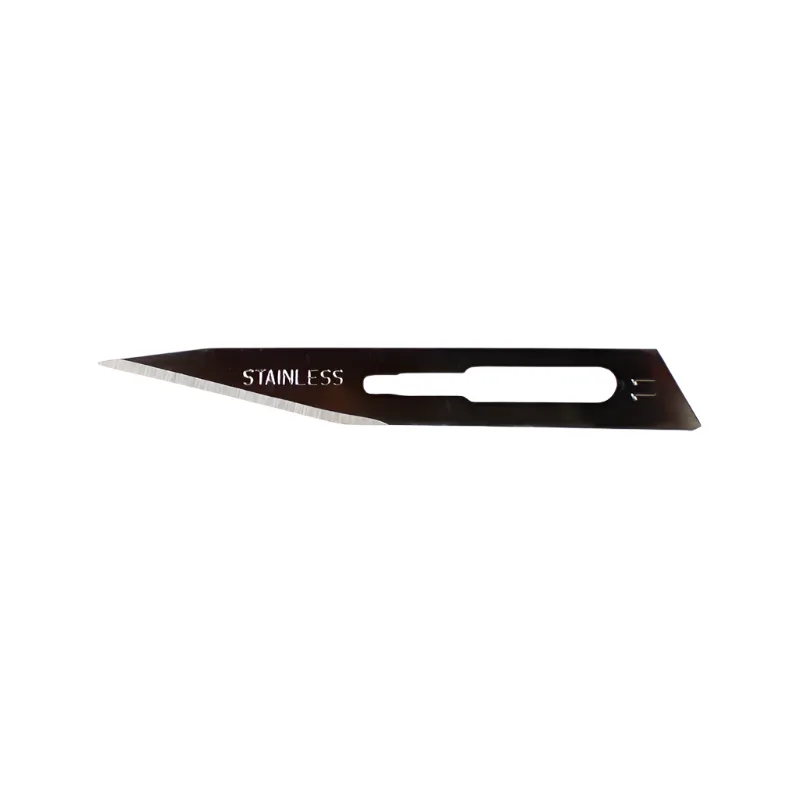
#11 Surgical Scalpel Blades, USA Made
