Quick answer
For a child ages 5-8, the best 100 piece puzzle combines sturdy, easy-to-handle pieces with a theme that sparks curiosity and conversation. Look for dustless, double-coated pieces and illustrations that offer enough detail to hold attention without overwhelming.
Why 100 pieces is a sweet spot
100 piece puzzles sit perfectly between simpler 24-48 piece puzzles and more challenging 200+ piece sets. They give young kids a satisfying sense of accomplishment without causing frustration. Most children ages 5-8 can complete a 100 piece puzzle in one or two sessions, which builds confidence and patience.
Piece quality matters more than you think
Not all puzzle pieces are created equal. Thin, flimsy pieces can bend or tear, and dusty pieces can irritate sensitive hands. Look for puzzles that advertise sturdy, dustless, double-coated pieces. These snap together cleanly and hold up to repeated use—important if you have multiple kids or plan to pass the puzzle along.
Theme and illustration depth
A good 100 piece puzzle for kids does more than just look pretty. The best illustrations have enough going on to keep a child interested and spark conversations. Scenes with multiple characters, hidden details, or educational elements (like identifying animals or objects) turn puzzle time into a learning moment. Avoid overly simple or repetitive patterns that a child might finish in minutes and never touch again.
How to choose: decision rules
- Check the piece quality: Look for puzzles that specifically mention sturdy, dustless, double-coated pieces. These hold up better to small hands and repeated assembly. Avoid puzzles with thin cardboard or visible dust on the pieces. Sturdy pieces reduce frustration and extend the puzzle's life.
- Match the theme to the child's interests: Choose a theme that the child already loves—animals, fantasy, nature, or everyday scenes. A familiar topic keeps them motivated to finish. For extra learning value, pick a puzzle that includes a poster or informational insert. A theme they love turns puzzle time from chore into play.
- Consider the puzzle format: Standard 100 piece puzzles work well for tabletop play. Floor puzzles (often larger pieces) are better for younger children who prefer to spread out on the floor. Check the product description for format details if that matters for your space. Floor puzzles give more room but take up more space.
Two great options to consider
-
Haunted House 100 Piece Puzzle: Artist Kaly Quarles brings us a houseful of haunted hijinks with stories and shenanigans in every room. Warm and playful scenarios offer scenes and details to hold a puzzler’s interest while prompting conversations about what is happening, what is scary, and why. The rich, story-driven illustration keeps kids engaged and encourages them to talk through the puzzle, building language and observation skills.
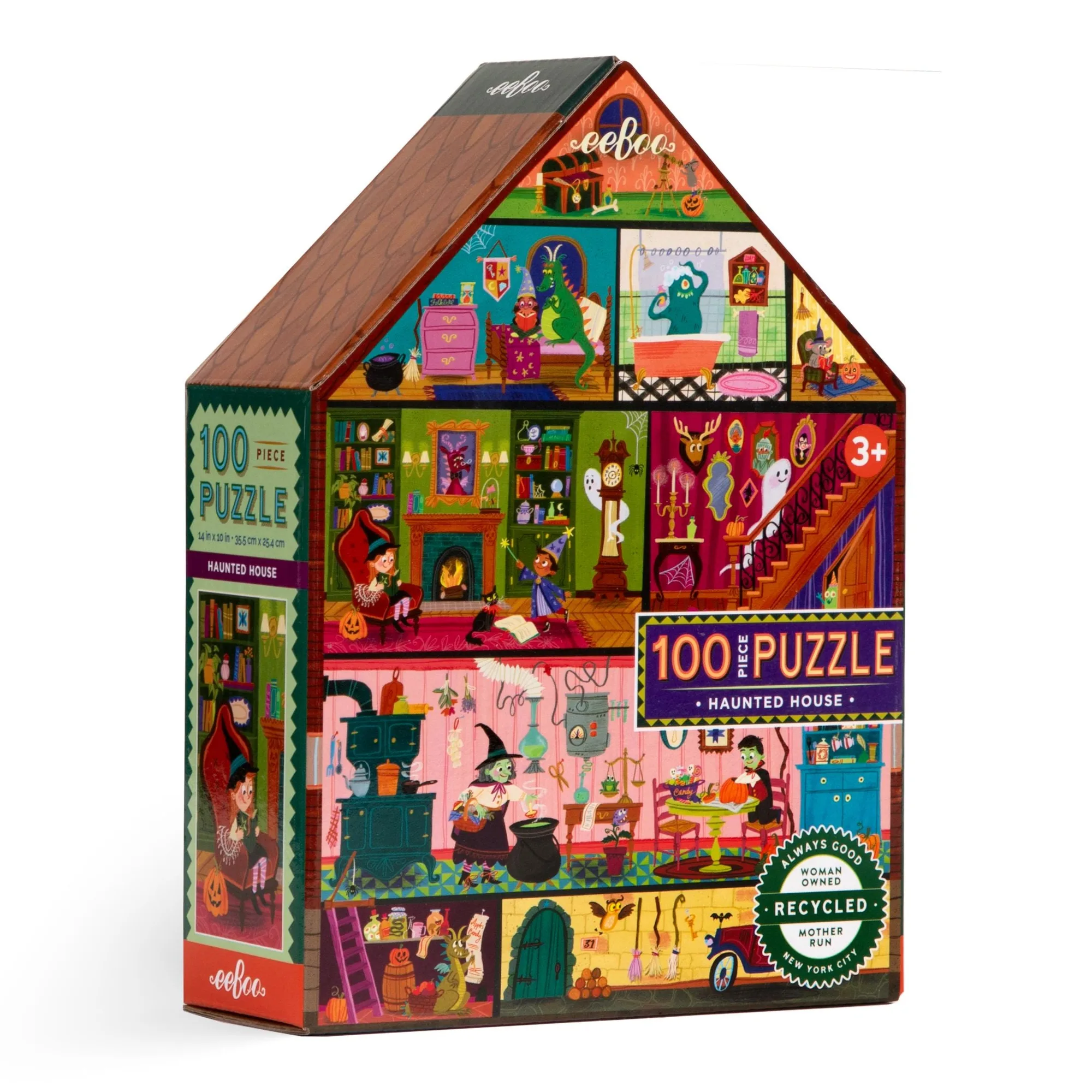
Haunted House 100 Piece Puzzle
-
Love of Bees 100 Piece Puzzle: Suitable for ages 5+, this challenging yet charmingly illustrated activity features a fascinating scene packed with bumble bee adventure! See them swoop, soar, collect pollen, and make honey, as they demonstrate what an important part of our ecosystem they are. The educational theme about bees introduces real-world science while the floor puzzle format gives younger kids more space to spread out and work comfortably.
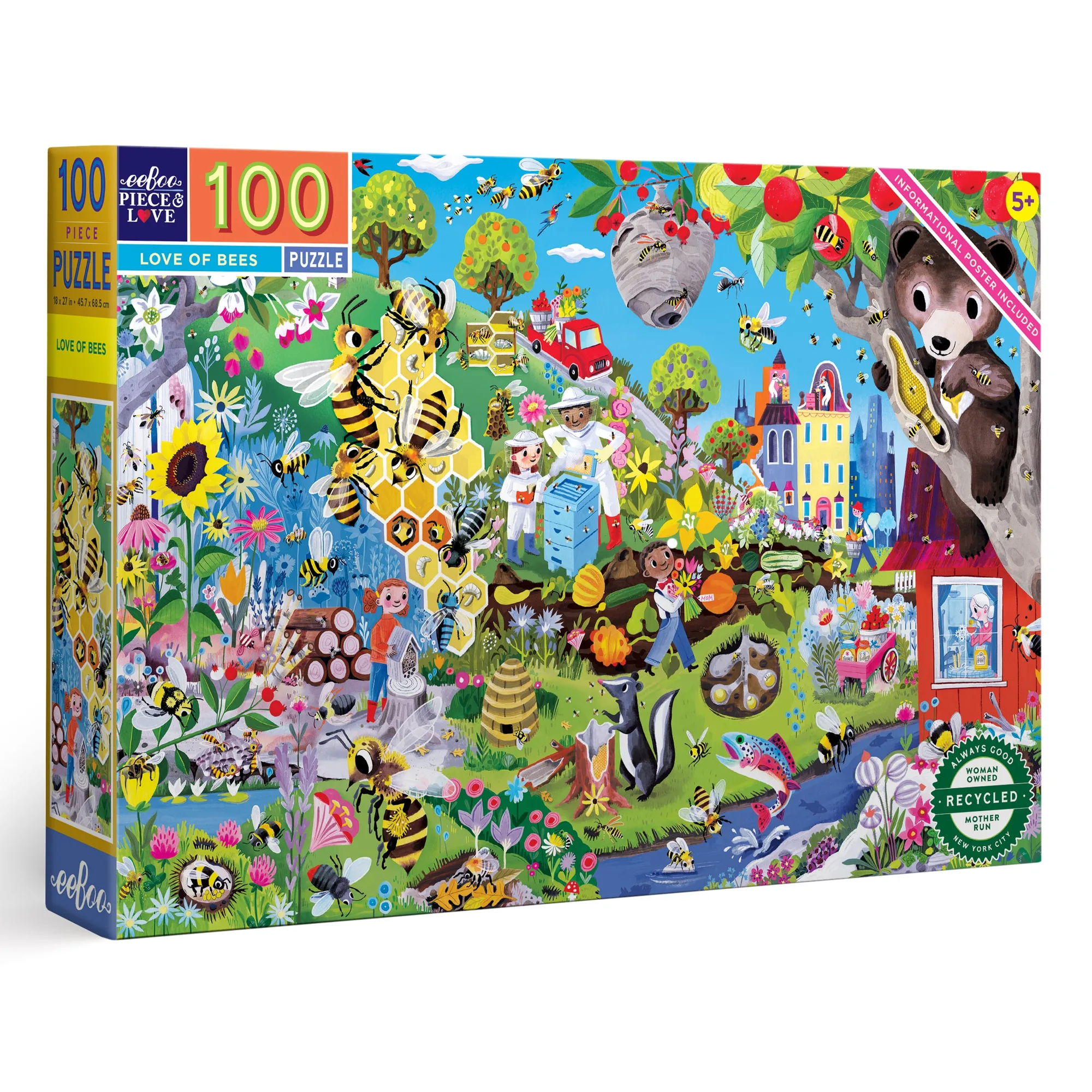
Love of Bees 100 Piece Puzzle
Who is this for?
Best for
- Children ages 5-8 who are ready for a step up from 24-48 piece puzzles
- Parents who want a puzzle that combines play with learning (observation, conversation, patience)
Not for
- Children under 4 who may still mouth pieces or need larger, chunkier pieces
- Kids who prefer fast, simple puzzles and get bored with detailed scenes