Quick answer
A 100-piece puzzle is a good next step for children around age 5 who have mastered simpler puzzles. Focus on piece size, image clarity, and extra sensory features like fuzzy accents.
Why 100 pieces is a milestone
Moving from 20- or 50-piece puzzles to 100 pieces challenges a child's patience, pattern recognition, and hand-eye coordination. It's not just about more pieces—the smaller size demands more precise matching.
Consider the piece size and quality
Not all 100-piece puzzles have the same piece dimensions. Look for puzzles with larger, sturdy pieces that are easier for small hands to grasp and fit. This reduces frustration and builds confidence.
Decision rules for choosing a 100-piece puzzle
- Age check: Most 100-piece puzzles are labeled for ages 5 and up. If your child is younger, start with a 50-piece puzzle to build skills.
- Piece size matters: Choose puzzles with larger pieces (roughly 1.5–2 inches wide). They are easier for small hands to pick up and align. Check product dimensions or reviews for piece size if not listed.
- Image and theme: Pick a puzzle with high-contrast, simple images (animals, vehicles, or scenes your child loves). Avoid overly detailed or dark images that are hard to sort. A clear, colorful image makes the puzzle more approachable and fun.
- Extra features: Look for puzzles with tactile elements like fuzzy accents or textured pieces. These add sensory play and can help children who learn by touching.
Product spotlight
-
100-Piece Fuzzy Puzzle - Bunny: 100-piece Fuzzy Puzzle - Bunny features bold colors and whimsical fuzzy accents that encourage hand-eye coordination and problem-solving. The sturdy box is perfect for travel. The fuzzy texture adds a sensory element that keeps young children engaged and helps them distinguish pieces by touch, not just sight.
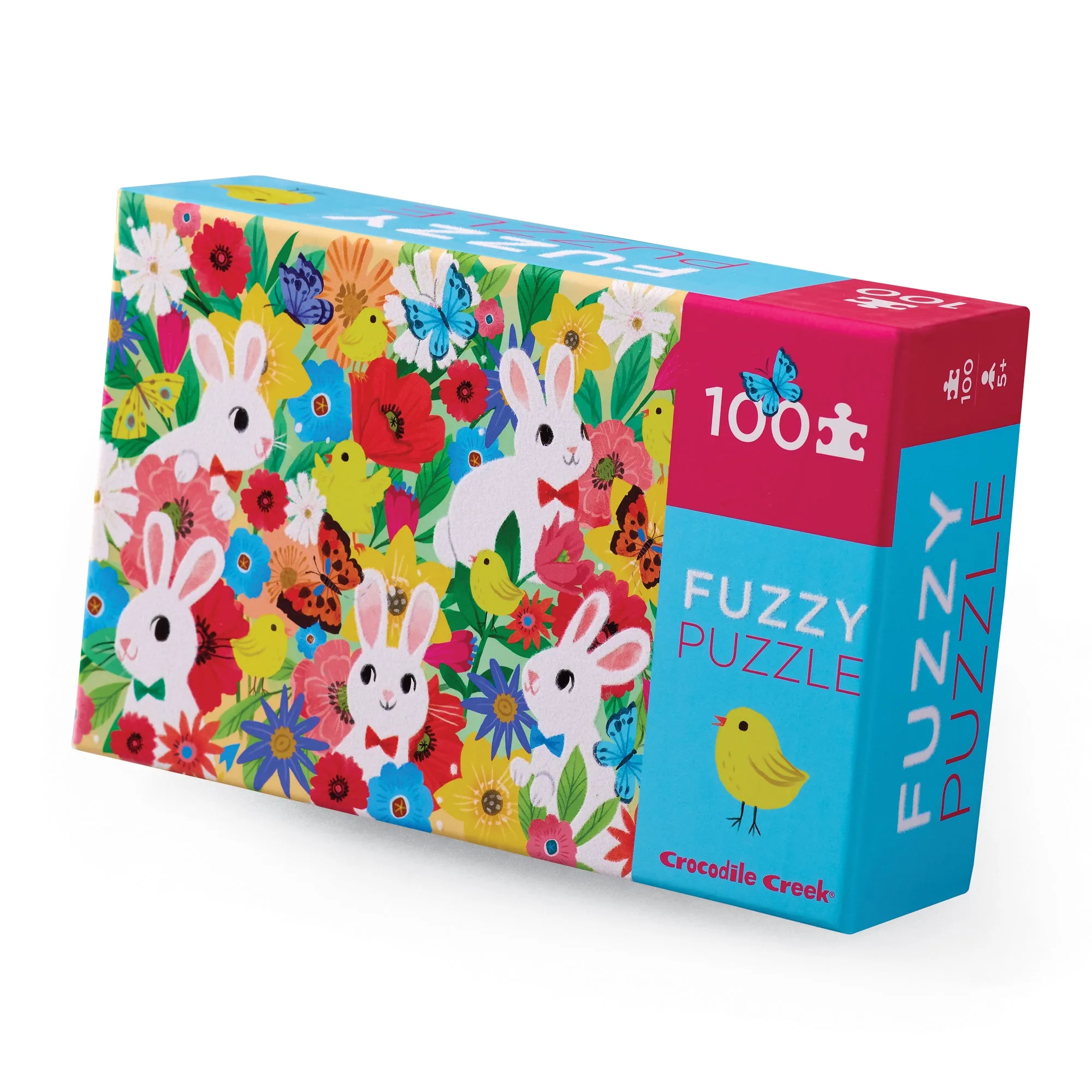
100-Piece Fuzzy Puzzle - Bunny
Who is this for?
Best for
- Children ages 5–7 who have completed 50-piece puzzles
- Parents looking for a travel-friendly, skill-building activity
Not for
- Children under 4 who may still mouth small pieces
- Kids who easily lose interest in puzzles with many similar-looking pieces