Quick answer
For a beginner, a 500 piece puzzle is a great starting point: large enough to be engaging, but with pieces that are easy to handle and assemble. Focus on artwork with clear color blocks, avoid overly similar textures, and look for random cut pieces that fit loosely to reduce frustration.
Why 500 pieces?
500 piece puzzles hit a sweet spot for new puzzlers. They offer a satisfying challenge without the intimidation of 1000 or 2000 piece sets. The pieces are large enough to see details clearly, and the time commitment (usually 2-4 hours) is manageable for a single session or two.
Compared to smaller puzzles (like 275 pieces), a 500 piece puzzle gives you more room to practice sorting, edge-finding, and pattern recognition. It's a perfect stepping stone if you eventually want to tackle larger sizes.
What makes a puzzle beginner-friendly?
Artwork is the biggest factor. Puzzles with distinct color blocks, clear subject separation, and varied textures are easier. Avoid images with large areas of a single color (like a blue sky or green field) or repetitive patterns (like a brick wall).
Piece quality also matters. Random cut pieces (not all the same shape) make assembly more forgiving. A reference poster helps you see the full image without squinting at the box. And a sturdy box keeps everything organized.
The trade-off: artwork vs. challenge
If you pick a puzzle with a complex, busy image, you'll get a longer, more frustrating experience. But if you choose something too simple, you might finish too quickly and feel underwhelmed. The best first puzzle has a clear focal point (like an animal or vehicle) with a moderate amount of background detail.
Consider your personal preference: do you want a relaxing hour or a brain-teaser? For a true beginner, go with the relaxing option. You can always increase difficulty later.
Decision rules for choosing your first 500 piece puzzle
- Check the artwork: Pick an image with 3-5 distinct color zones and a clear subject. Avoid all-over patterns or large monochrome areas.
- Look for piece quality features: Random cut pieces (not all the same shape) and a reference poster are signs of a beginner-friendly puzzle. Large size pieces are easier to handle.
- Consider the time investment: Plan for 2-4 hours. If you have less time, choose a puzzle with simpler shapes and fewer pieces. If you want a longer project, pick a more complex image. Start with a simpler design and save complex images for your second or third puzzle.
- Read reviews from other beginners: Look for comments about piece fit, image clarity, and overall satisfaction. Reviews often mention if a puzzle is too easy or too hard for a newbie.
Product facts
-
A Touch of Warmth | 500 piece: The soft sunlight casts a A Touch of Warmth on the fox as it rests its head on a branch, camouflaged in the dry brown leaves of the forest. This puzzle features a single animal with a warm, limited color palette, making it a good choice for beginners who want a manageable challenge without overwhelming detail.
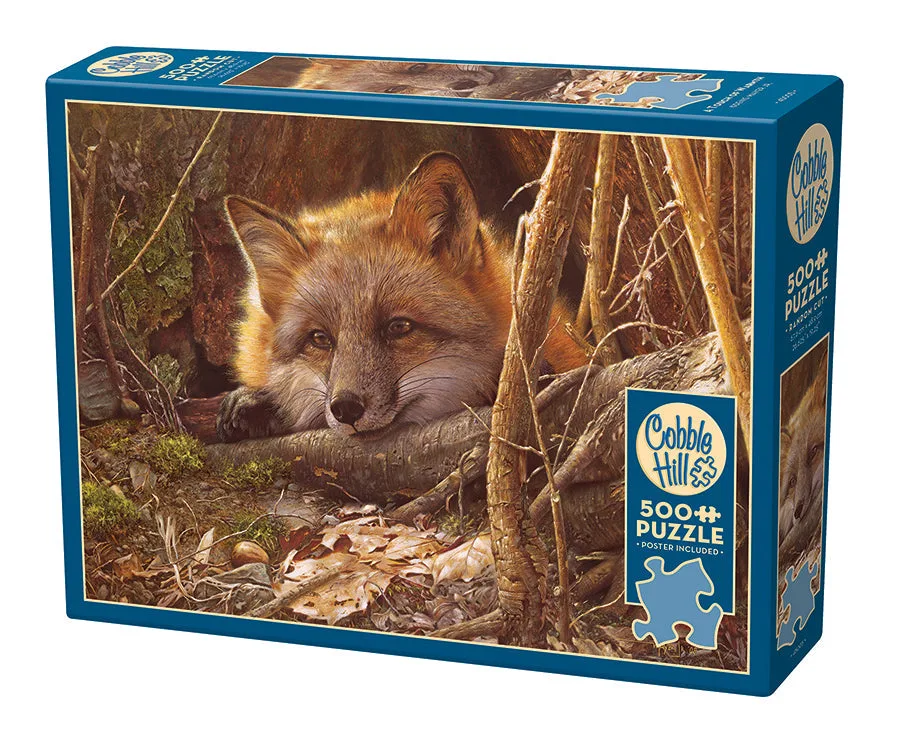
A Touch of Warmth | 500 piece
-
Let's Go Fishing | 500 piece: The green vintage truck parked by the lakeside is guarded by three lovable dogs as they eagerly await their owner. Cobble Hill's 500 piece puzzles have large size random cut pieces and it includes a reference poster to help in your adventure! The clear subject (truck and dogs) and distinct color blocks make sorting easier, while the random cut pieces and reference poster reduce frustration for new puzzlers.
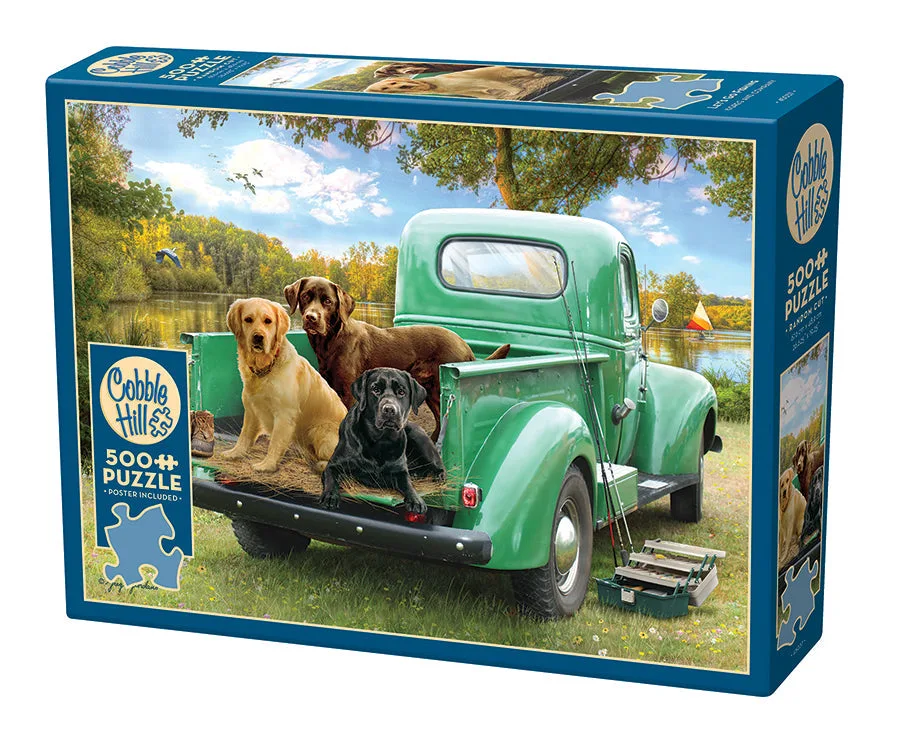
Let's Go Fishing | 500 piece
Who this guide is for
Best for
- Adults trying their first jigsaw puzzle
- Parents looking for a puzzle for a child aged 8+
- Anyone who wants a relaxing, low-pressure puzzling experience
Not for
- Experienced puzzlers looking for a challenge (consider 1000+ piece puzzles)
- Children under 6 (try a 275 piece or tray puzzle first)
- Anyone who wants a very quick puzzle (choose a 100-275 piece set)