Quick answer
For a newborn bonnet, prioritize soft, breathable fabric like bamboo rayon, a self-tie fastening for a secure fit, and ensure it's only used during awake time — never for sleep.
Bonnets vs. hats: the key trade-off
A bonnet ties under the chin, which keeps it in place on a wiggly newborn. A standard hat (like a beanie) can slide up over the eyes or fall off altogether. That makes bonnets a solid choice for photo sessions, walks, or keeping your baby's head warm during awake moments. The trade-off is that the ties require attention: they must be fastened snug but not tight, and many parents find them fiddly compared to a simple pull-on hat.
Why bamboo rayon stands out for a newborn's skin
Newborn skin is thin and sensitive. Synthetic blends or rough wools can cause irritation or overheating. Bamboo rayon is naturally smooth, breathable, and has a slight stretch — properties that help the bonnet stay comfortable without leaving marks. The Kyte Baby Bonnet, for example, uses 97% rayon from bamboo with 3% spandex, which gives it both softness and just enough give to adapt to your baby's head shape.
Safety rules for baby headwear
The biggest misconception about baby bonnets is that they're for sleep. In reality, loose items — including bonnets, beanies, bows, and hoodies — should never be worn by a sleeping baby due to suffocation and overheating risks. If you want head coverage for sleep, choose a sleep sack or sleeper with an integrated hood that's part of the garment. Use a bonnet only during supervised awake time, and remove it as soon as your baby is placed in a crib.
How to choose the right newborn bonnet
- Check the fabric: Look for a breathable, stretchy material like bamboo rayon. Avoid synthetic fabrics or rough wool that could overheat or irritate.
- Make sure it ties under the chin: A self-tie or snap fastening keeps the bonnet from slipping. Without a tie, a newborn can easily wiggle it off or pull it over their face.
- Use only during awake time: Never put a baby to sleep in a bonnet. Remove it before nap or bedtime, and opt for footed sleepwear or a sleep sack for overnight warmth. If you need head coverage for sleep, choose a garment that doesn't detach or cover the face — like a bodysuit with a built-in hood.
Product spotlight
-
Baby Bonnet in: 97% Rayon made from Bamboo, 3% Spandex. Breathable fabric for year-round use. The bamboo rayon and spandex blend means the bonnet stays soft and stretchy — it fits snugly without being too tight, and the fabric won't irritate delicate newborn skin.
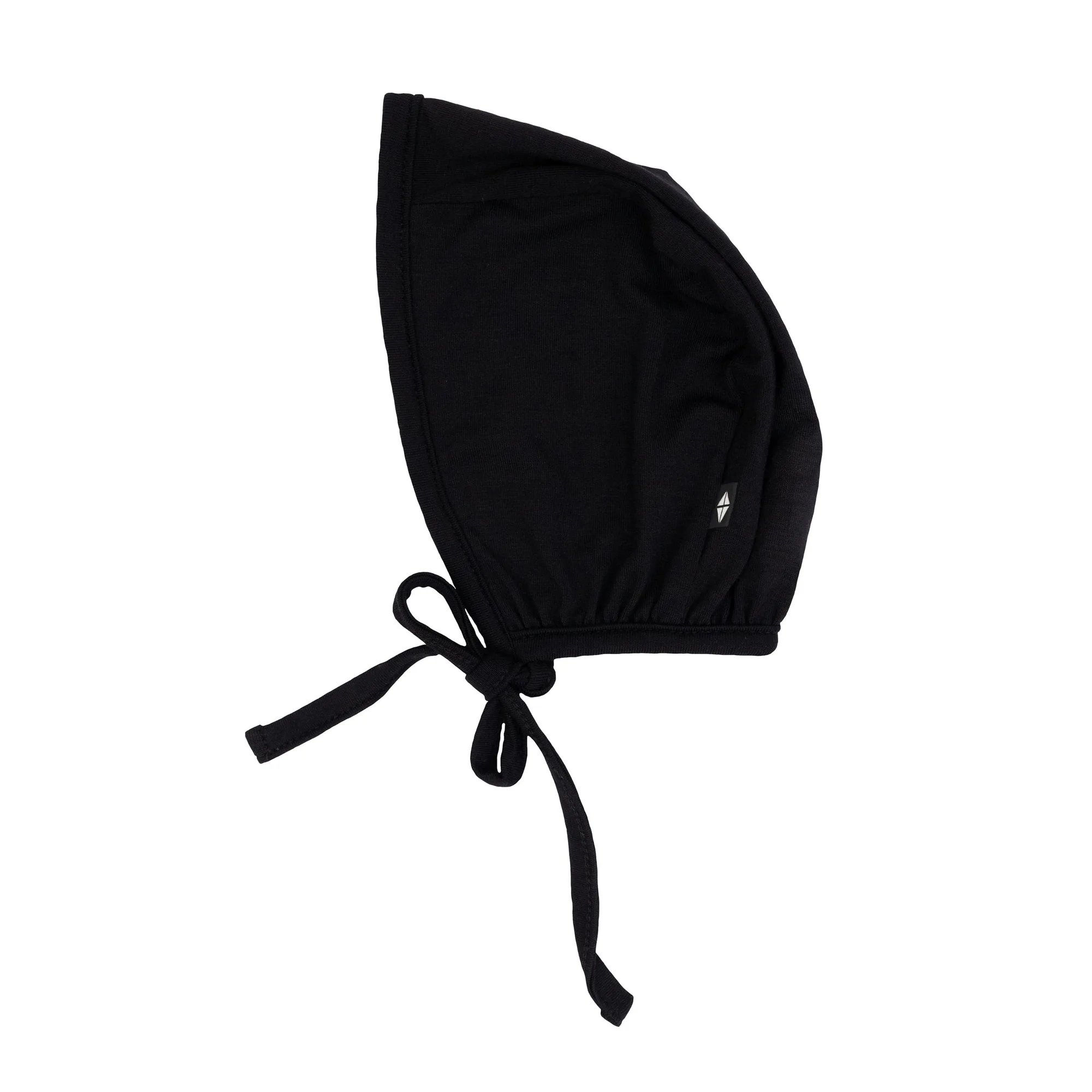
Baby Bonnet in
Who should pick a bonnet — and who might skip it
Best for
- Parents who want a secure fit that stays in place during walks or photo sessions
- Newborns who will be awake and supervised while wearing headwear
Not ideal for
- Sleeping babies — bonnets pose a suffocation risk and can cause overheating
- Parents who prefer a quick, no-fuss hat — bonnet ties require a little extra effort