Quick Answer
Choose a bassinet that meets current safety standards, has a firm, flat mattress with a snug-fitting sheet, and fits your space and lifestyle—whether that's a bedside sleeper for night feeds or a portable carry cot for stroller travel.
Safety standards: what to verify before you buy
Before anything else, confirm the bassinet meets the latest safety standards for your region. In the US, look for JPMA certification or compliance with ASTM F2194; in the EU, check for EN 1130. These standards cover stability, mattress firmness, and entrapment risks. A bassinet that doesn't list any standard may be unsafe, so skip it.
Also check the mattress: it should be firm and flat, with no gaps around the edges. The fitted sheet should be tight and specific to that model. Avoid adding pillows, blankets, or bumpers—they're not safe for infant sleep.
Bassinet vs crib: when a bassinet makes sense
Bassinets are smaller and more portable than cribs, making them ideal for the first few months when your baby wakes frequently. They fit beside your bed for easy night feeds, and they take up less space in a small nursery or apartment. However, babies outgrow bassinets quickly—usually by 4-6 months or when they can push up on their hands and knees. If you want a longer-term solution, a crib or mini crib might be a better investment.
Consider your space and budget: a bassinet is a short-term purchase, but the convenience of having your newborn close by during those early weeks is often worth it.
Portable and stroller bassinets: flexibility for on-the-go parents
Some bassinets double as carry cots that attach to a stroller, giving you a seamless transition from car to stroller to indoor sleep. This is especially handy for travel or errands. However, stroller bassinets are often lighter and may not be as sturdy as stationary bedside bassinets. If you plan to use it primarily at home, a dedicated bedside bassinet with a sturdy base might be a better choice.
Check compatibility: if you already have a stroller, see if the brand offers a matching bassinet that clicks in without adapters. This saves money and hassle.
Decision rules: how to choose your bassinet
- Safety first: Confirm the bassinet meets ASTM F2194 (US) or EN 1130 (EU) and has a firm, flat mattress with a tight-fitting sheet. No gaps, no soft bedding. If the product page doesn't list a safety standard, consider it a red flag.
- Match your sleep setup: If you plan to room-share for night feeds, choose a bedside bassinet with a drop-down side or clear visibility. If you need portability, look for a carry cot that fits your stroller. Decide where the bassinet will live before you shop—bedside, stroller, or both.
- Check size and weight limits: Most bassinets are suitable from birth to around 4-6 months or until the baby can push up on hands and knees. Verify the weight limit and dimensions to ensure it fits your space and your baby's growth. Measure your bedroom or nursery and note the weight limit so you know how long the bassinet will last.
- Consider breathability and materials: Look for mesh panels, breathable mattresses, and organic or low-emission fabrics. If you live in a warm climate, ventilation is key to prevent overheating. If your baby runs warm, prioritize models with zip-open ventilation or air mesh.
- Evaluate portability and travel needs: If you travel often, a lightweight carry cot that attaches to a stroller is more practical than a bulky stationary bassinet. Test the fold and weight if possible. For frequent travel, a stroller-compatible bassinet doubles as a car seat alternative for naps on the go.
Bassinet options at Strolleria
-
CYBEX MIOS3 LUX Carry Cot: The Cybex Mios3 Lux Carry Cot attaches to the Cybex Mios3 stroller without adapters and features a breathable cotton interior and extendable UPF 50+ sun canopy. If you own a Cybex Mios3, this carry cot gives you a safe sleep spot that clips onto your stroller for walks and travel, without extra adapters.
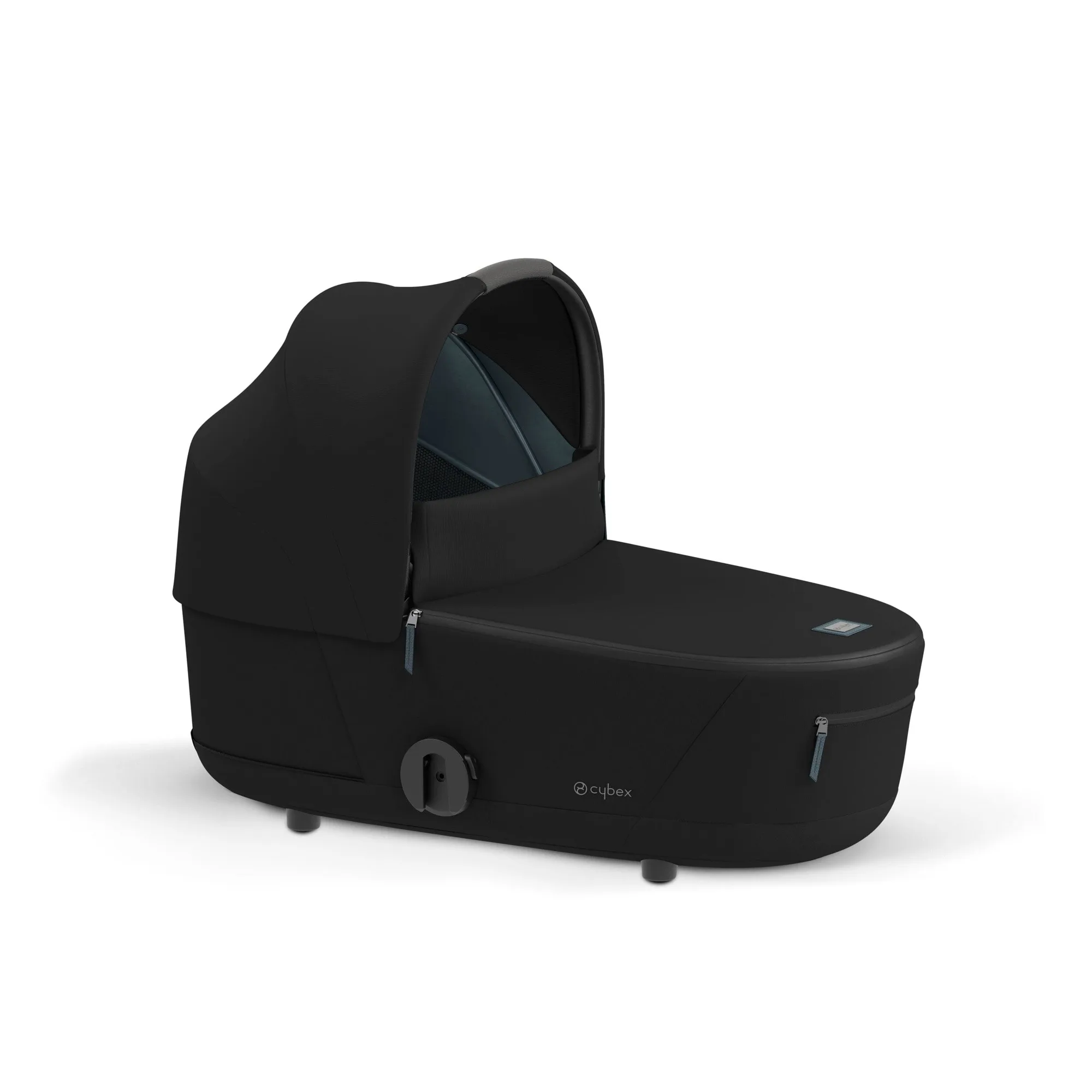
CYBEX MIOS3 LUX Carry Cot
-
UPPAbaby Bassinet V3: The UPPAbaby Bassinet V3 has a foam-free air mesh mattress and zip-open ventilation panels, plus GREENGUARD Gold certification. Its breathable design and certified low emissions make it a strong choice for parents who prioritize air quality and temperature regulation.
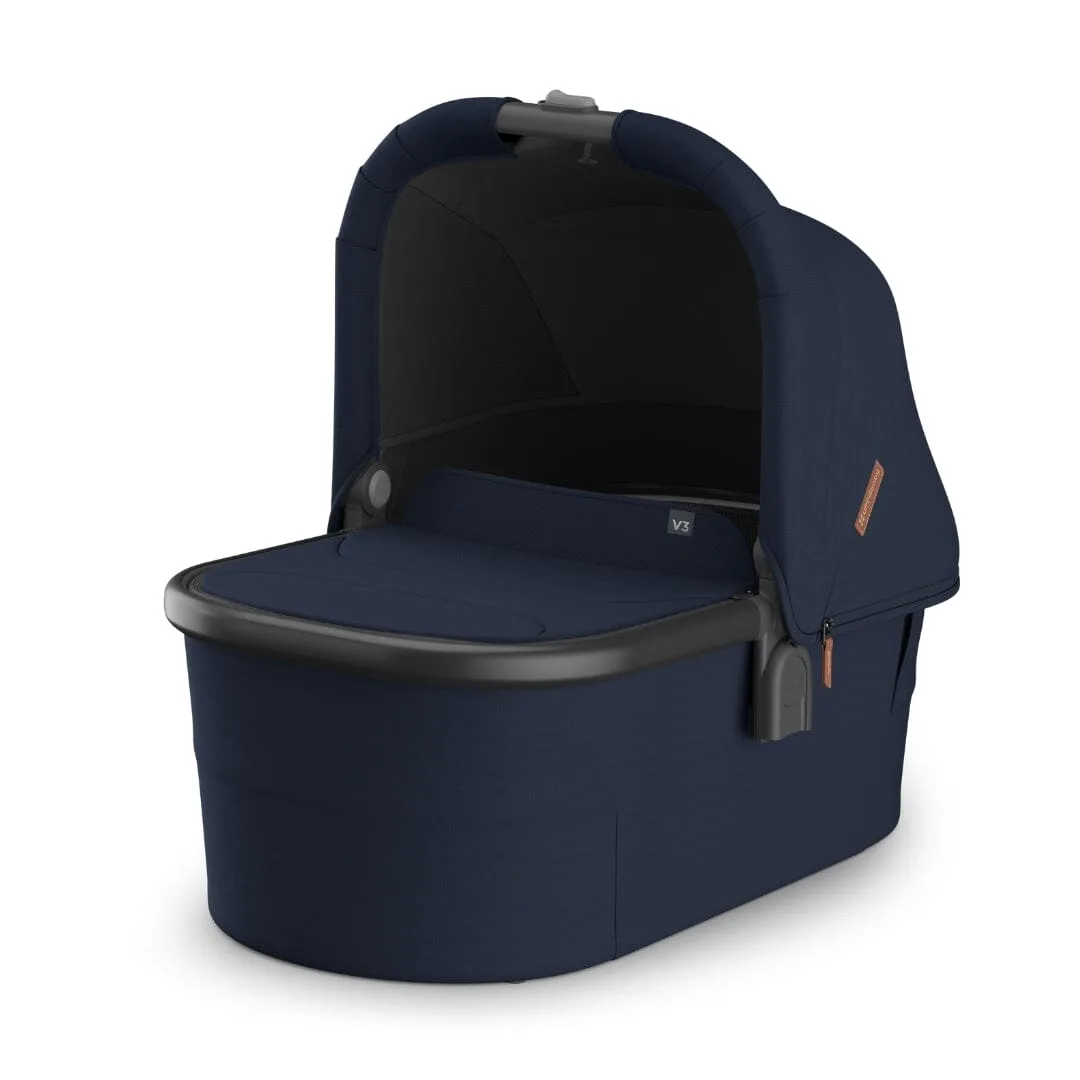
UPPAbaby Bassinet V3
Who should choose what
Best for
- Parents who want a bedside sleeper for easy night feeds and room-sharing
- Families with limited space who need a compact, temporary sleep solution
- Parents who already own a compatible stroller and want a carry cot for travel
Not for
- Parents who want a long-term crib that lasts beyond 6 months
- Families who prioritize a stationary, full-featured sleep environment over portability