Quick answer
Look for a beach towel made from absorbent cotton with a tight weave—it dries fast, shakes sand off easily, and holds up to sun exposure. A generous size (at least 30 x 60 inches) gives you room to stretch out on the sand.
Why material and weave matter for sand and sun
Cotton beach towels are soft and absorbent, but not all cotton is the same. A terry weave feels plush and soaks up water quickly, while a flat-woven or jacquard towel dries faster and sheds sand better. For sun resistance, look for cotton that is pre-shrunk or colorfast—bright dyes can fade after repeated UV exposure. Synthetic blends (polyester or microfiber) dry in minutes and pack smaller, but they lack the softness and absorbency of cotton, so they are better for quick dips than all-day lounging.
Size is another practical factor. A standard bath towel (around 27 x 52 inches) is too small for the beach. A dedicated beach towel should be at least 30 x 60 inches, with some reaching 40 x 70 inches for couples or tall users. Oversized towels take up more bag space but give you a comfortable, sand-free zone.
The trade-off: softness vs. sand resistance
Plush, high-pile cotton towels feel luxurious but trap sand in the loops—you will be shaking sand out for hours. Flat-weave or low-pile towels release sand quickly and dry faster, but they are less cozy. If you prioritize lounging comfort, choose a thick terry towel and accept the sand. If you value convenience, go with a flat-weave or a towel labeled 'sand-resistant' (usually a tight cotton or cotton-poly blend).
Color choice also affects sun performance. Dark or bright colors show fading less than pastels, but they absorb more heat. Light colors stay cooler on hot sand but show stains more easily. A striped or patterned design hides both fading and minor stains, making it a practical choice for repeated outdoor use.
How to choose your beach towel: decision rules
- Check the material: 100% cotton (terry or flat-weave) for softness and absorbency; cotton-poly blend for faster drying and lighter packing. Avoid pure synthetic if you want a towel that feels soft against skin.
- Look for a tight weave: A dense, low-pile weave sheds sand more easily than a loose terry loop. If sand resistance is your top priority, choose a flat-weave or jacquard cotton towel. Test the weave by rubbing the towel—if fibers lift easily, it will trap sand.
- Pick the right size: Aim for at least 30 x 60 inches. For two people or extra legroom, go up to 40 x 70 inches. Standard bath towels are too small for comfortable beach use. Measure your bag before buying oversized towels to ensure they fit.
- Consider sun and colorfastness: Bright or dark colors hide fading better than whites or pastels. Pre-shrunk cotton reduces distortion after washing. Stripes and patterns disguise both fading and stains. Wash new beach towels separately the first time to set the dye and remove excess lint.
- Plan for drying and care: Cotton towels dry best in direct sun or a low-heat dryer. Avoid fabric softener—it coats fibers and reduces absorbency. Shake out sand before washing to protect your machine. Hang the towel immediately after use to prevent mildew; machine wash every 3-4 uses.
Product spotlight
-
Pride Stripe Beach Towel: Our Beach Towels are extra soft and absorbent, with bright summer colors that bring the relaxation of vacation to the front of mind. The soft cotton weave makes it comfortable for lounging, while the vibrant stripes help hide fading and sand—so it looks great season after season.
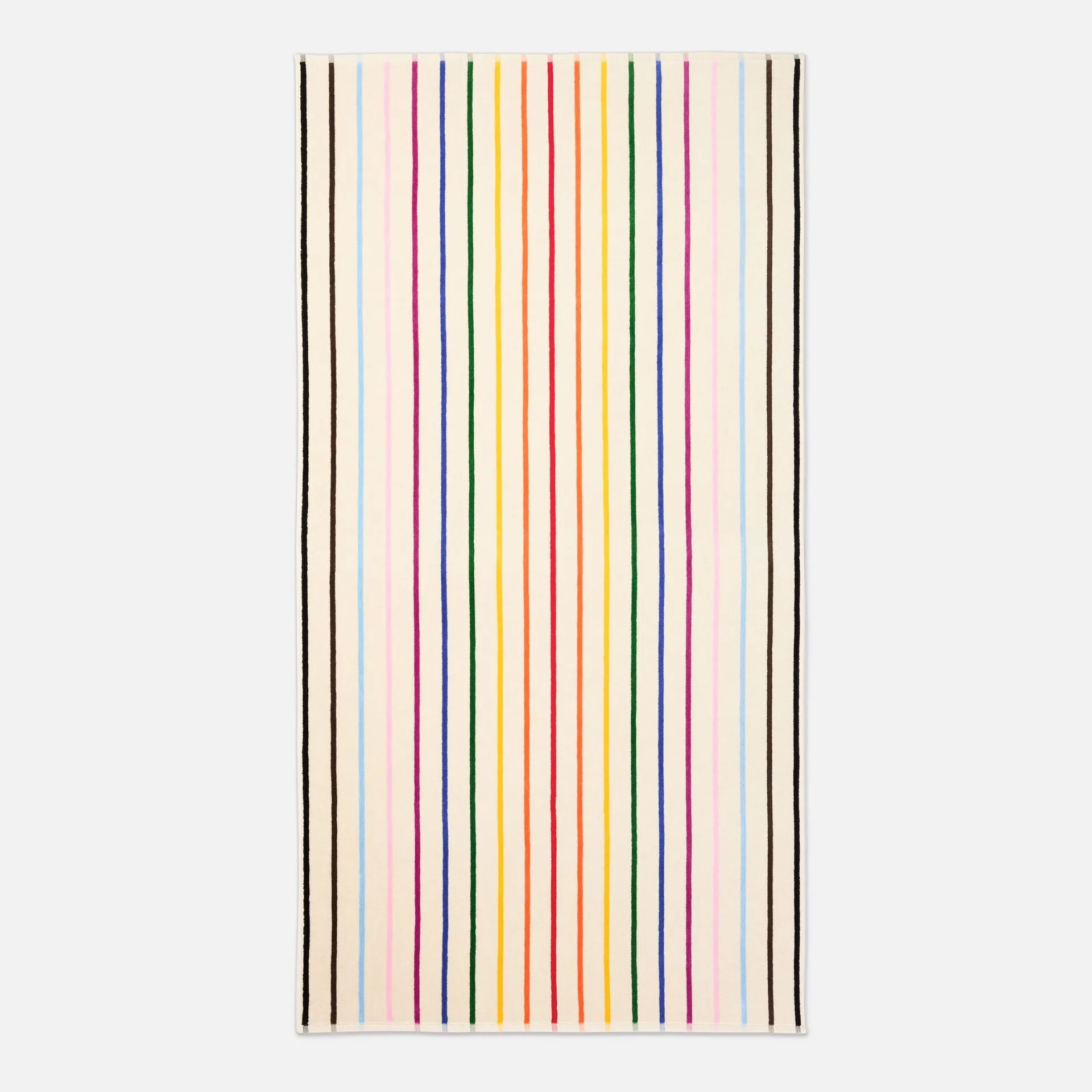
Pride Stripe Beach Towel
Which beach towel is right for you?
Best for
- Loungers who want a soft, absorbent cotton towel for all-day beach comfort
- Travelers who need a lightweight, quick-drying option that packs small
Not ideal for
- Minimalists who want a single towel for both bath and beach (dedicated beach towels are larger and more sand-resistant)
- Anyone who prefers a synthetic, ultra-light towel for backpacking or sports