Quick answer
Choose a binky clip with a secure, breakaway clip and a soft, absorbent strap to keep your baby's pacifier clean and within reach without posing a choking hazard.
Why material matters for drool and comfort
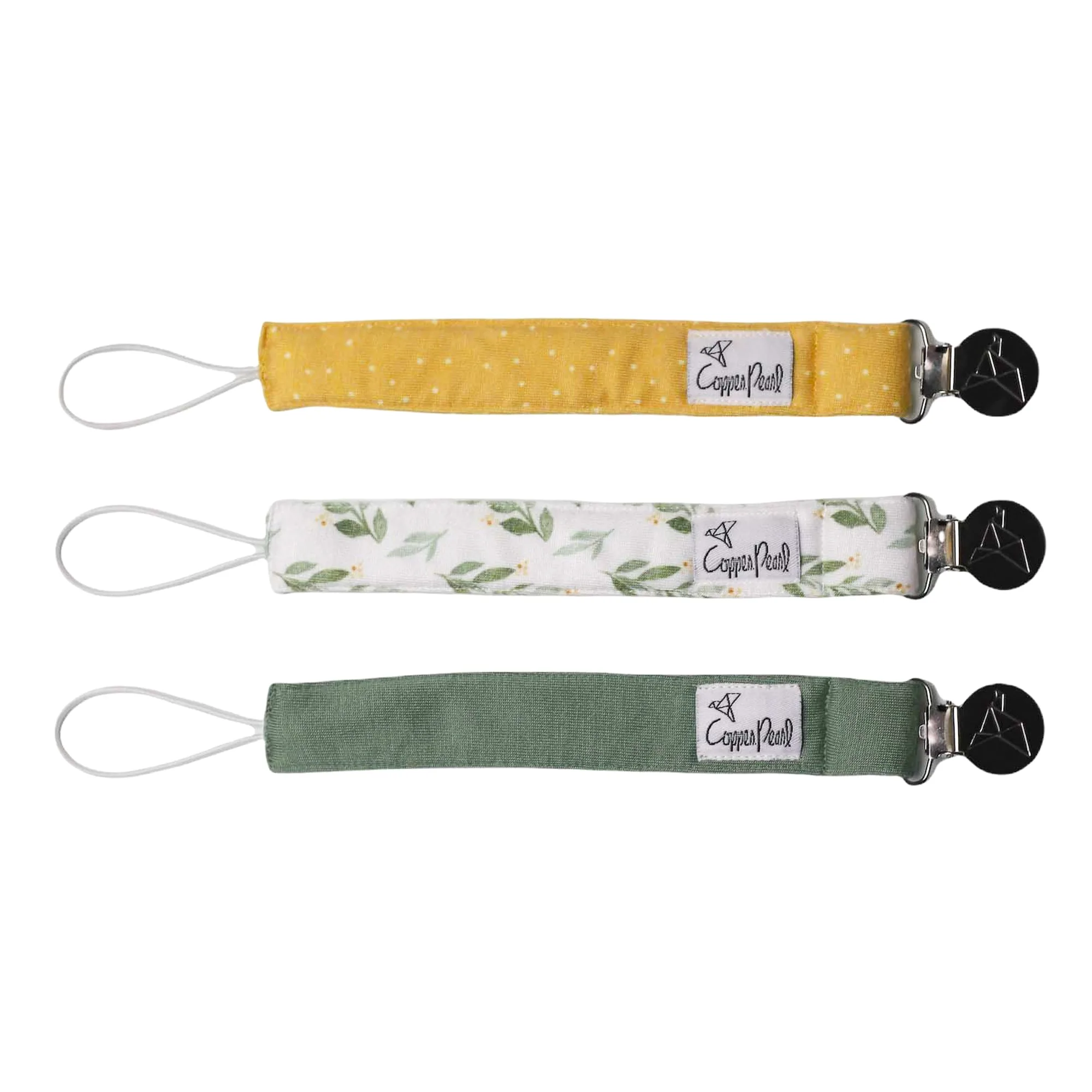
A binky clip sits close to your baby's face and mouth, so the strap material directly affects comfort and hygiene. Knit straps lined with absorbent fleece, like those used in Copper Pearl binky clips, help soak up drool and keep the strap from feeling wet against your baby's skin. This is especially helpful for teething babies who produce extra saliva.
Avoid clips with rough or non-breathable materials that could irritate delicate skin. A soft, moisture-wicking lining adds a layer of practicality that a plain fabric strap cannot match.
Clip security and attachment points
The clip itself must hold firmly to clothing, blankets, or baby gear without slipping off or pinching tiny fingers. Look for a sturdy, rust-proof metal clip with a smooth closure mechanism. A clip that is too weak can release unexpectedly, letting the pacifier fall to the ground.
Equally important is the loop or attachment point for the pacifier. It should be small enough to fit through most pacifier handles but secure enough not to pull apart. Some clips use a ribbon loop, while others use a plastic ring—both work well as long as they are reinforced.
Length and tangle risks
Standard binky clips are about 10–12 inches long. This is long enough to let the pacifier reach your baby's mouth without being so long that it becomes a tangle or trip hazard. Clips that are too short may limit movement, while overly long straps can get caught on crib rails or stroller wheels.
Always test the length with the intended use. For a stroller or car seat, a shorter clip may be more practical. For a crib or play mat, a slightly longer clip gives more freedom.
Decision rules for choosing a binky clip
- Check the clip mechanism: Choose a clip that snaps or slides securely and has no sharp edges. Test that it does not release when tugged gently. A breakaway feature is ideal for safety.
- Inspect the strap material: Prefer a knit or fabric strap with an absorbent lining (like fleece) to manage drool. Avoid plastic or rubber straps that can trap moisture and cause rash. Absorbent lining is a key differentiator for comfort.
- Verify the attachment loop size: Make sure the loop fits through your baby's pacifier handle. A loop that is too small is frustrating; one that is too large may slip off. Look for a reinforced stitch or ring.
- Consider the number of clips per set: Multi-packs (e.g., three clips per set) are practical because binky clips get lost, dropped, or need washing. A single clip may not be enough for daily rotation. A multi-pack saves you from buying replacements frequently.
- Match the style to your gear: Binky clips come in various prints and colors. Choose a pattern that coordinates with your baby's clothes, nursery decor, or diaper bag. This is a personal choice but makes the clip feel like an accessory rather than an afterthought.
Product facts
-
Binky Clips - Fern: Premium knit strap lined with absorbent fleece to help soak up drool. Keeps the strap drier and more comfortable for drooly babies, reducing skin irritation.
Binky Clips - Fern
-
Binky Clips - Tatooine: Three binky clips included in every set, so you always have a backup. You can keep one on the diaper bag, one on the stroller, and one at home without running out.
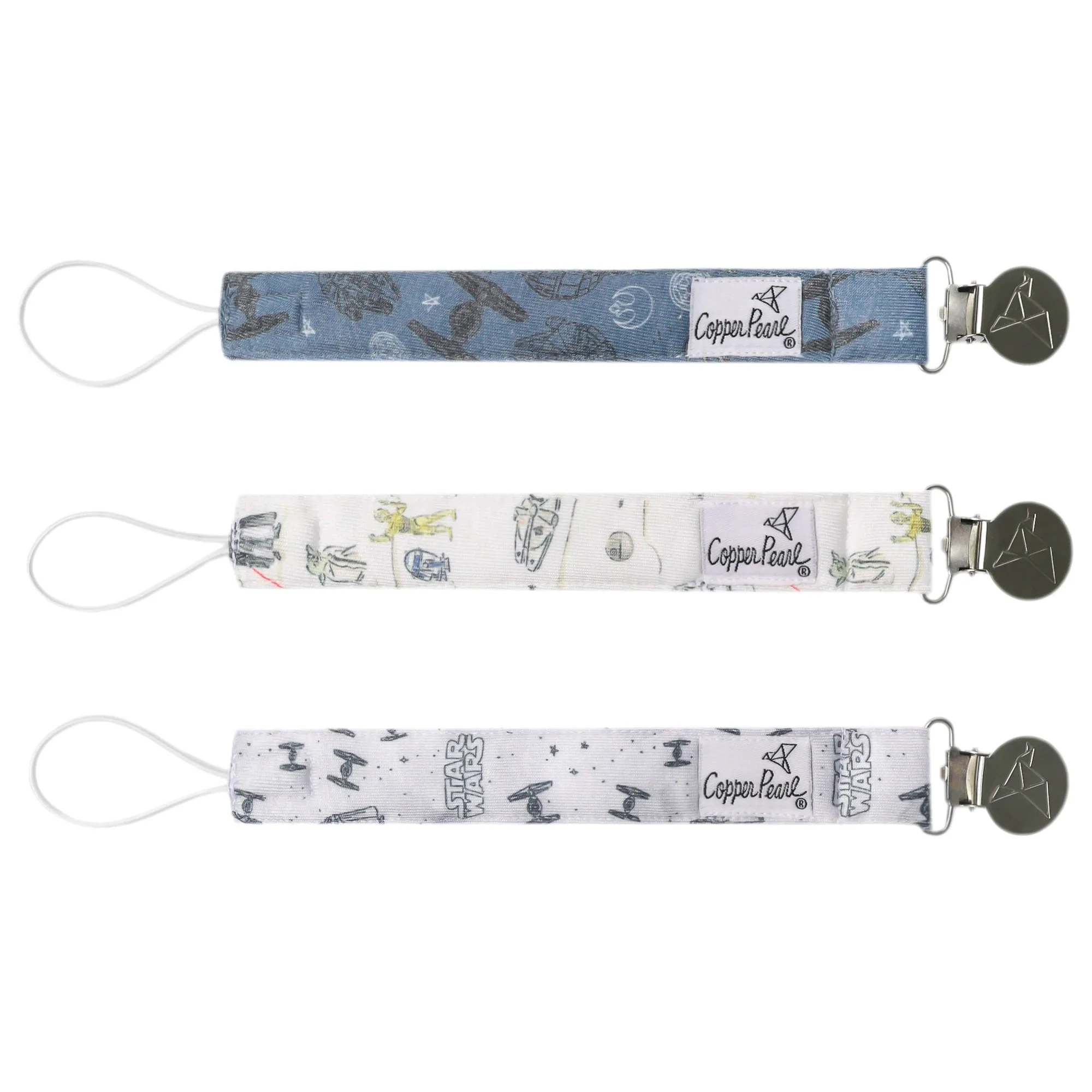
Binky Clips - Tatooine
Who should buy what
Best for
- Parents of babies 0–36 months who want a drool-absorbent, soft clip that doubles as a style accessory.
- Caregivers who need multiple clips for different bags or rooms and prefer a coordinated set.
Not for
- Parents who want a clip with a built-in teether or toy attachment (those are separate products).
- Babies who still mouth the clip itself—supervise use and remove if the strap becomes frayed.