Quick answer
For D+ to J cups, prioritize bras with wide underwires, firm side panels, and adjustable straps. Plunge styles work well under low necklines, while full-coverage or embroidered mesh options offer all-day comfort without sacrificing support.
Why cup size alone isn't enough
Band size and cup volume work together. A 10D and a 16J have very different band lengths and cup depths, so the same bra model may fit differently across the size range. Always start with your band measurement, then adjust cup volume.
The right bra should lift without digging into shoulders or riding up at the back. If straps leave marks or the band shifts, the fit is off regardless of the cup letter.
Plunge vs full-coverage trade-offs
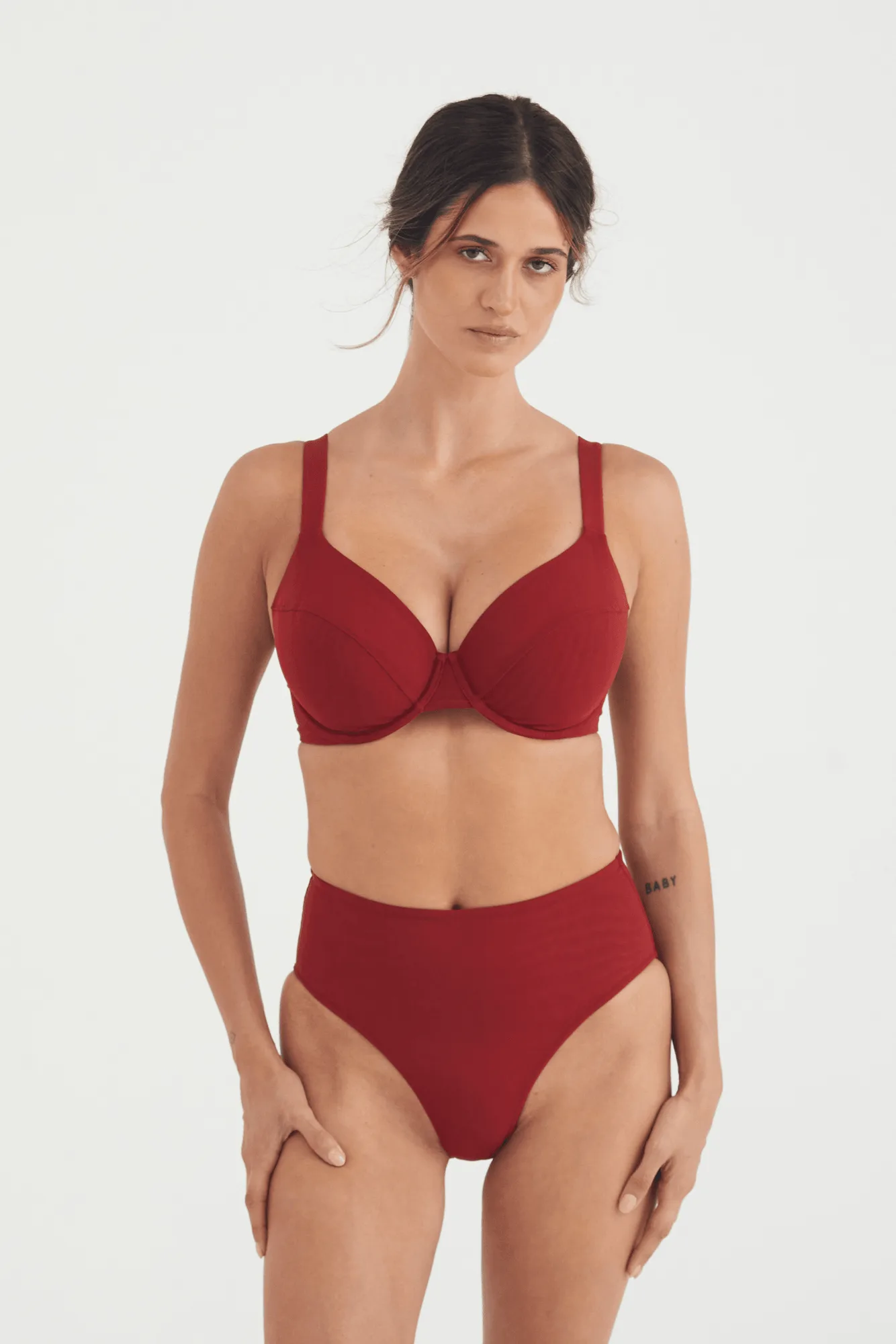
Plunge bras like the Busty Basics Plunge Bra offer a lower neckline that works with V-neck tops and dresses, but they may provide less side coverage than a full-cup style. If you prefer a rounded shape under fitted tops, a plunge can still work as long as the underwire sits flat against your sternum.
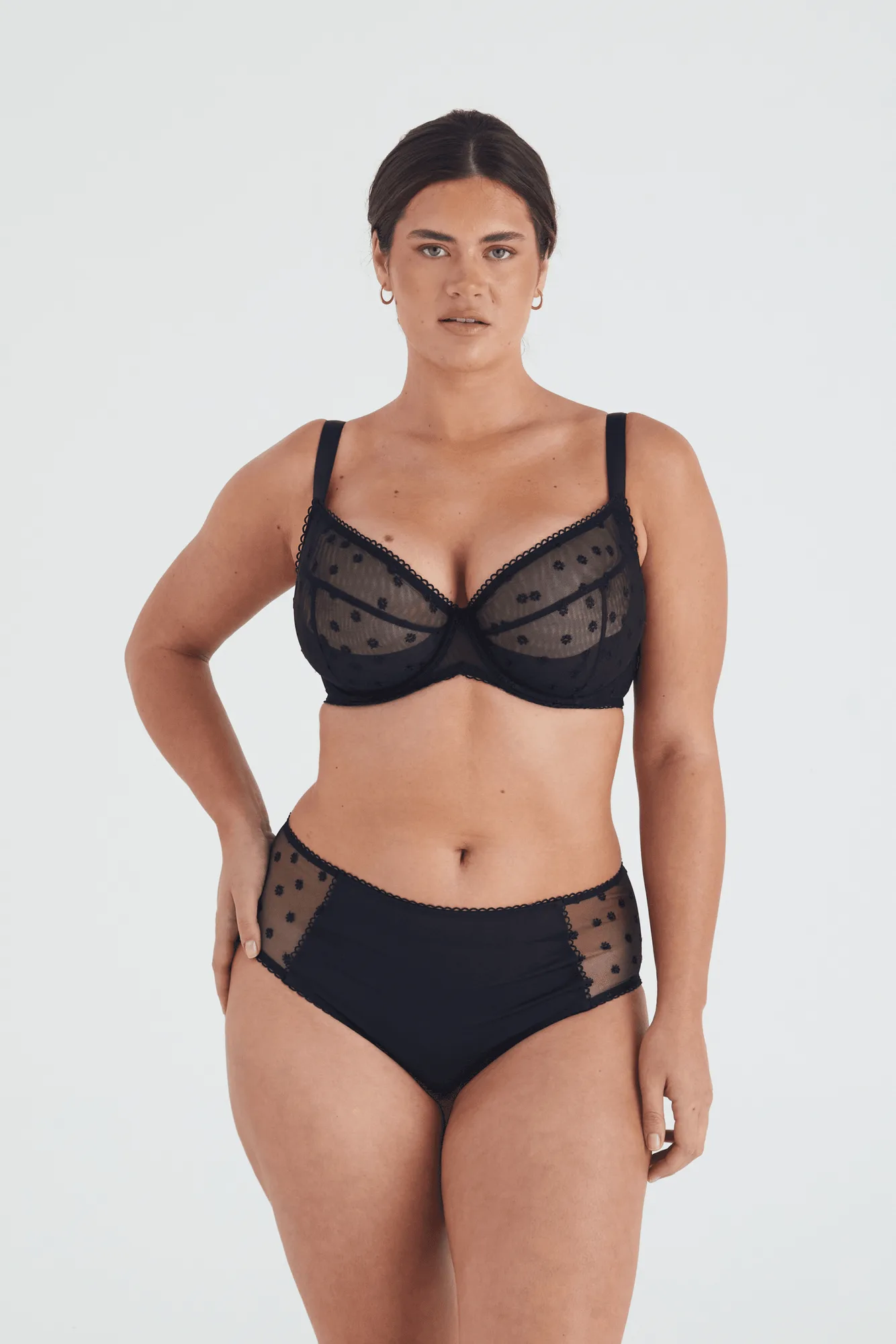
Full-coverage or mesh bras like the Juni Bra give more fabric and structure, which can feel more secure for all-day wear. The trade-off is a higher neckline that may peek out of certain clothing.
How to choose your bra: decision rules
- Measure your band first: Wrap a tape measure snugly under your bust, at the band line. Round to the nearest even number. This is your band size. Then measure the fullest part of your bust and subtract the band measurement to find your cup size (1 inch = A, 2 = B, etc.). Write down both numbers before shopping.
- Check underwire placement: The wire should lie flat against your ribcage between your breasts and follow your breast root without poking or lifting away. If it sits on breast tissue, go up a cup size or try a different shape.
- Look for wide, adjustable straps: Thin straps can dig into shoulders on larger busts. Choose straps that are at least half an inch wide and fully adjustable. Lightly padded straps, like those on the Juni Bra, add comfort without bulk. If straps slip off, tighten them or try a racerback converter.
- Test the band snugness: A new bra should fasten on the loosest hook and feel firm but not painful. You should be able to slide two fingers under the band. If the band rides up at the back, it is too loose. Most support comes from the band, not the straps.
Bra options for D+ to J cups
-
Busty Basics Plunge Bra - Cherry: Carved-out neckline and plunge front you won't fall out of. This means you can wear lower-cut tops without visible bra lines or spillage, a common concern for larger busts.
Busty Basics Plunge Bra - Cherry
-
Juni Bra: Embroidered mesh cups team with lightly padded straps for all-day comfort and style. The combination of breathable mesh and padded straps reduces pressure on shoulders while adding a decorative element, so support doesn't have to look plain.
Juni Bra
Which bra style fits you?
Best for
- Daily wear under low-cut tops and dresses – choose a plunge bra like Busty Basics Plunge Bra
- All-day comfort with a feminine look – choose an embroidered mesh bra like Juni Bra
Not ideal for
- High-impact sports or intense activity – these are not sports bras
- Very wide-set breasts that need extra side coverage – a full-cup or balconette style may fit better