Quick Answer
Pick a chef knife that feels balanced and comfortable in your hand, with a blade suited to your most common tasks. Prioritize handle grip and weight over looks, and consider a design that brings you joy if it doesn't compromise function.
Blade Material and Edge Retention
Chef knives come in various steel types, each balancing edge retention, sharpening ease, and corrosion resistance. High-carbon stainless steel is a common choice because it resists rust and holds an edge well. If you prefer low-maintenance blades, look for stainless steel that doesn't require special care. If you enjoy sharpening and want maximum sharpness, consider carbon steel, but be ready to wipe it dry after each use.
Handle Comfort and Grip
A knife's handle determines how comfortable it feels during long prep sessions. Look for a handle that fits your hand size and provides a secure grip, even when wet. Materials like wood, plastic, or resin each have trade-offs: wood feels warm but needs oiling, while synthetic handles are more durable and easier to clean. Try holding the knife to see if the handle shape suits your grip style.
Weight and Balance
The weight and balance of a chef knife affect control and fatigue. A heavier blade helps with chopping through dense ingredients, but can tire your wrist. A lighter knife offers more agility for precise work. The balance point should feel comfortable—usually where the blade meets the handle. Choose a weight that feels natural for your most frequent tasks.
Maintenance and Longevity
All chef knives need some care to stay sharp and safe. Hand washing is recommended for most quality knives, as dishwashers can dull blades and damage handles. Regular honing keeps the edge aligned, and occasional sharpening restores it. Consider whether you're willing to invest time in maintenance—if not, opt for a blade that requires less frequent sharpening.
Decision Rules for Choosing a Chef Knife
- Assess your cooking habits: If you mostly chop vegetables, fruits, and boneless proteins, a standard 8-inch chef knife is versatile. For heavy meat cutting or dense roots, choose a thicker, heavier blade. Match the blade to your most frequent tasks.
- Test the handle grip: Hold the knife and mimic cutting motions. The handle should feel secure and not slip, even with wet hands. If you have smaller hands, look for a slimmer handle profile. Comfort is non-negotiable for safety.
- Consider blade maintenance: Decide how much time you'll invest in care. Stainless steel is lower maintenance; carbon steel needs more attention. If you prefer a set-and-forget knife, choose stainless. Your willingness to maintain affects blade choice.
- Weigh style vs. function: A themed or designer knife can make cooking more enjoyable, but ensure the blade quality and handle comfort meet your standards. If the design compromises grip or balance, skip it. Style should enhance, not replace, function.
Chef Knife Options from Hedley & Bennett
-
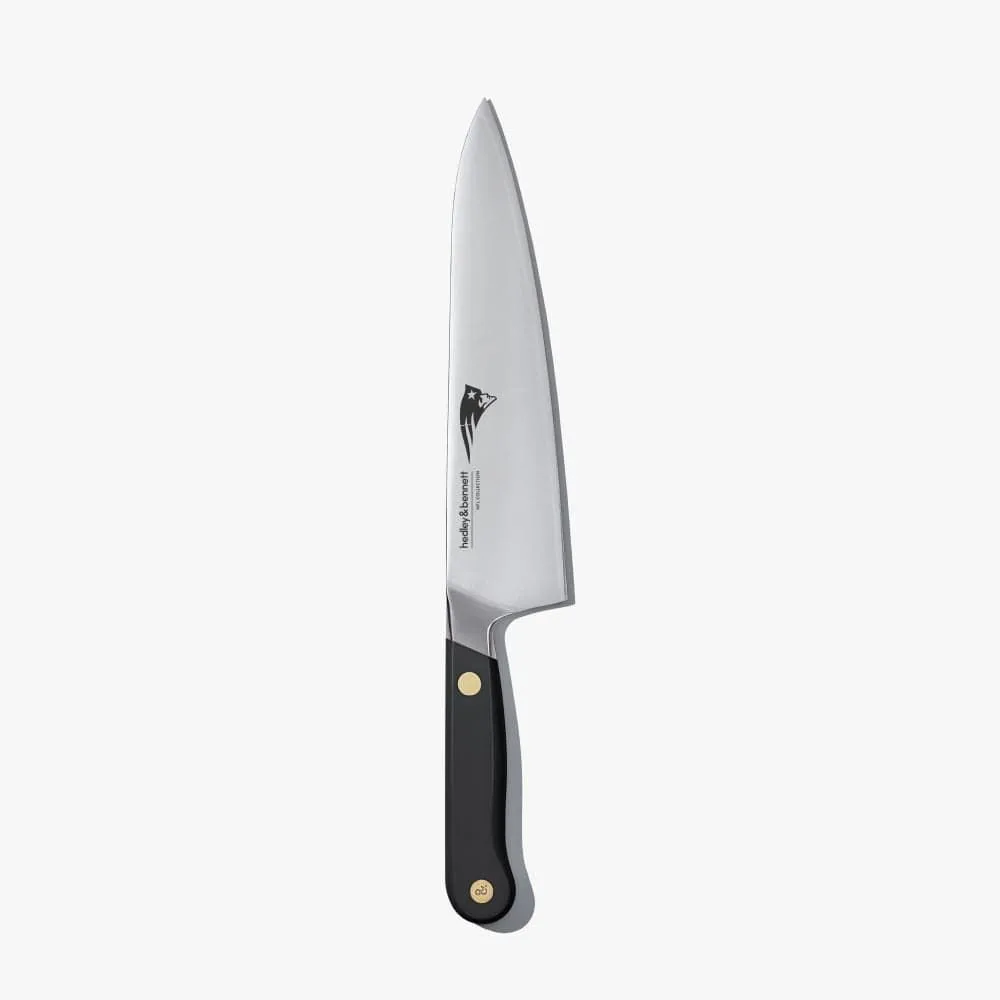
New England Patriots Chef Knife: The New England Patriots Chef Knife features a New England Patriots colorway and is part of the NFL collaboration collection. If you're a Patriots fan, this knife adds team spirit to your kitchen without sacrificing the functionality of a chef knife.
New England Patriots Chef Knife
-
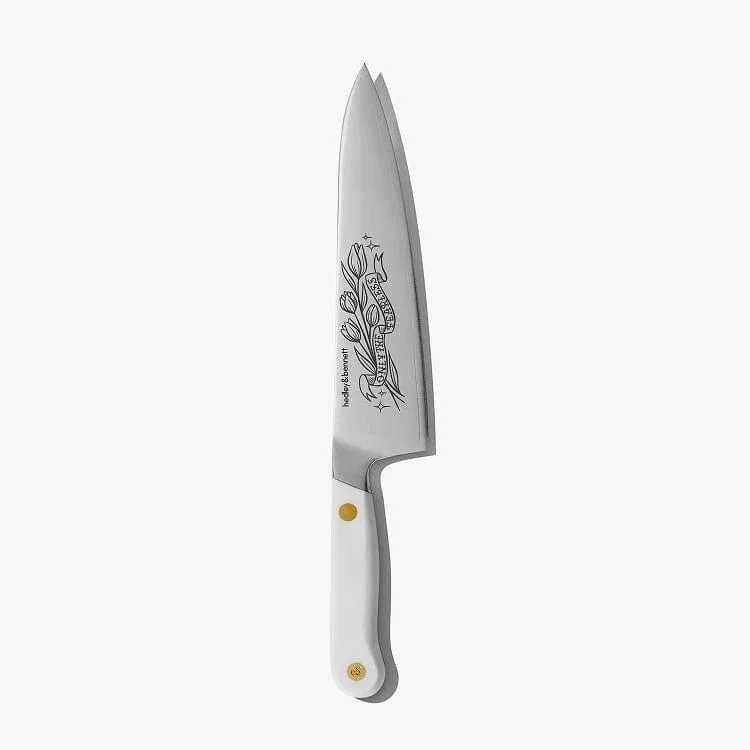
Tini Younger x H&B Chef's Knife: The Tini Younger x H&B Chef's Knife features a floral-inspired design with white and cream tones. This knife suits cooks who want a beautiful, statement piece that still performs well for everyday prep.
Tini Younger x H&B Chef's Knife
-
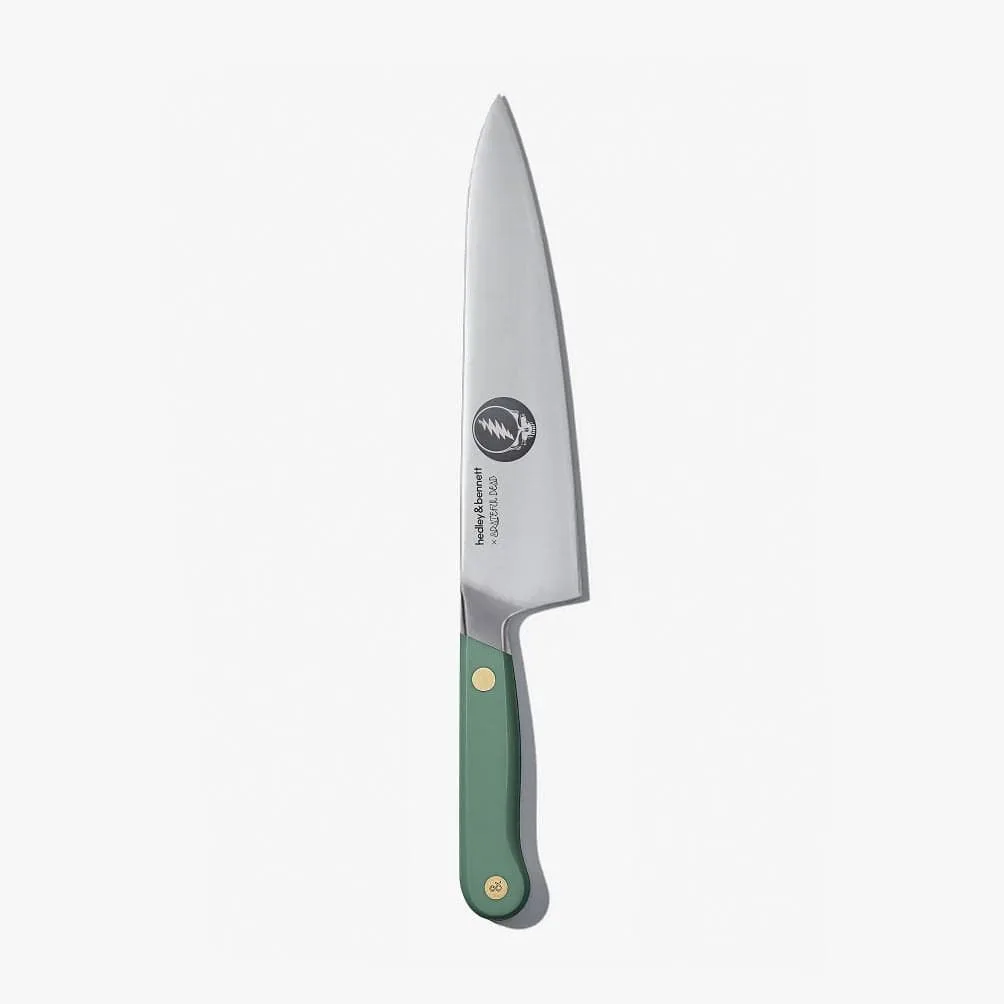
Grateful Dead Steal Your Face Chef’s Knife: The Grateful Dead Steal Your Face Chef’s Knife features a bold blue handle and the iconic Steal Your Face design. For Deadheads, this knife combines collectible style with versatile kitchen functionality.
Who Should Choose Which Knife
Best for
- Home cooks who want a reliable, everyday chef knife and value a design that reflects their personality.
- Fans of a specific team or artist who want to bring that passion into the kitchen without sacrificing performance.
Not for
- Professional chefs who need a neutral, no-nonsense tool and prefer a plain handle for maximum grip in high-volume kitchens.
- Cooks who prioritize minimalist aesthetics and don't want a themed or patterned blade.