Quick answer
The best child carrier for hiking balances lightweight design, sturdy support, and enough storage for essentials. Prioritize a carrier with a comfortable harness, ample padding, and a sun or rain cover for changing conditions.
Why weight matters on the trail
A lighter carrier reduces strain on your back and shoulders during long hikes. Look for models under 3 kg if you plan multi-hour treks, but remember that lighter often means fewer built-in pockets or padding. Trade-off: you may need to attach extra pouches or a hip belt for stability.
Storage and weather protection
Hiking demands quick access to snacks, water, and a change of clothes. A carrier with integrated storage compartments or attachment points for a daypack saves stops. Also consider whether the carrier includes a sun canopy or rain cover—these can be essential for sudden weather changes, though they add weight.
Decision rules for choosing a hiking child carrier
- Check the weight limit and child size: Ensure the carrier supports your child’s current weight and height. Most carriers accommodate children from around 6 months to 3 years. A higher weight limit may mean a heavier frame, so match it to your child’s age and your hiking frequency.
- Evaluate the harness and hip belt: A padded hip belt transfers weight from shoulders to hips, crucial for longer hikes. Adjustable shoulder straps and a chest strap prevent chafing. Test the fit with your child inside if possible.
- Look for ventilation and storage: Mesh back panels reduce sweat buildup in warm weather. Integrated pockets or a removable daypack simplify carrying snacks, a water bottle, and a changing pad. Avoid carriers that force you to buy separate accessories for basic storage. A carrier with a mesh back and at least two small pockets is a practical baseline for day hikes.
Product facts
-
Out N About Nipper Trek Backpack Carrier: The Nipper Trek is Out’n’About’s first backpack carrier, a lightweight, compact, and comfortable child carrier weighing 2.5 kg, making it one of the lightest structured carriers in its class. At 2.5 kg, it reduces fatigue on long hikes while still offering a structured frame for stability and comfort.
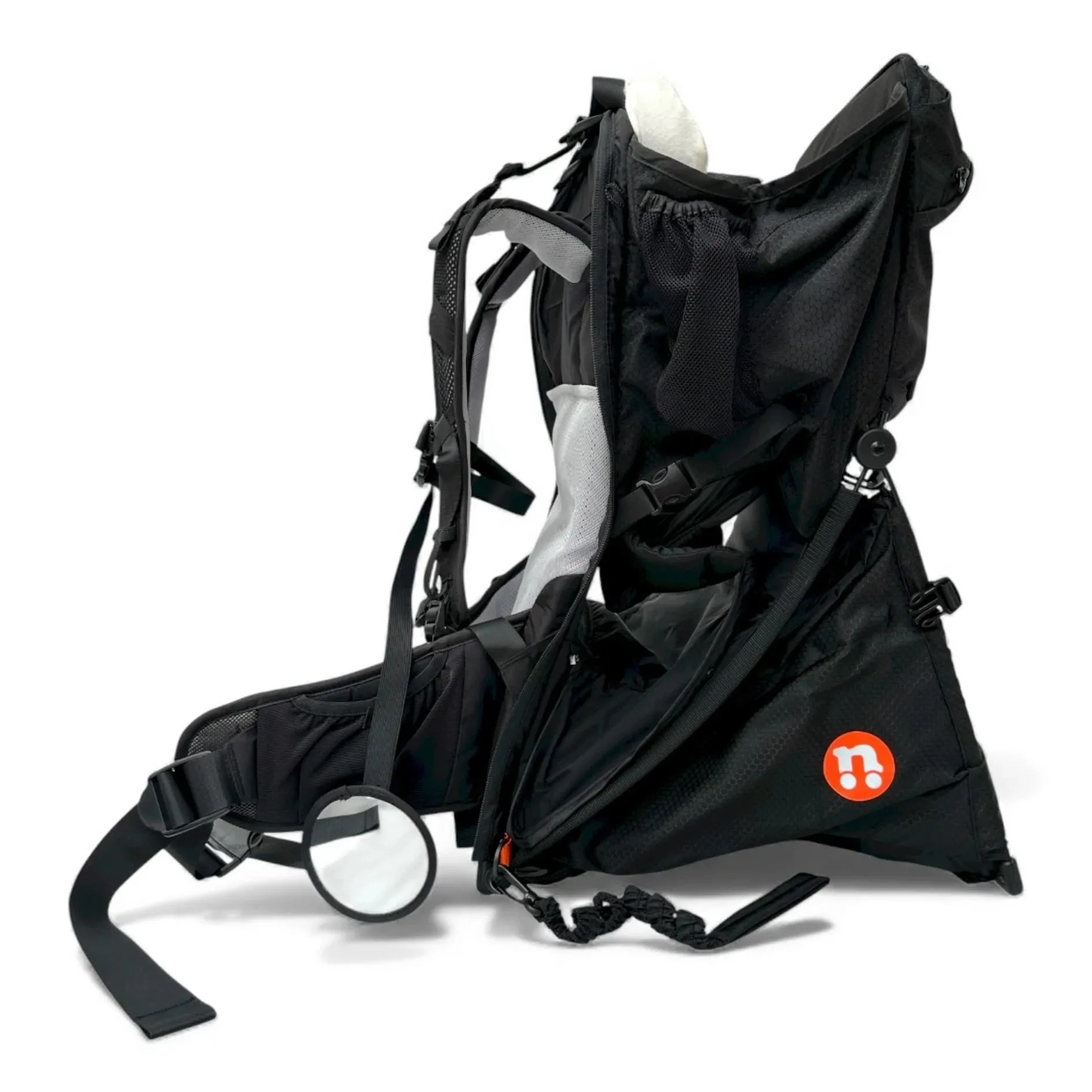
Out N About Nipper Trek Backpack Carrier
Who this guide is for
Best for
- Parents planning regular day hikes or moderate trails
- Families who want a lightweight carrier for travel and park walks
Not ideal for
- Parents who need a carrier for multi-day backpacking trips with heavy gear
- Those with children over 3 years old or above the carrier’s weight limit