Quick Answer
Choose a cooling dog bandana that fits snugly but not tight, is made from a material that cools when wet, and matches your dog's typical outdoor activity level. For most dogs, a lightweight bandana with an adjustable size option is the safest, most versatile pick.
How Cooling Bandanas Work
Cooling dog bandanas are made from a special material that activates when wet. You soak the bandana, wring out the excess, and let evaporation do the rest. As the water evaporates, it pulls heat away from your dog's neck, which helps lower their body temperature on warm days.
This makes them a lightweight alternative to cooling vests or harnesses. They're easy to pack, quick to re-wet, and don't add bulk. But they're not a substitute for shade, water, or avoiding midday heat—they're a comfort tool, not a cooling system.
Size and Fit Matter More Than You Think
A bandana that's too loose will slide off or fail to make good contact with your dog's skin, reducing its cooling effect. One that's too tight can rub, chafe, or even restrict breathing. That's why most cooling bandanas come in multiple sizes, and some have adjustable closures.
When you measure your dog's neck, add a little slack—you should be able to fit two fingers comfortably between the bandana and your dog's neck. If you're between sizes, size up rather than down, especially for puppies or dogs with thick fur.
Pattern and Style: More Than Just Looks
While any cooling bandana will function the same way, the pattern can affect visibility and practicality. A bright or high-contrast pattern makes your dog easier to spot on walks, especially in low light or grassy areas. Darker patterns may show dirt and drool more easily, which is worth considering if your dog is a heavy drooler.
Some patterns are designed to match a harness or collar from the same brand, which can give your dog a cohesive look. That's a nice bonus, but it shouldn't override fit or function.
Decision Rules: How to Choose Your Cooling Bandana
- Measure your dog's neck: Use a soft tape measure around the widest part of your dog's neck, then add two fingers of slack. Compare this to the brand's size chart. If between sizes, choose the larger size.
- Check the cooling mechanism: Look for bandanas that explicitly say they cool when wet. Avoid bandanas that are purely decorative if your goal is heat relief. Read the product description for the material and how to activate the cooling effect.
- Match the pattern to your dog's gear: If you want a coordinated look, pick a bandana that matches your dog's existing harness or collar pattern from the same brand. Matching patterns can make your dog easier to spot, but function should come first.
- Consider your dog's activity level: For short walks or light play, a basic cooling bandana is enough. For intense exercise, consider a cooling vest or harness that covers more surface area. A bandana is a good first step, but not a replacement for full-body cooling in extreme heat.
Cooling Bandana Options to Consider
-
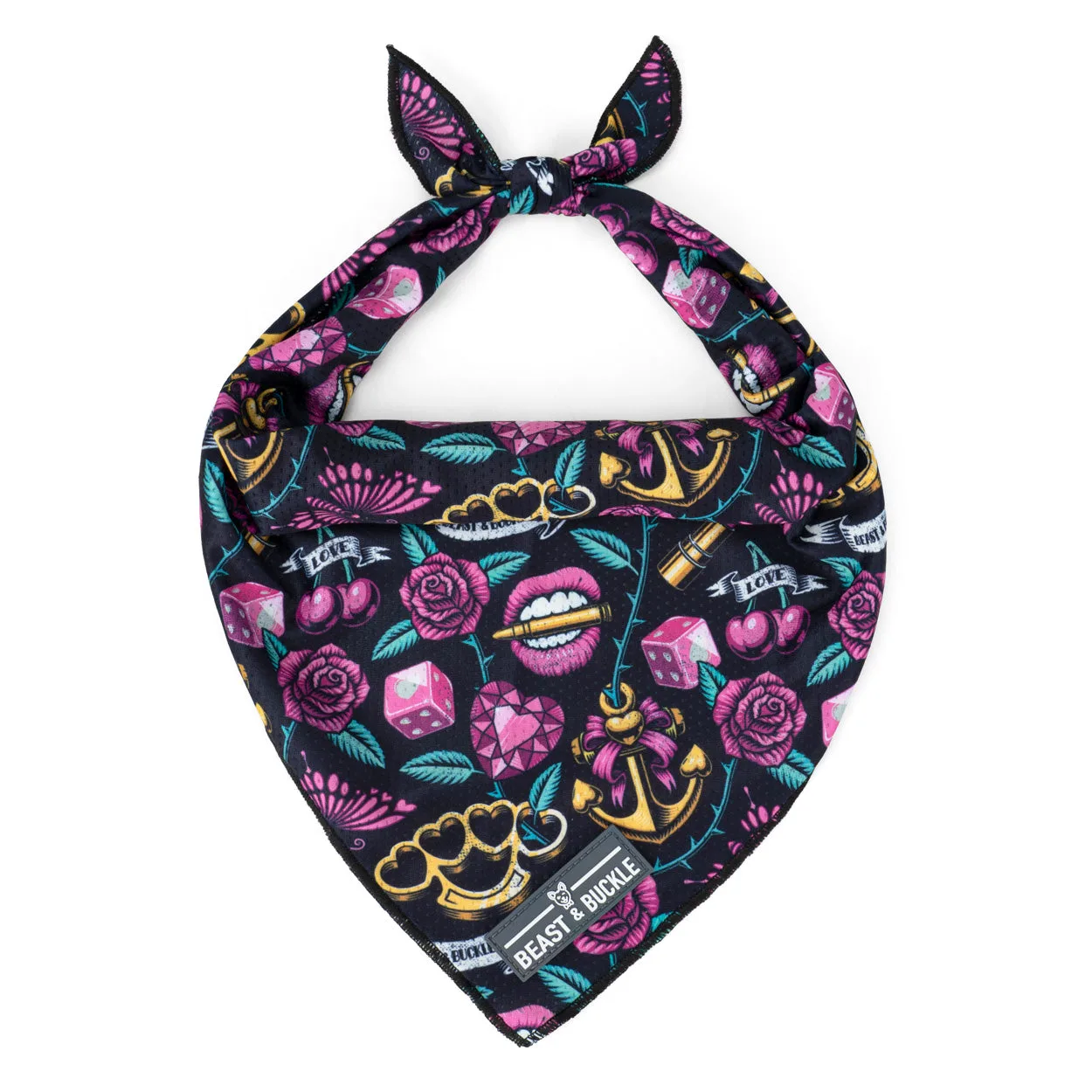
Girly Tattoo Cooling Dog Bandana: Made with a special material that cools when wet, this bandana features a Girly Tattoo pattern. The wet-activated cooling fabric helps keep your dog comfortable on warm walks, and the pattern adds a fun, feminine touch.
Girly Tattoo Cooling Dog Bandana
-
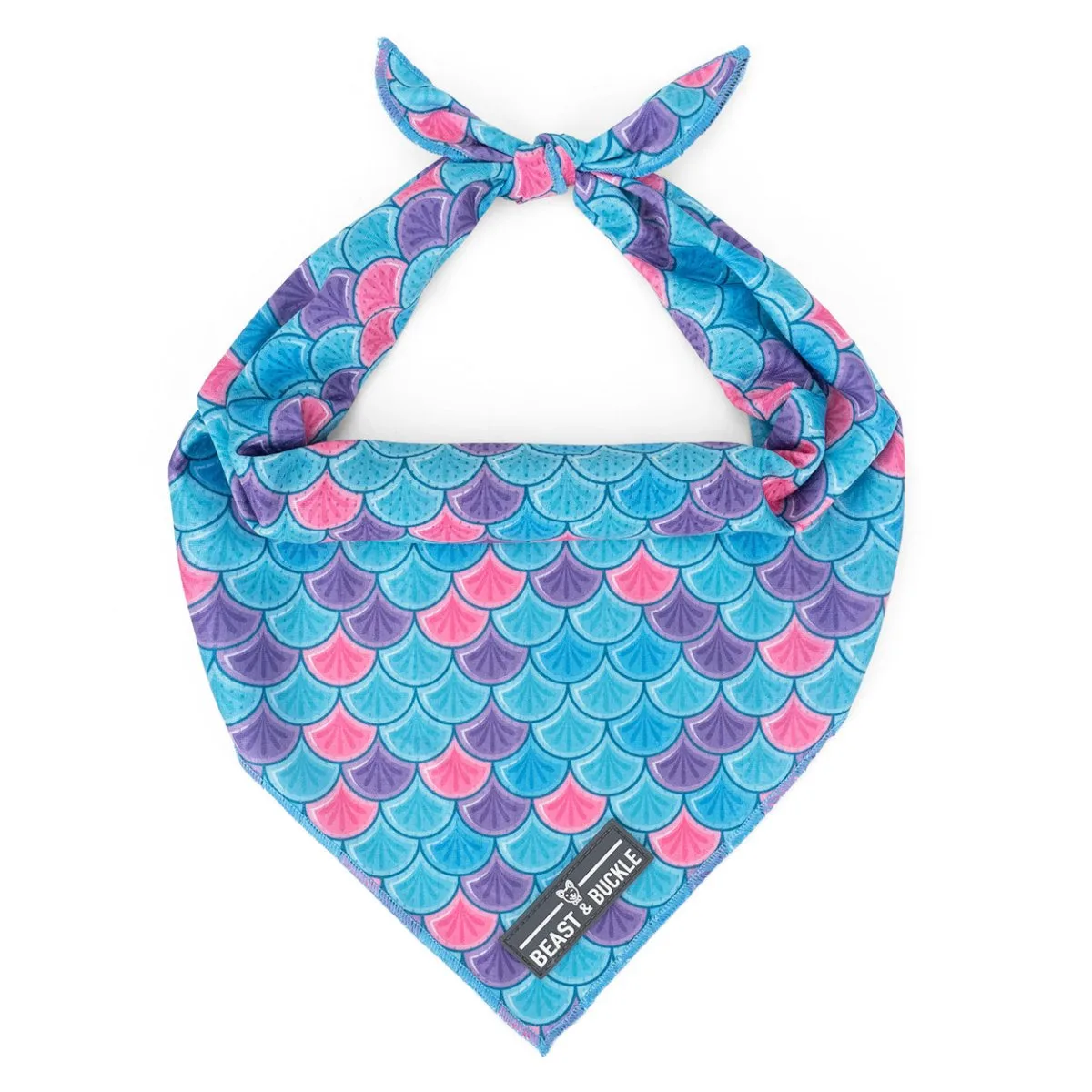
Mermaid Cooling Dog Bandana: Made with a special material that cools when wet, this bandana features a pattern from our Mermaid harness. If your dog already wears a Mermaid harness, this bandana matches it for a coordinated look while providing the same cooling benefit.
Mermaid Cooling Dog Bandana
Who Should Choose a Cooling Bandana
Best for
- Dogs that overheat quickly on short walks or during light outdoor play
- Owners who want a lightweight, easy-to-pack cooling option for travel or quick outings
Not for
- Dogs with thick, heavy coats that need full-body cooling during intense exercise
- Dogs that chew or swallow fabric accessories, as bandanas can be a choking hazard