Quick Answer
For a custom folder, prioritize blade steel that balances edge retention and toughness, then choose a handle material and grip texture that match your carry and use habits. Deep carry clips and integral builds add comfort and durability, but cost more.
Blade Steel: What You Actually Get
Blade steel determines how long the edge lasts, how easy it is to sharpen, and how well it resists corrosion. You don't need to be a metallurgist, but knowing a few basics helps you match the steel to your tasks.
CPM S45VN is a premium stainless steel that balances edge retention, toughness, and corrosion resistance. It's a solid all-rounder for everyday carry and most cutting jobs, and it takes a fine edge without being overly brittle.
Heat treat matters as much as the steel itself. A blade heat treated to 58-60 HRC offers a good combination of hardness and strength; harder isn't always better because very hard blades can chip more easily.
Handle Material and Grip: Comfort Meets Control
The handle is what you actually hold, so material and texture directly affect comfort and control. Aluminum handles are lightweight, corrosion-resistant, and can be anodized in different colors or coated for extra durability.
Integral construction means the handle is machined from a single piece of material rather than assembled from separate liners and scales. This reduces parts, adds stiffness, and often makes the knife slimmer and lighter.
Textured grip is not just cosmetic. Patterns like grenade stippling or other aggressive textures give you a secure hold even with wet or gloved hands, which matters if you use the knife for hard work.
Carry and Lock: The Daily Experience
A deep carry pocket clip positions the knife lower in your pocket, so it doesn't scream for attention and stays out of the way. This is a big deal if you carry in an office or want a low-profile look.
The lock type affects how you open and close the knife. An integral button lock is a modern design that is strong and easy to use with one hand, though it may feel different from a traditional liner or frame lock.
Weight and closed length are practical numbers to check. A lighter folder disappears in the pocket, but a slightly heavier one may feel more substantial in hand. Think about how long you'll carry it and what you'll cut.
Decision Rules for Choosing a Custom Folder
- Blade steel choice: Choose CPM S45VN if you want a proven stainless steel that balances edge retention, toughness, and corrosion resistance for everyday cutting. If you only cut tape and packages, a simpler steel might save money, but for general use S45VN is a safe pick. Match the steel to your cutting tasks, not to the most impressive name.
- Handle material and construction: Pick an aluminum integral handle if you want a light, stiff, and corrosion-resistant frame without extra parts. If you prefer a more traditional feel or want to customize scales later, a non-integral handle might be better. Integral handles reduce weight and parts, but they limit aftermarket customization.
- Grip texture: Choose a textured grip like grenade stippling if you often use the knife with wet or gloved hands. If you carry in a pocket and rarely do heavy work, a smoother handle may be more comfortable and less abrasive. Texture helps control but can feel rough against the skin over long carry.
- Pocket clip: Choose a deep carry pocket clip if you want the knife to sit low in your pocket and stay discreet. If you prefer quick access from a higher carry position or use a belt sheath, a standard clip or no clip may suit you better. Deep carry clips are about discretion, not faster draw.
- Blade length and weight: Pick a 3.2” to 3.5” blade if you want a balance of cutting ability and legal carry in most areas. Lighter knives (under 4 oz) are easier to carry all day, but a slightly heavier blade can feel more substantial for tougher cuts. Check local laws before choosing a blade length.
Two Custom Folders to Consider
-
Custom Kwaiken Folder - Shipwreck Camo Quartz, Anodized Black Handle, Black Nitride Blade, Textured Grip, Deep Carry Pocket Clip: 3.2” CPM S45VN blade, nitride coated, 7075-T6 aluminum integral handle with Type III hard coat anodizing, 3.6 oz total weight, hand formed titanium deep carry clip. The nitride coating reduces glare and adds corrosion resistance, while the hard coat anodizing helps the handle resist wear; the titanium clip keeps the carry low and secure.
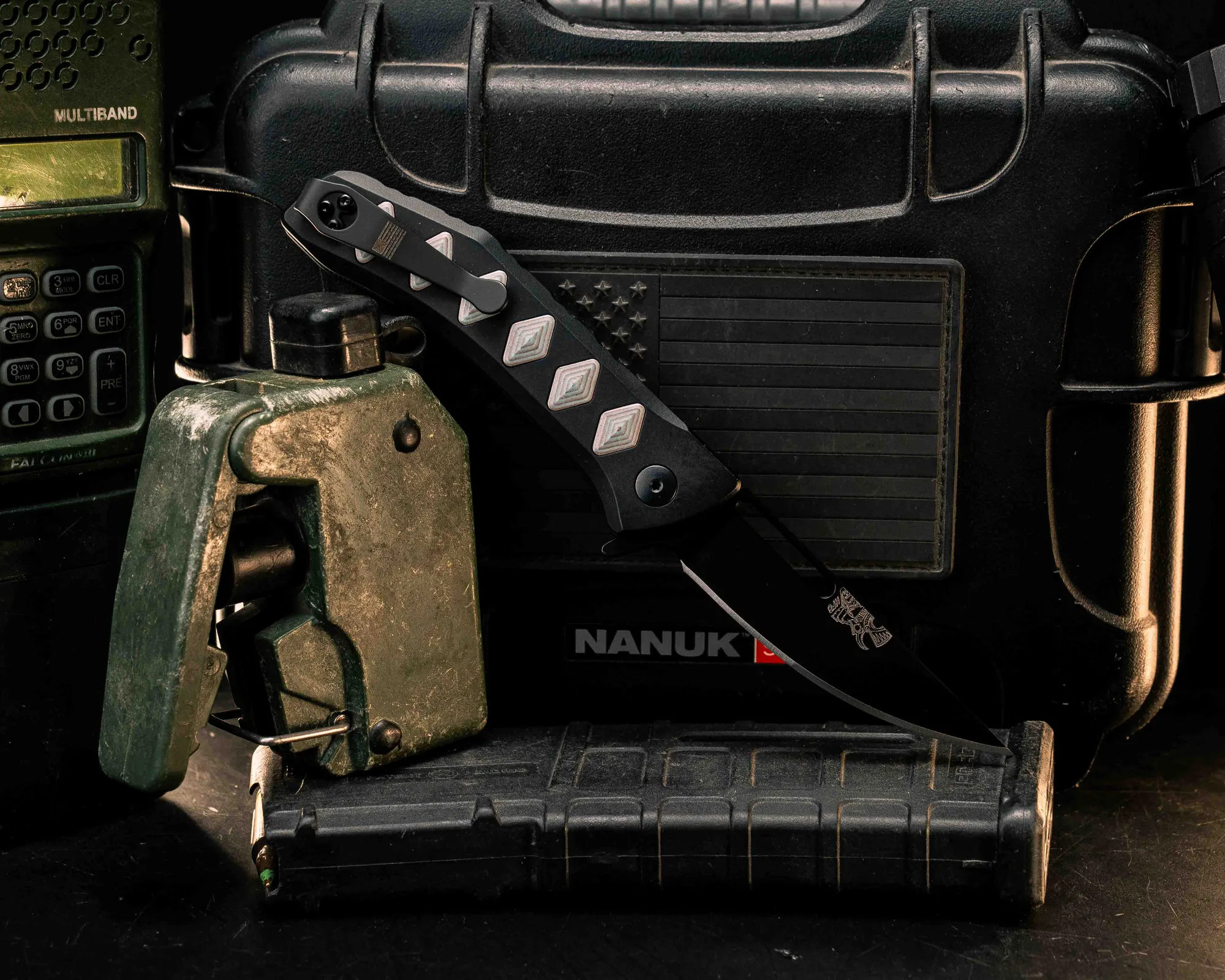
Custom Kwaiken Folder - Shipwreck Camo Quartz, Anodized Black Handle, Black Nitride Blade, Textured Grip, Deep Carry Pocket Clip
-
Disaster Folder- Anodized Gray Handle, Black Nitride Blade, Grenade Stippled Grip, Deep Carry Clip: 3.5” CPM S45VN blade, nitride coated, 7075-T6 aluminum monolithic handle with grenade stippled grip, 4 oz total weight, hand formed titanium deep carry clip. The longer blade gives a bit more cutting edge, and the grenade stippled texture provides extra grip in slippery conditions; the 4 oz weight still feels light for daily carry.
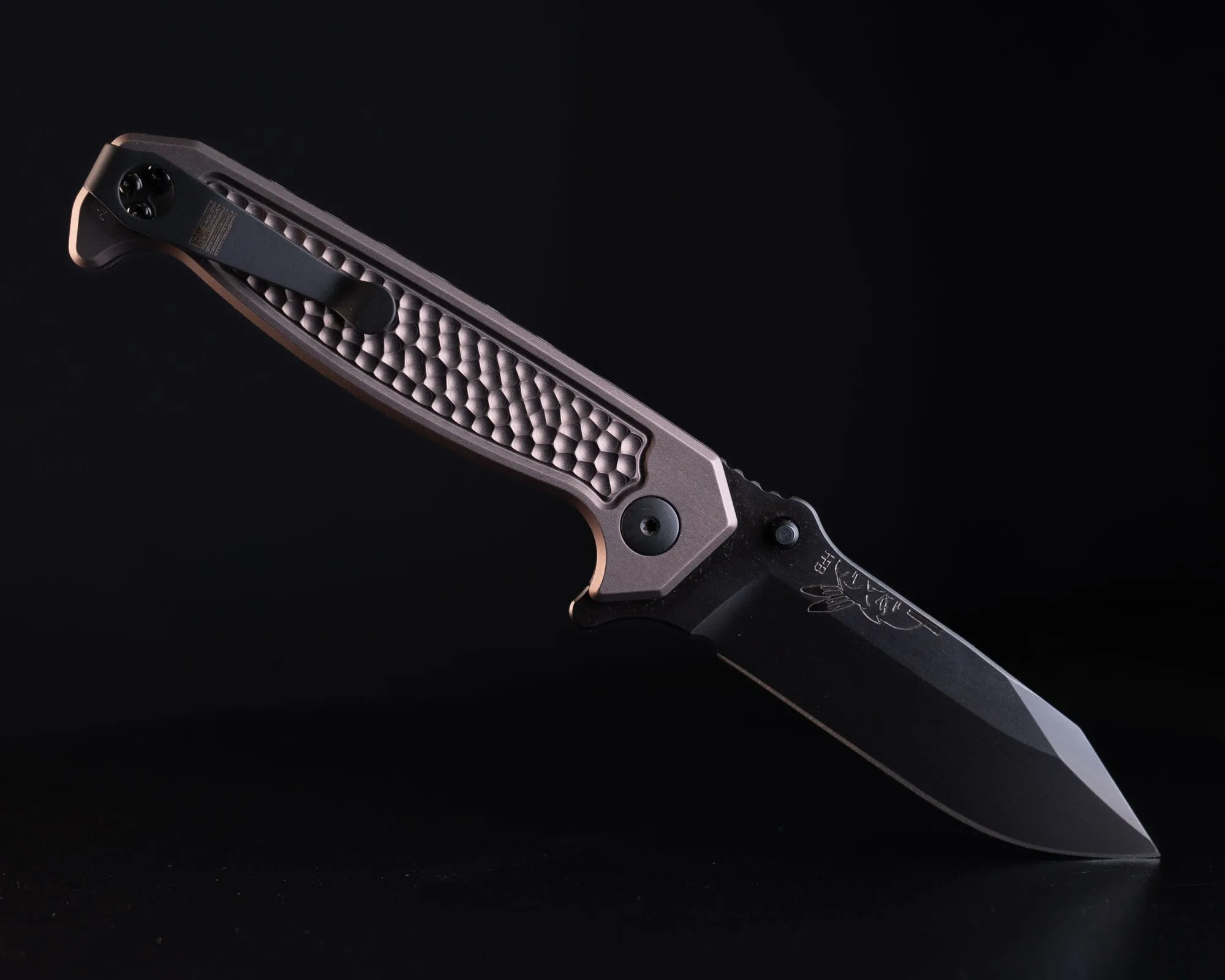
Disaster Folder- Anodized Gray Handle, Black Nitride Blade, Grenade Stippled Grip, Deep Carry Clip
Who Should Buy What
Best for
- Everyday carriers who want a low-profile, deep carry clip and a light, corrosion-resistant handle.
- Users who need a reliable stainless steel blade for general cutting without frequent sharpening.
Not for
- Collectors who want traditional handle materials like wood or micarta, since these folders use anodized aluminum.
- Heavy-duty users who need a very long blade or a more aggressive chopping tool; a folder is not a fixed blade.