Quick answer
Look for a coloring book with large, simple outlines, thick pages, and a theme your toddler already loves—like fruits and vegetables—to keep them engaged without frustration.
Why page size and paper thickness matter
Toddlers have developing fine motor skills, so they need pages that are easy to hold and color without tearing. A standard 8.5 x 11 inch book is a good size, but check that the paper is sturdy enough to handle crayon pressure and occasional crumpling.
Thinner pages can rip easily, leading to frustration. A coloring book with at least 28 pages gives variety without overwhelming a young child.
Themes that support early learning
Toddlers learn best when they can connect the activity to familiar objects. A coloring book featuring fruits and vegetables, for example, lets them practice color recognition while associating each picture with a real-world item they see at mealtime or in the grocery store.
Look for books that include the names of the objects in multiple languages if you want to introduce basic vocabulary naturally. This turns a simple coloring session into a low-pressure language lesson.
Safety and ease of use
Choose a coloring book with rounded corners and a binding that lies flat so pages don't curl. Avoid books with small staples or sharp edges. For toddlers, the book should be lightweight and easy to carry from room to room.
Pair the book with chunky, non-toxic crayons that fit small hands. Avoid markers or thin pencils that require more control than a toddler typically has.
How to choose: decision rules
- Age range: Choose a coloring book designed for ages 18 months to 3 years. Look for simple, thick outlines (not tiny details) that a toddler can color without going completely outside the lines.
- Page count and variety: Aim for 20–30 pages. Too few and your toddler loses interest quickly; too many and the book becomes heavy. A 28-page book offers a good balance of repetition and novelty.
- Theme and engagement: Pick a theme your child already shows interest in—animals, foods, vehicles, or shapes. A fruit-and-vegetable theme works well because toddlers encounter these items daily, making the coloring activity more meaningful.
- Language and learning bonus: If you want to add a language element, choose a book that labels the pictures in one or more languages. This turns coloring into a passive vocabulary-building activity without any extra effort. For an extra learning boost, choose a book like My First Coloring Book that includes English, French, and Spanish labels.
Product spotlight
-
My First Coloring Book-Fruits&Vegetables(28 pages): 28 coloring pages featuring fruits and vegetables with names in French, English, and Spanish. This gives toddlers a familiar theme and introduces early vocabulary in multiple languages, making coloring time both fun and educational.
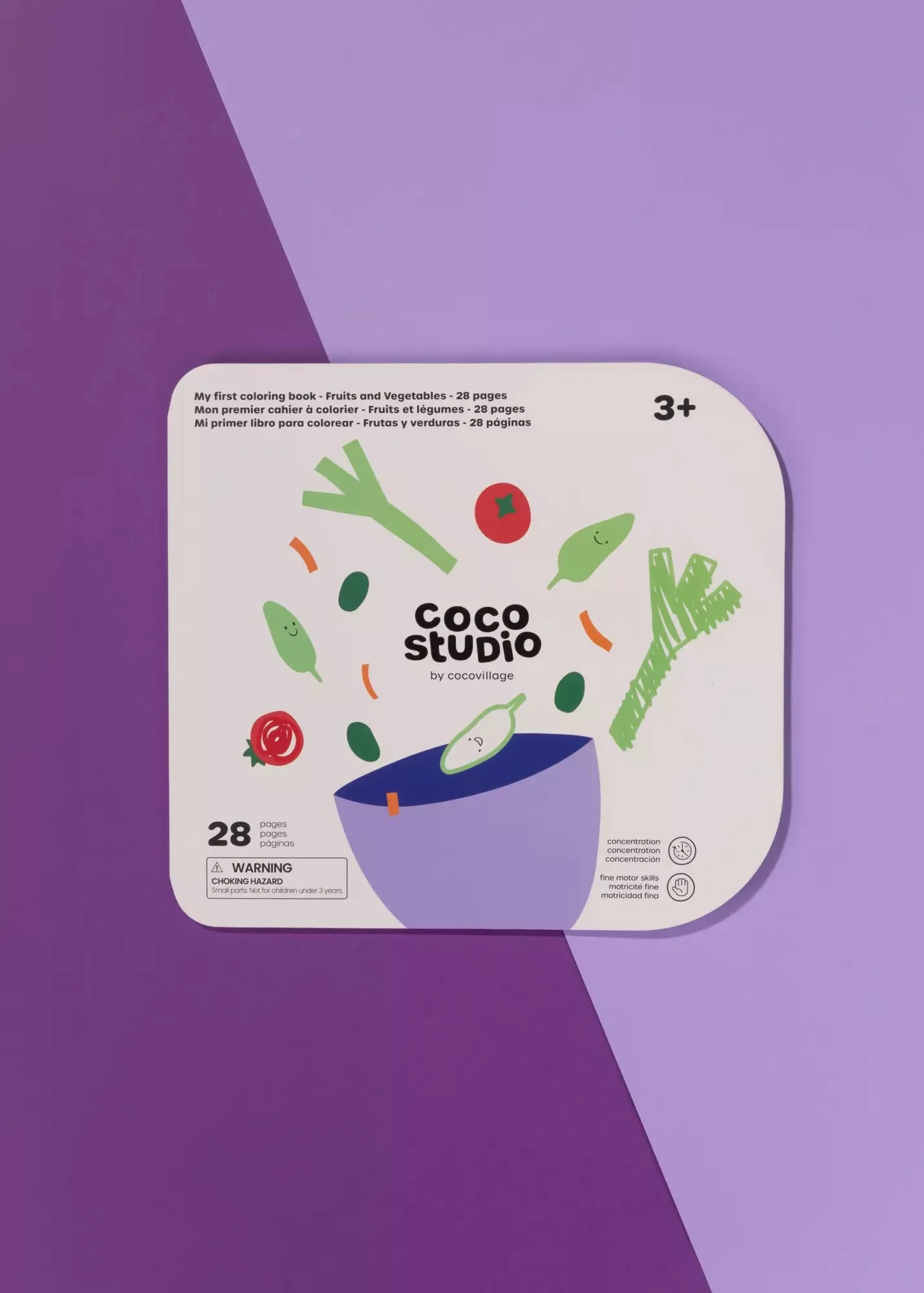
My First Coloring Book-Fruits&Vegetables(28 pages)
Who this is for
Best for
- Toddlers ages 18 months to 3 years who are just starting to color
- Parents who want a simple, mess-free art activity that also introduces basic vocabulary
Not for
- Older children (ages 4+) who need more detailed illustrations or complex scenes
- Parents looking for a washable or reusable coloring book (e.g., water-reveal or mess-free options)