Quick answer
For most car camping and general camp chores, a fixed blade knife with a blade length of 3 to 5 inches and a full tang is your best bet. If you prioritize lightweight carry for hiking or backpacking, consider a smaller, thinner blade around 3 inches. For heavy-duty tasks like batoning wood, look for a thicker spine and a handle that fills your hand.
Blade length and camp tasks
A 3- to 4-inch blade handles food prep, rope cutting, and light carving without being cumbersome. A 5-inch blade adds leverage for splitting small kindling or slicing larger pieces of meat. Anything over 6 inches becomes unwieldy for precision work and adds unnecessary weight in a pack.
Match the blade to your primary activity: a compact knife (3–4 inches) suits backpackers who value ounces, while a 4.5–5 inch blade works well for base-camp cooking and shelter building. The trade-off is that longer blades are harder to control for detail cuts.
Handle and grip comfort
A handle that is too short or too slick can cause blisters or loss of control, especially in wet conditions. Look for textured scales (G10, Micarta, or rubberized) and a shape that fills your palm without feeling bulky. A full tang adds strength and shifts the balance forward, which helps with chopping motions.
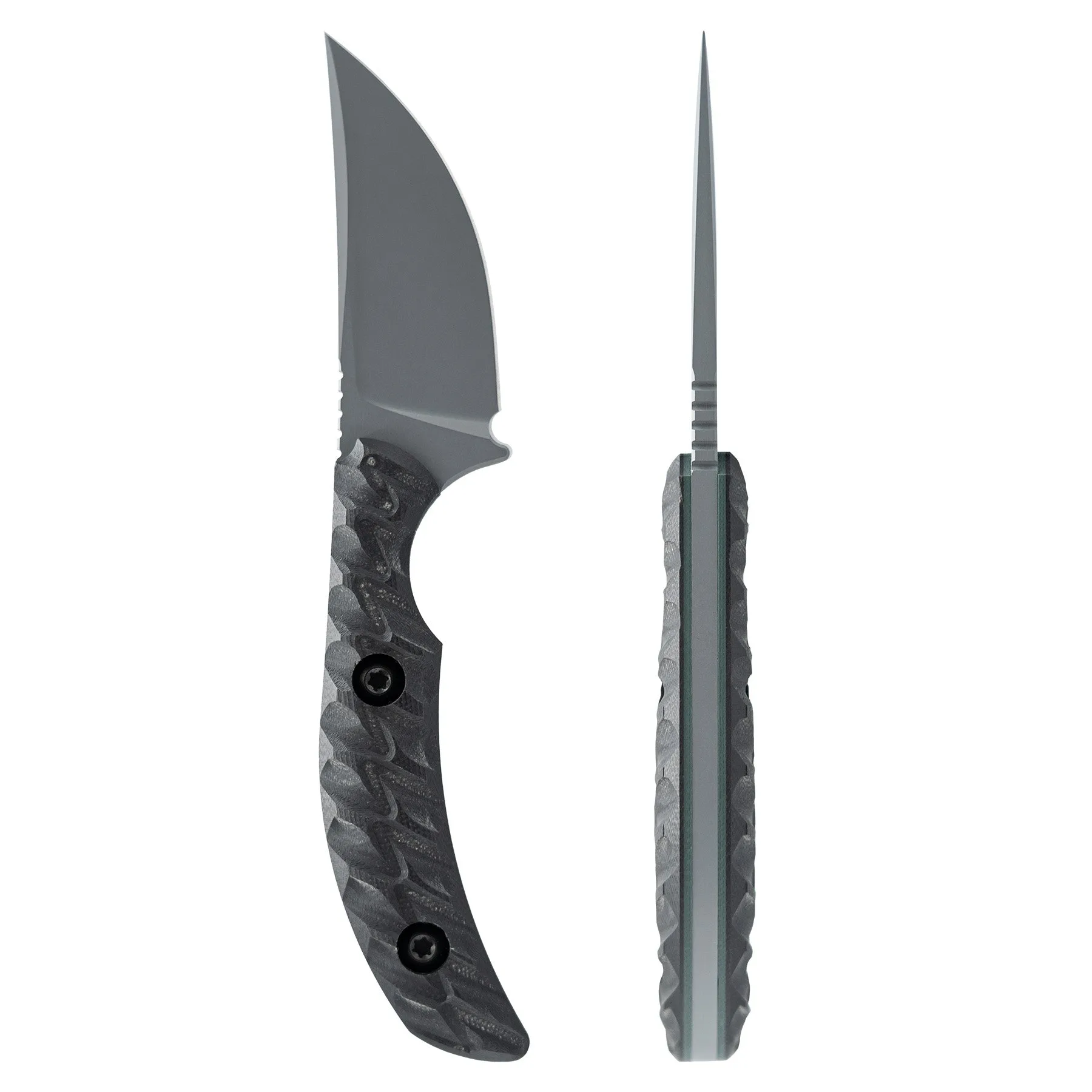
Try to match the handle length to your glove size. If you wear a large glove, a handle under 4 inches will crowd your fingers. If you have smaller hands, a thick handle can feel clumsy. The Barrow from Toor Knives is a good example of a handle designed for control at the front half of the blade, which helps during detailed cutting tasks.
Steel and edge retention
Stainless steels like 14C28N or S35VN resist rust and hold an edge well, making them ideal for humid or coastal camping. Carbon steels like 1095 or O1 take a sharper edge and are easier to sharpen in the field, but require more maintenance to prevent corrosion.
If you plan to use the knife for food prep, a stainless blade is more practical because it won't react with acidic foods. For bushcraft tasks where you'll sharpen frequently, carbon steel offers a better balance of toughness and edge retention. The trade-off is that carbon steel needs oiling and drying after each use.
Decision rules for choosing a camping fixed blade
- Rule 1: Blade length vs. task range: Under 4 inches for light carving and food prep; 4–5 inches for all-around camp chores; over 5 inches for heavy wood processing. Longer blades add weight and reduce control for fine work. Stick with 3–5 inches for 90% of camping scenarios.
- Rule 2: Full tang vs. partial tang: Full tang provides maximum strength for batoning and prying. Partial tang saves weight but is less durable. For camping, full tang is the safer bet unless you are strictly doing light cutting. Choose full tang unless weight is your only priority.
- Rule 3: Steel choice based on environment: Stainless for wet, coastal, or food-prep use. Carbon for dry conditions and when you want easy field sharpening. Carbon requires more care but can take a finer edge. Match steel to your camp climate and maintenance habits.
Fixed blade knives to consider
- STR S - Phantom Grey: The Toor Knives STR S is a standout model in the STR blade series, engineered for those seeking an ultra-compact self-defense and everyday carry tool. In today's world, where personal safety and quick accessibility are paramount, the importance of a small, concealable blade cannot be understated. The STR S is thoughtfully designed to provide peace of mind without compromising on convenience, ensuring it's always… If you want a fixed blade that disappears on your belt or in a pack pocket, the STR S's compact size makes it easy to carry on day hikes or as a backup blade. Its small footprint means it won't get in the way during other camp activities.
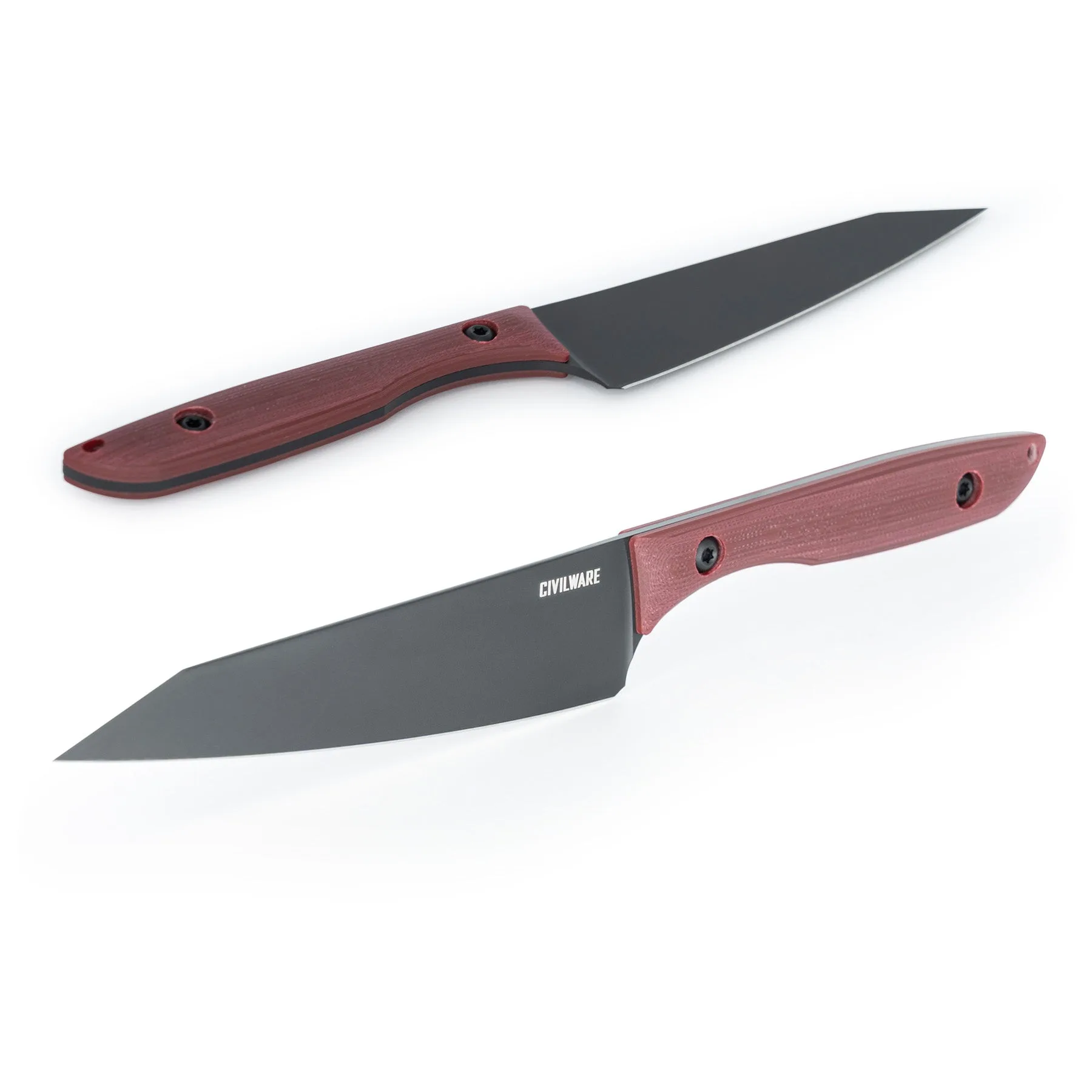
- Petty - Fire Red: Precision cutting and handling in the home or afield. The CIVILWARE Petty [LTD] is slightly larger than a standard paring knife and designed for a wide range of tasks, such as slicing, dicing, trimming meat, cutting vegetables - The Petty [LTD] balances the control of a paring knife with greater versatility of a larger chef's knife . A great everyday carry choice for kitchen, camp, or bbq - this knife can handle it… For camp cooks who want a dedicated food-prep blade, the Petty offers the control of a paring knife with the reach of a small chef's knife. It's a smart choice if you do a lot of meal prep at the campsite and want a knife that stays sharp on vegetables and meat.
Which knife fits your camp style?
Best for
- Backpackers and ultralight campers who need a compact, lightweight fixed blade for cutting cordage and food
- Car campers and base-camp cooks who want a dedicated food-prep blade with good edge control
Not for
- Heavy bushcrafters who baton large logs regularly (look for a thicker, longer blade with a full tang)
- Hunters who need a skinning-specific blade profile (a drop-point or trailing-point design may serve better)