Quick answer
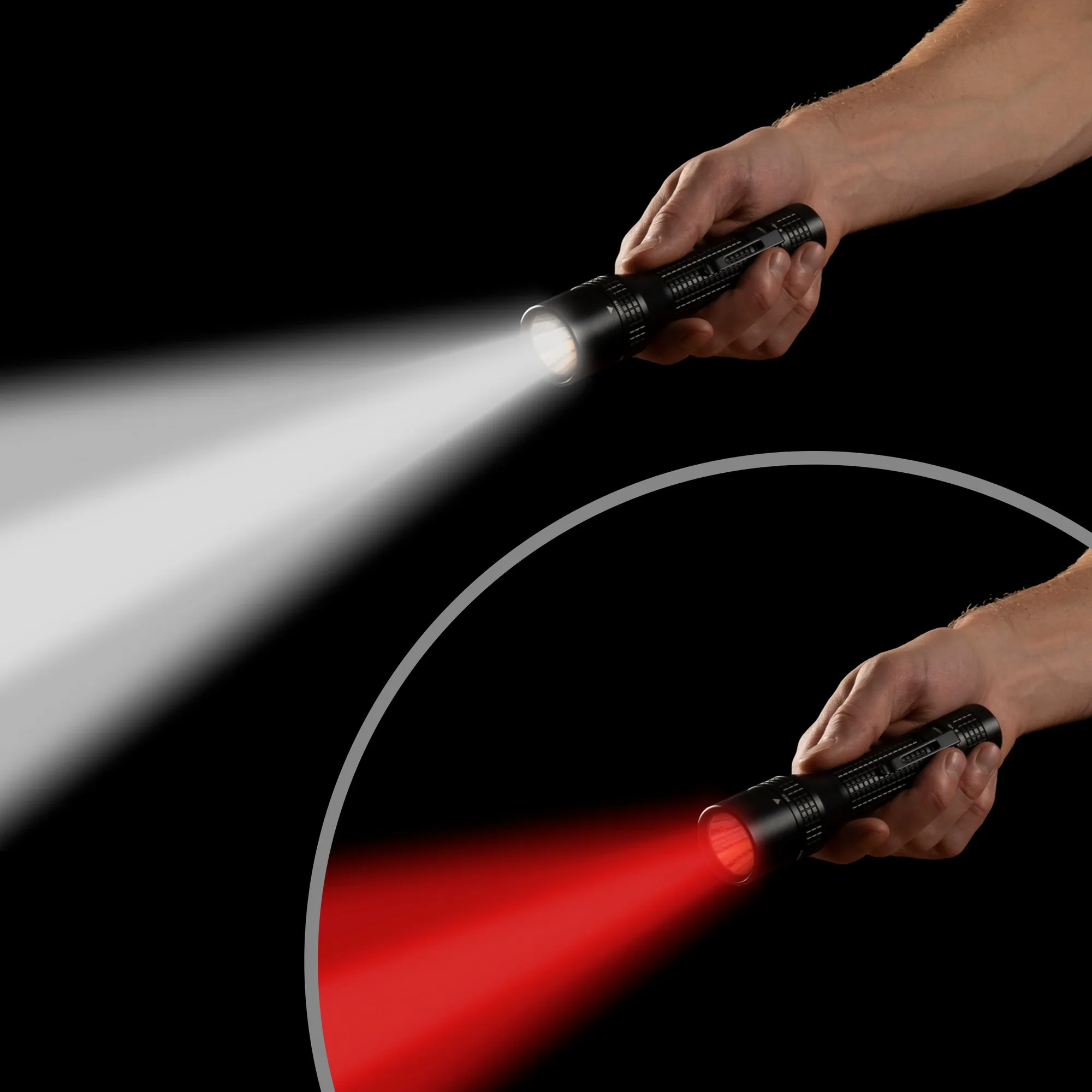
Choose a flashlight by starting with the task, not the lumen number. For everyday carry, prioritize a light that disappears in a pocket or bag, has a low mode for close work, and recharges over USB. For home or outdoor use, pick a larger body with higher output and a red or low mode to protect night vision. If you want one light that covers both, a rechargeable dual-color model like the INOVA T8R gives you a bright white beam plus a red beam without carrying two lights.
Start with the job, then pick lumens
Lumens measure total light output, but they do not tell you how far or how wide the beam throws. A 100-lumen light focused into a tight spot can be more useful for checking a dark corner than a 500-lumen flood that lights up everything at once. Match output to distance: close-range tasks like reading a label or finding a keyhole need 5–50 lumens; walking a dog or navigating a trail needs 100–300; searching a yard or signaling needs 500 or more.
The INOVA T8R is rated at 762 lumens, which puts it in the high-output range for outdoor and search use. That number matters less than the fact that it also has lower modes, so you are not forced to blast full brightness every time you click it on.
Understand beam modes before you buy
Beam modes are the real usability feature. A single-mode light is simple but often too bright for close work. A multi-mode light lets you step down. Look for a low mode under 50 lumens, a medium around 100–300, and a high mode for distance. Strobe and SOS are secondary; they are nice for emergencies but should not be the reason you pick a light.
Color modes matter for specific jobs. A red beam preserves night vision, which helps if you are checking on a sleeping child, stargazing, or moving around a campsite without blinding yourself or others. The T8R offers both a white and a red beam, so you can switch based on the situation instead of covering the lens with your hand.
Rechargeable vs battery: the honest trade-off
Rechargeable lights save money over time and are convenient for daily use, but they depend on a charging routine. If you forget to charge, you are dark. Battery-powered lights trade convenience for readiness: you can keep spare CR123 or AA cells in a drawer for years and swap them in seconds.
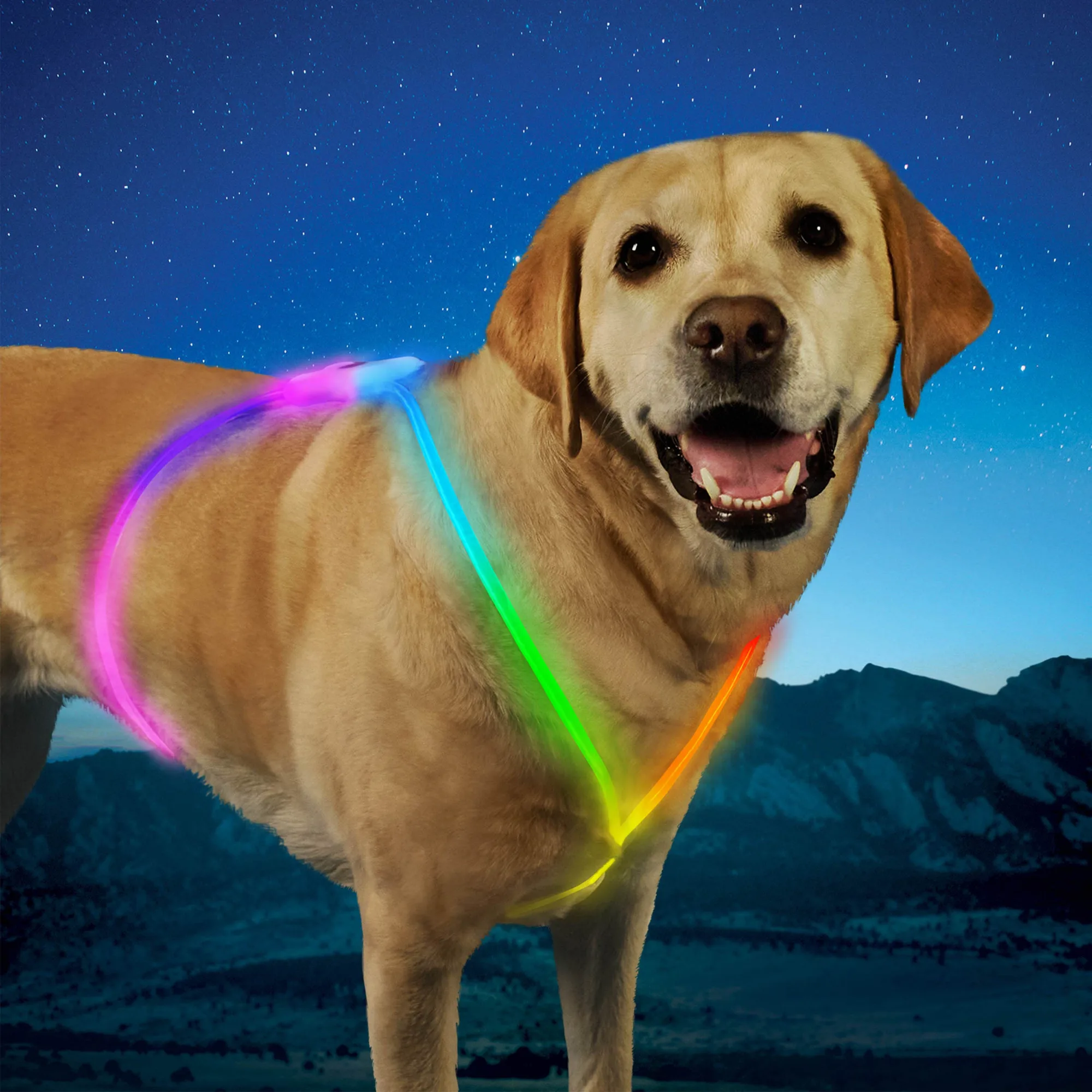
Some lights, including the INOVA T8R, are rechargeable but can also run on two non-rechargeable CR123 batteries. That dual option is the most flexible setup: recharge on a normal week, carry spare batteries for travel or emergencies. If you want the simplest possible routine, a USB-C rechargeable light like the NiteHowl Lite Suit is easier to top up from a laptop or power bank, but it is designed for visibility on pets rather than as a handheld task light.
Size and carry method decide what you actually use
The best flashlight is the one you have with you. For everyday carry, look for a body under about 4 inches and under 3 ounces, with a pocket clip or a lanyard hole. If it is bigger than that, it will live in a bag, not your pocket. For a glovebox or kitchen drawer, size matters less than a tail switch that is easy to find in the dark.
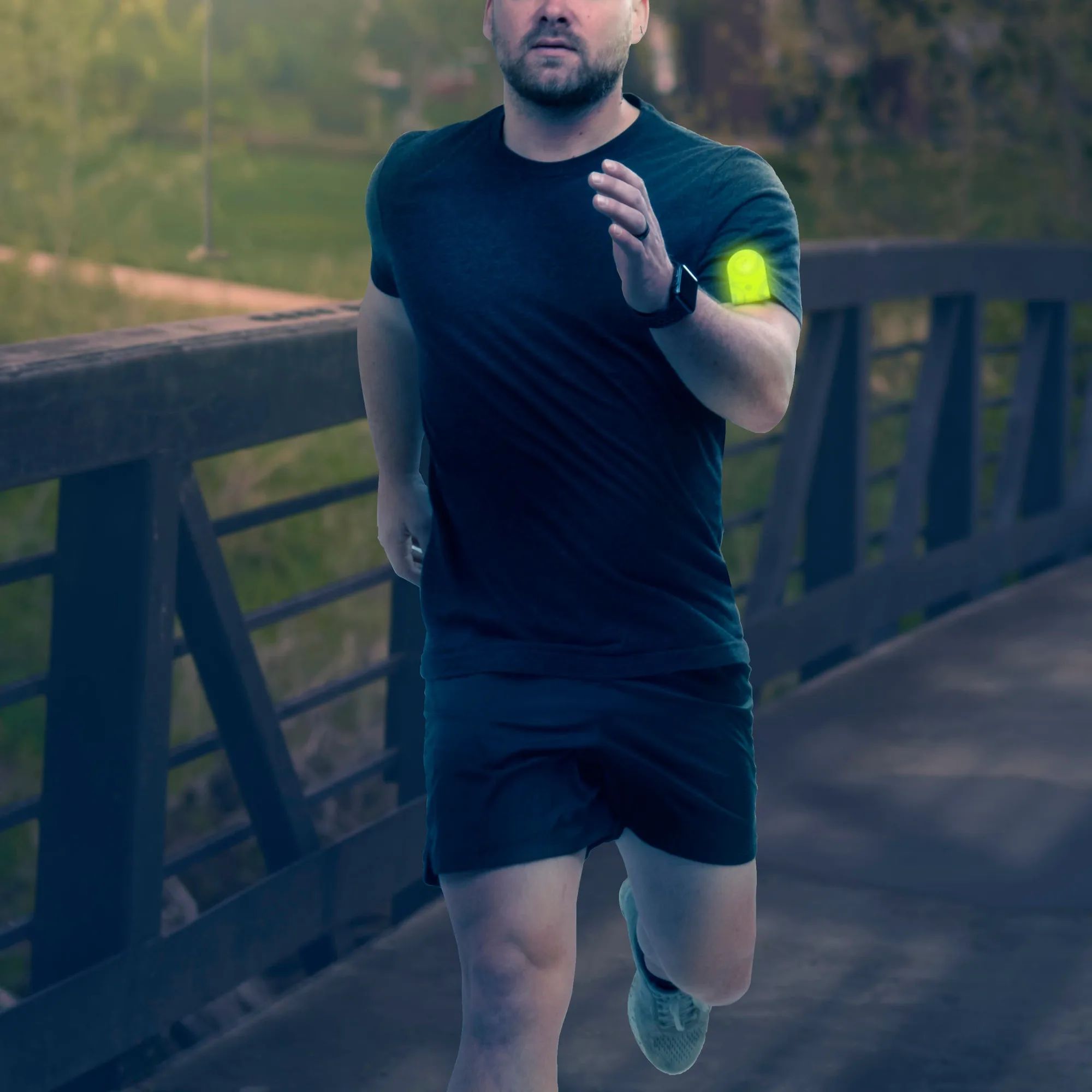
Be honest about how you carry. A light with a magnetic tail cap can stick to a car hood or fridge while you work, but it also collects keys and coins in a pocket. A push-button activated light like the TagLit Magnetic LED Marker is not a primary flashlight, but it shows how small magnetic lights can be for marking a bag or jacket. For a primary light, prioritize a switch you can operate with one hand.
Decision rules for your next flashlight
- Rule 1: Buy for the darkest task you actually do: If your darkest regular task is walking the dog or finding a parking spot, a 100–300 lumen light with a low mode is enough. If you need to search a field or identify something at 100 yards, step up to 500+ lumens with a focused beam. Write down your two most common tasks before you compare specs.
- Rule 2: Require a low mode under 50 lumens: A light that only has a high mode will blind you during close work and drain batteries faster. A low mode is the single most useful feature for everyday carry. If the mode list does not include a low output, keep looking.
- Rule 3: Choose rechargeable only if you will charge it: Rechargeable lights are cheaper to run, but they fail when forgotten. If you travel or keep a light in a car, pick a model that also accepts disposable batteries, or keep a spare battery-powered light as a backup. Match the power source to your habits, not to the spec sheet.
- Rule 4: Let carry method set the size limit: Pocket carry: under 4 inches and 3 ounces. Bag or glovebox: up to 6 inches is fine. If a light is too big for your chosen carry method, you will leave it at home. Measure your pocket or pouch before you buy.
- Rule 5: Add a red or low mode if you work in the dark around others: Red light preserves night vision and is less disruptive for sleeping children, campsite neighbors, or stargazing. A dual-color light removes the need to carry two flashlights. If you regularly move around at night without wanting to wake anyone, prioritize a red beam.
Product facts that affect your choice
- INOVA® T8R® PowerSwitch™ Rechargeable Dual Color Flashlight: Rechargeable, dual-color 762 lumen tactical flashlight with a bright white beam and a red beam that preserves night vision; features PowerSwitch technology, five modes, and a machined aluminum body; can also run on two non-rechargeable CR123 batteries. This is the flexible option: five modes cover close work and distance, the red beam protects night vision, and the CR123 fallback means you are not stranded if you forget to charge.
- NiteHowl™ Rechargeable Lite Suit - Disc-O Select™: Wrapping, cut-to-size lite suit with rapid USB-C charging, three selectable colors, and color-changing Disc-O mode for full-body illumination on pups big and small. If your main need is being seen at night rather than seeing far, this is a visibility tool, not a replacement for a handheld flashlight. USB-C charging keeps the routine simple.
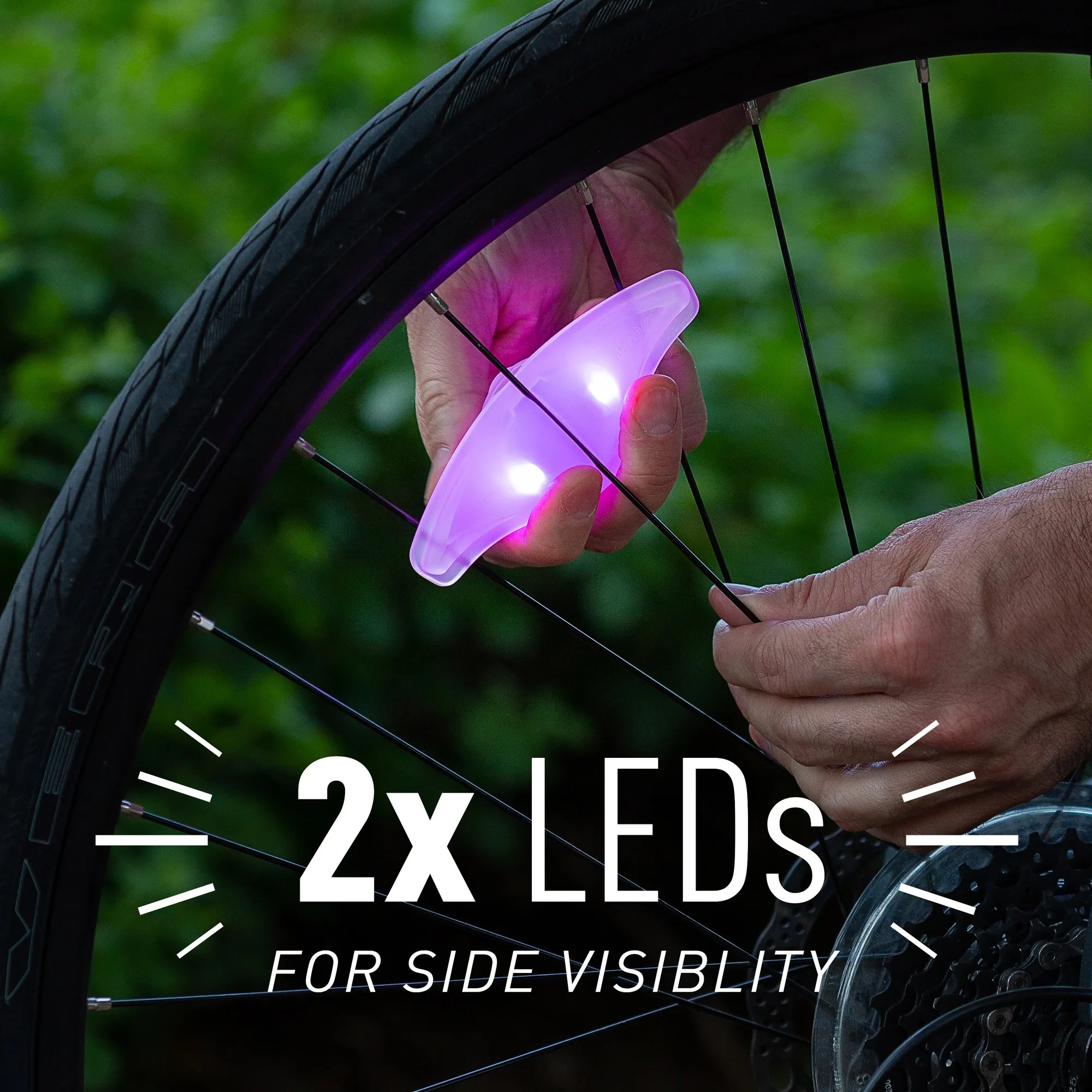
- SpokeLit® Rechargeable Wheel Light - Disc-O Select™: Rechargeable wheel light with choose-your-color Disc-O Select technology, push-button activation, weather resistance, and secure attachment to most bike spokes. Side visibility on a bike is a different job from lighting your path. This is a complement to a handlebar light, not a substitute.
- TagLit™ Rechargeable Magnetic LED Marker: Rechargeable magnetic LED marker with push-button activation and a powerful magnetic closure that attaches to fabric, hats, and backpacks. Useful as a small marker light for a bag or jacket when you want to be seen, but it is not built for long-throw illumination or close task work.
Who should buy which type
Best for
- Everyday carry users who need a small, rechargeable light with a low mode for close work
- Homeowners who want one light for power outages, repairs, and occasional outdoor use
- Campers and dog walkers who need a red beam to preserve night vision
- Cyclists who want to be seen from the side and are willing to add a small wheel light to their setup
Not for
- Buyers who want a single disposable-battery light and never want to think about charging
- Divers or cavers who need a purpose-built waterproof or helmet-mounted light
- Anyone who needs a light with a specified beam distance or runtime that is not published
- Shoppers looking for a weapon-mounted light with a remote pressure switch