Quick answer
Choose a floor cleaner based on your hygiene requirements, floor material, and cleaning volume: disinfectant sachets for spotless, no-rinse sanitation; bactericidal concentrate for heavy-duty degreasing; or a general-purpose cleaner for routine maintenance.
Why the right floor cleaner matters for your business
Your floors take a daily beating from foot traffic, spills, and dirt. A cleaner that matches your floor type and hygiene level keeps surfaces safe, extends floor life, and saves labour time. Picking the wrong product can leave residues, damage seals, or fail to kill germs where it counts.
Disinfectant vs. bactericidal vs. general-purpose: what’s the difference?
Disinfectant floor cleaners are tested to kill a broad spectrum of bacteria and viruses. They are ideal for healthcare, food prep areas, and spaces that need verified hygiene. Bactericidal cleaners focus on bacteria and often include degreasers for greasy floors like kitchens. General-purpose cleaners remove everyday dirt and leave a fresh scent but do not disinfect.
Decision rules for choosing a floor cleaner
- Hygiene standard needed: If you require a verified disinfectant (e.g., for healthcare or food contact surfaces), choose a product tested to EN 13697 or BSEN 1276. If general bacteria control is enough, a bactericidal cleaner works. If you only need cleaning and scent, use a general-purpose product.
- Floor material compatibility: Check the cleaner’s approved surfaces. For sealed wood, vinyl, ceramic, concrete, or stainless steel, a disinfectant like Soluclean is safe. For unsealed wood or natural stone, avoid high-pH cleaners unless specifically approved. If your floor type is not listed, test on a small hidden area first.
- Cleaning volume and storage: For high-traffic areas or multiple cleaning stations, 5-litre concentrates offer better value per use. For occasional spot cleaning or small spaces, sachets reduce waste and are easier to store. Sachets are also handy for mobile cleaning kits or staff who work across different sites.
- Grease and soil level: If your floors accumulate heavy grease or food residue, choose a bactericidal cleaner with degreasing power. For light daily soil and general disinfection, a no-rinse disinfectant is faster and less labour-intensive.
Product facts
-
Soluclean Disinfectant Floor Cleaner – 50 Sachets: Independently tested to EN 13697 and conforms to BSEN 1276 and PAS 2424 bacteriostatic. Suitable for all hard sealed surfaces including treated wood, vinyl, ceramic, and concrete. No pre-clean required—cleans and disinfects in one step. You get a verified disinfectant that saves time because it doesn’t need a separate cleaning pass, ideal for busy commercial spaces.
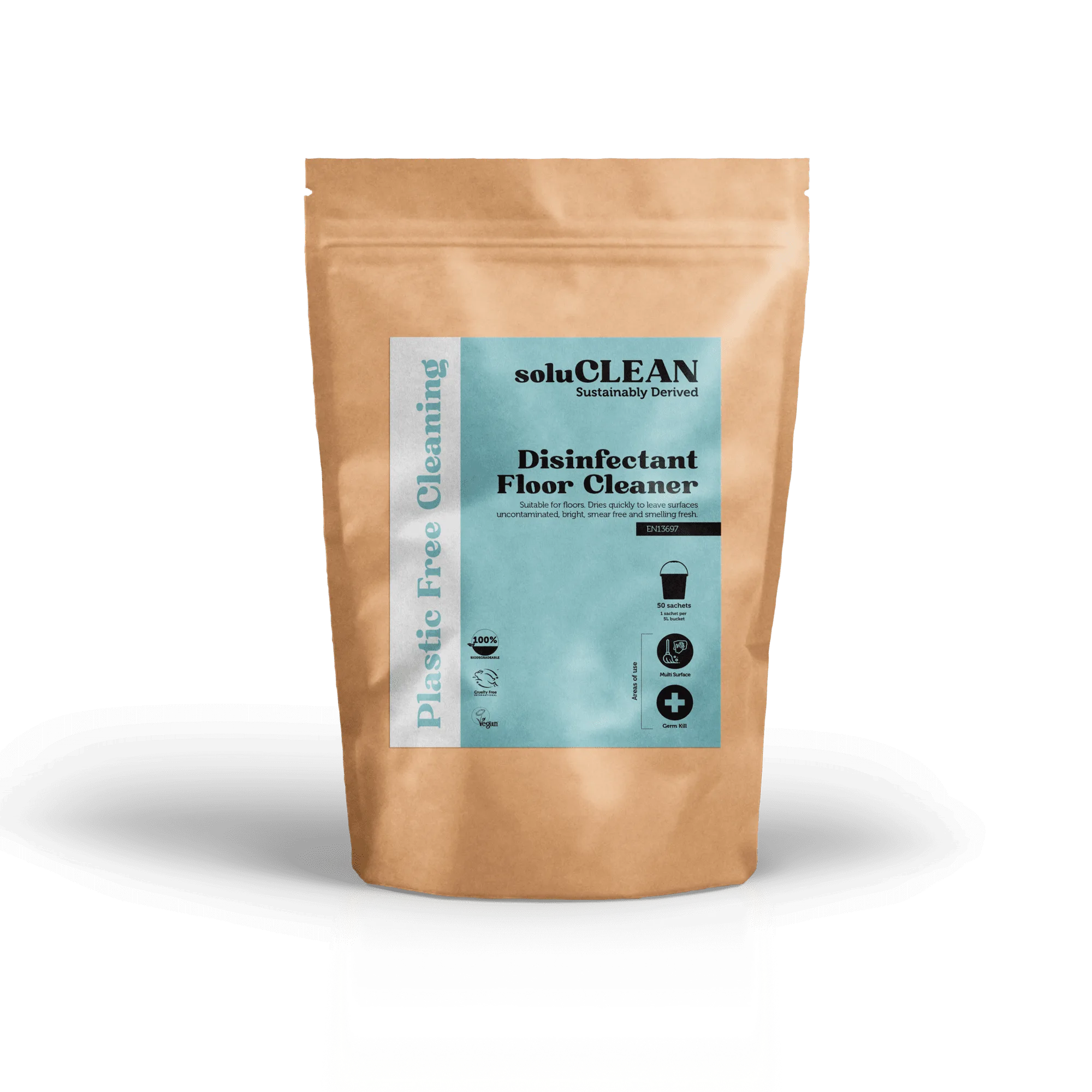
Soluclean Disinfectant Floor Cleaner – 50 Sachets
-
Bactericidal Floor Cleaner 2x5Ltrs: A powerful degreaser/cleaner supplied as 2 x 5 litres. COSHH data available (7207). This bactericidal cleaner is built for heavy grease and grime, making it a smart choice for commercial kitchens or workshops where degreasing is a priority.
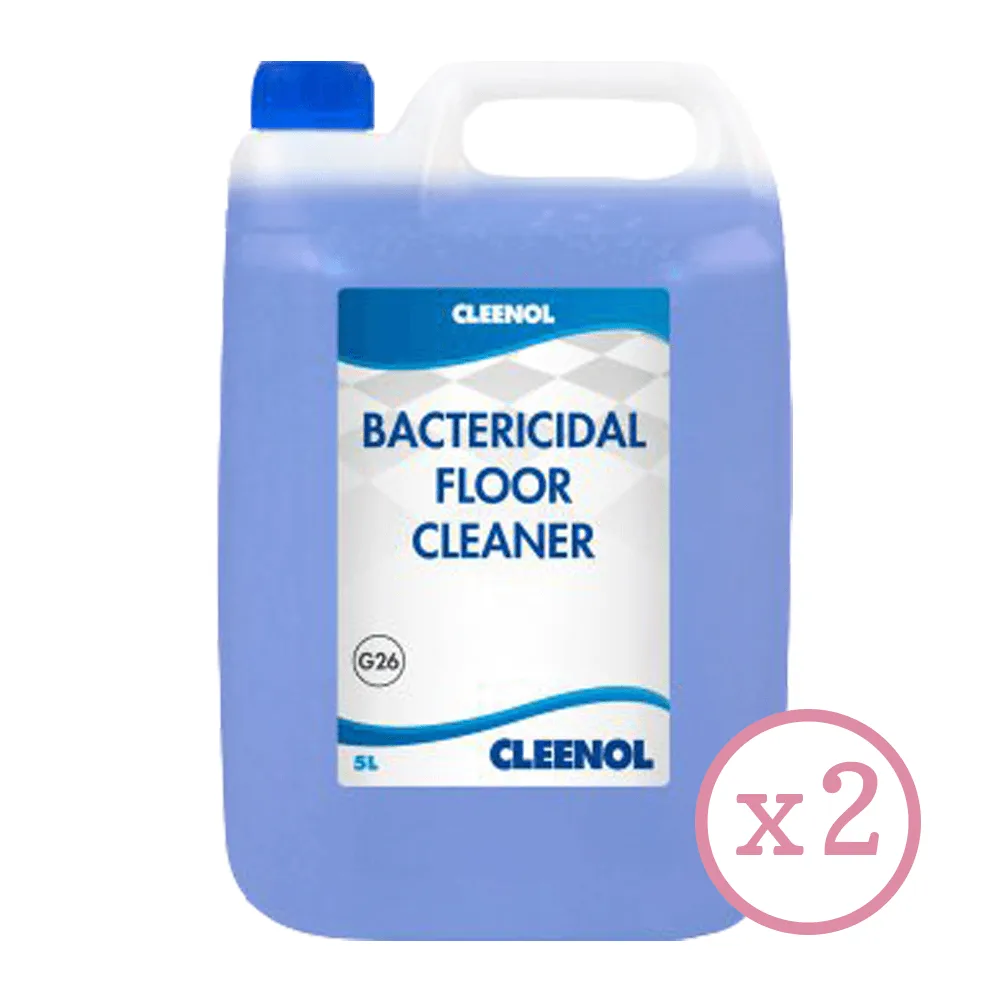
Bactericidal Floor Cleaner 2x5Ltrs
Who should choose which
Best for
- Businesses needing verified disinfection (e.g., clinics, food prep) – choose a disinfectant floor cleaner sachet
- Commercial kitchens or workshops with heavy grease – choose a bactericidal floor cleaner 5 litre
Not for
- Unsealed wood or delicate stone floors – these products may damage them; look for a dedicated wood or stone cleaner