Quick answer
Choose a fridge magnet with a strong enough magnetic pull for the surface and weight you plan to hang, and check the backing material before you commit. For most kitchen and locker use, a flat die-cut magnet with a full magnetic backing holds better than one with a small magnet dot.
Why magnets slip and what actually holds them
A fridge magnet slips for one of three reasons: the magnet is too weak for the item's weight, the surface is coated or textured, or the magnet's contact area is too small. Before you buy, think about where the magnet will live and what it will hold. A flat die-cut magnet, like the Weird Kids Fridge Magnet, spreads its pull across a wider surface, which helps it stay put on vertical metal doors and locker fronts.
Magnetic strength is measured in pull force, but most product listings don't state it. If the spec is missing, look at the magnet's thickness and backing material. A thin flexible sheet may hold a single photo, while a thicker ceramic or neodymium magnet can hold a small notepad or several papers. When the listing is vague, choose a magnet with a larger surface area—it grips better on textured or uneven surfaces.
Surface matters more than you think
A magnet's grip depends on the surface it touches. Painted fridge doors, stainless steel panels, and textured lockers all change how well a magnet adheres. Smooth, ferrous surfaces give the strongest hold; non-magnetic stainless steel or thick coatings can weaken it.
If you're hanging a single lightweight magnet, almost any flat surface works. For heavier items or vertical displays, test the magnet against the exact spot before committing to an arrangement.
Weight and shape trade-offs
Thin, flat die-cut magnets are great for stacking on a fridge without adding bulk, but they may struggle with heavier items like thick paper or small tools. Larger or thicker magnets provide more surface contact, which improves grip on uneven or coated surfaces.
A flat magnet also spreads its pull across the whole face, so it holds better on smooth metal than a small, thick magnet of the same weight. If your surface is textured or painted, expect weaker adhesion.
Decision rules for a fridge magnet that won't slip
- Check the magnet type: Choose a neodymium or rare-earth magnet for strong holding power on vertical surfaces. Flat, wide magnets distribute pull better than small point magnets.
- Match the surface: Magnetic strength drops dramatically on textured, painted, or coated surfaces. Test the magnet on your exact fridge or locker before committing to a set. If the magnet slides, the surface coating is the likely cause, not the magnet itself.
- Consider the weight it must hold: Heavier items like notes with clips or thick paper need a stronger magnet or a larger surface area. A flat die-cut magnet works best for lightweight paper and small photos. Weigh what you plan to hang, then add a margin of safety.
- Match the magnet to the surface: Smooth metal surfaces give the strongest hold. Textured, painted, or curved surfaces reduce contact, so expect weaker adhesion and check for rubber or padded backs. If your surface is uneven, look for a flexible or padded magnet instead of a rigid one.
- Check the magnet type and size: Flat die-cut magnets rely on surface area and material. A larger flat magnet with full coverage sticks better than a small one with a weak backing, so examine the back before buying. When a listing doesn't state the magnet material or thickness, treat adhesion as unverified and test it at home.
Magnet options worth considering
-
Weird Kids Fridge Magnet: This flat retro-inspired die-cut magnet transforms an old-school television into a portal to the Weird Kids world and carries the official Weird Kids logo. A flat die-cut shape sits flush against the surface, which helps it grip better than bulky or uneven magnets on fridges and lockers.
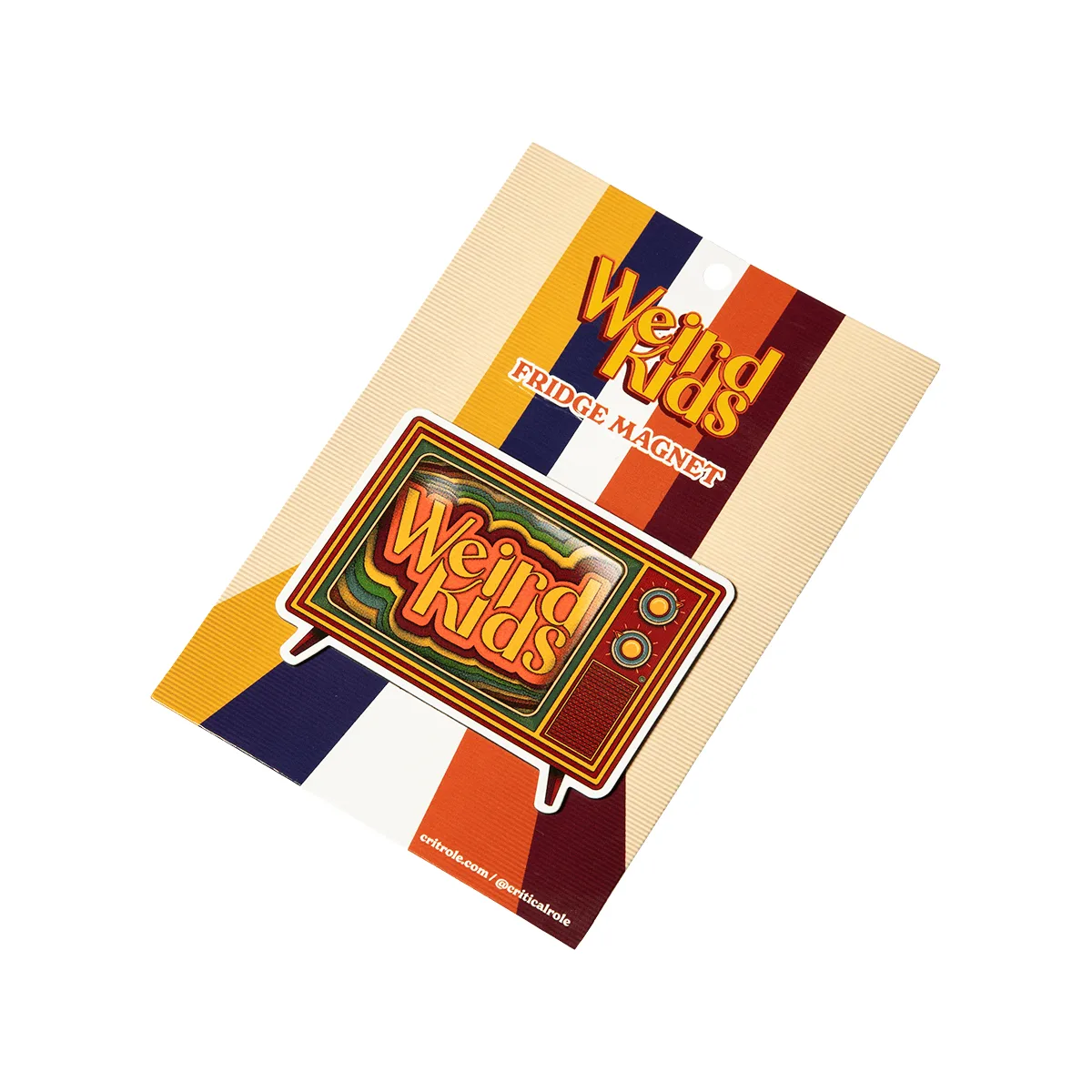
Weird Kids Fridge Magnet
Who this guide is for
Best for
- People who want a light, flat magnet for a fridge, locker, or game room shelf and care about a playful design.
- Collectors who rotate a small display and need a magnet that stays put without damaging the surface.
Not for
- Heavy or thick items that need strong holding force—choose a larger or multi-magnet option instead.