Quick answer
A full coverage bra for a petite frame needs a lower cup height, narrower wires, and scaled-down proportions to avoid gaping and excess fabric. Look for styles with contoured cups, adjustable straps, and side support panels that lift without adding bulk.
Why standard full coverage bras don't fit petite frames
Most full coverage bras are designed for average or fuller busts, with taller cups and wider underwires that can gap at the top or dig into the sides on a smaller ribcage. For petite women, this often means the bra band rides up or the straps slip because the proportions are off.
The key is to find a bra that offers full coverage—meaning the cup fully encases the breast tissue—but with a lower neckline and narrower wire that matches a smaller frame. Contoured or lightly padded cups help maintain shape without adding unnecessary volume.
Trade-off: coverage vs. cleavage
Full coverage bras naturally cover more of the chest, which can feel less revealing than a demi or plunge style. However, some petite women worry that full coverage will look matronly or hide their shape. The solution is to choose a full coverage bra with a modern cut, such as a lower center gore or a subtle V-neckline, that still provides support without sacrificing style.
If you prefer a more lifted, cleavage-enhancing look, a demi-cup bra with push-up pads might be a better fit for certain outfits. But for everyday wear under T-shirts or work tops, a well-fitted full coverage bra creates a smooth, seamless silhouette.
How to choose: 3 decision rules for a full coverage bra on a petite frame
- Rule 1: Check the cup height and wire width: Look for a bra where the cup top sits at or below your armpit level. The wire should follow your breast root without extending into your underarm. If the cup comes up too high, it will gap; if the wire is too wide, it will poke. Measure from your underbust to your collarbone to estimate ideal cup height.
- Rule 2: Prioritize adjustable straps and a firm band: Petite frames often have sloped shoulders, so fully adjustable straps (not just slide adjusters) let you shorten them enough to stay put. The band should sit level and snug on the loosest hook when new—if it rides up, size down the band. A bra that fits well on the loosest hook will last longer before stretching out.
- Rule 3: Choose the right cup construction for your shape: Contoured or lightly padded cups give a smooth shape under clothes and prevent nipple show. Seamed cups (like cut-and-sew) can add projection for shallow breasts. Avoid heavily padded cups that add too much bulk on a small frame. If your breasts are wide-set, a bra with side support panels (like Kaitlyn) helps center your shape.
Top picks for full coverage on a petite frame
-
Elizabeth: Elizabeth is a lightly contoured, breathable sports bra with structural seaming and a racerback. It is wire-free and can also be worn as a maternity bra. The contoured padding and seaming provide gentle shaping without flattening, making it a great full-coverage option for low-impact workouts or all-day wear on a petite frame.
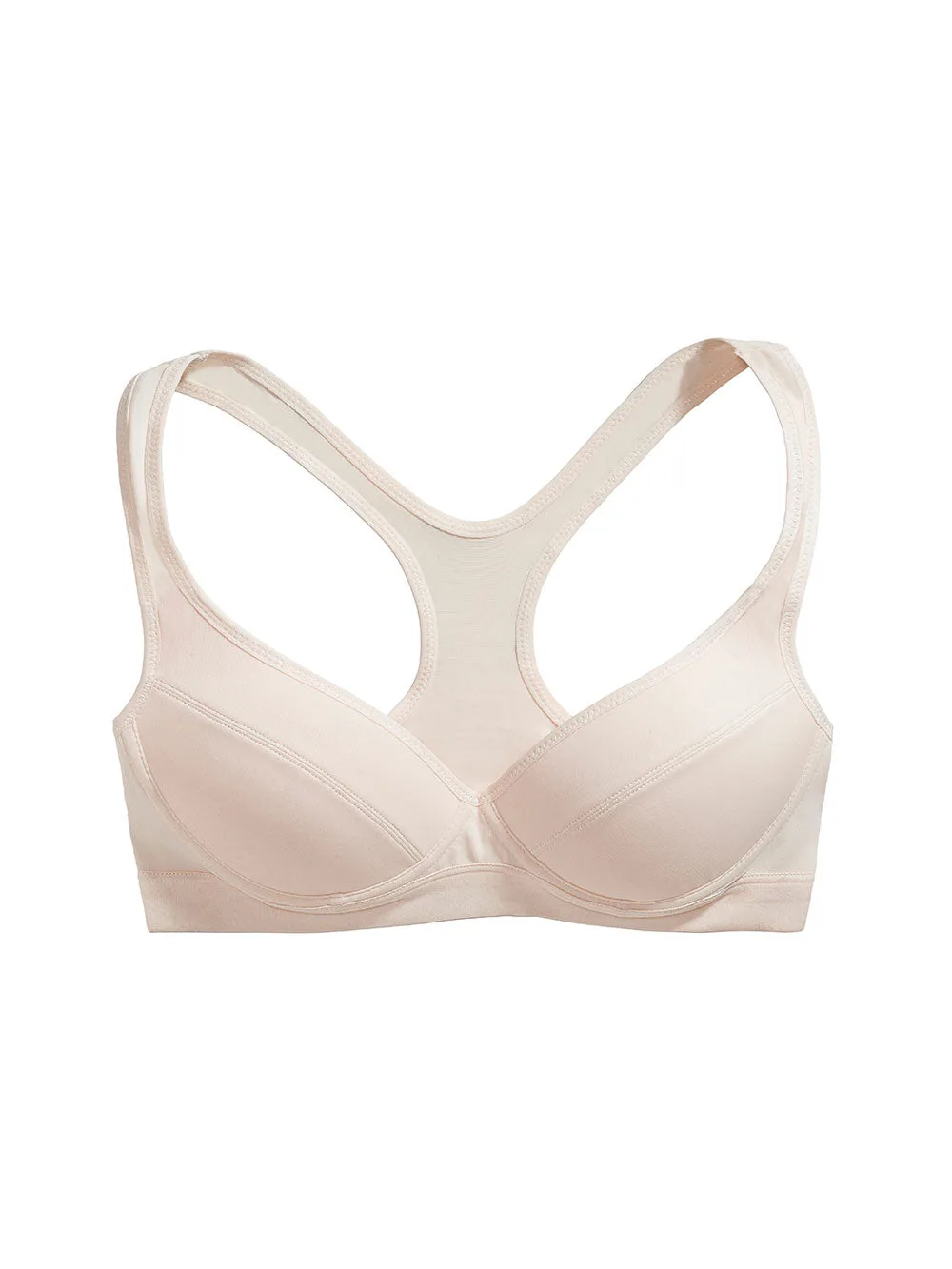
Elizabeth
-
Kaitlyn: Kaitlyn features contoured cups, additional side panels beneath the arms for extra support, and convertible straps for traditional, halter, or racerback styling. The side panels prevent side spillage and add structure without extra bulk, while the convertible straps let you adjust the fit for different necklines—ideal for petite frames that need a custom fit.
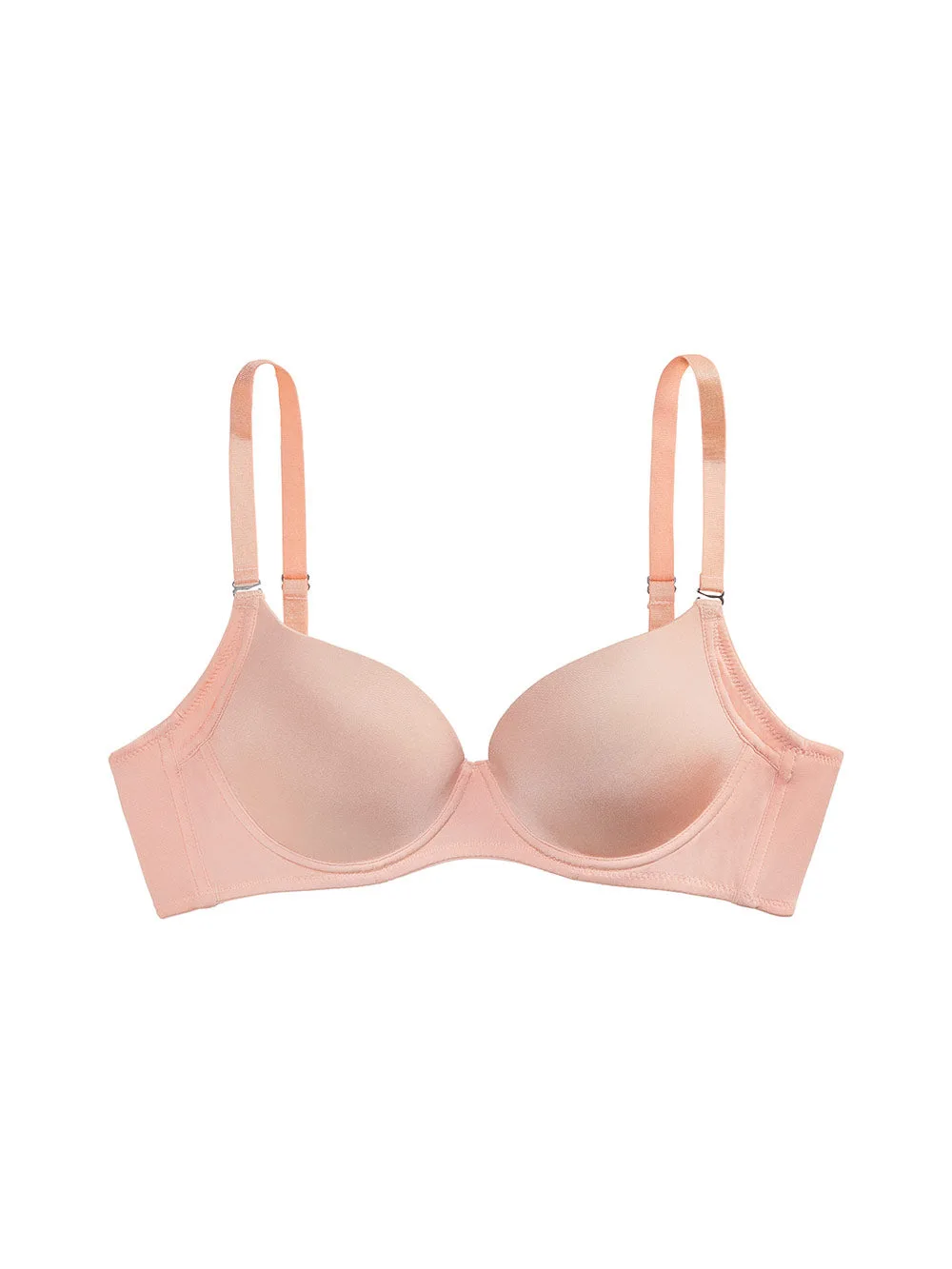
Kaitlyn
Who this guide is for
Best for
- Petite women with small to average busts (AA–C cup) who want full coverage without gaping
- Everyday wear under fitted tops, T-shirts, or work blouses where a smooth silhouette is key
Not ideal for
- Women who prefer deep plunge or extreme cleavage styles for evening wear
- Those with very full or heavy busts who need maximum lift from a full-coverage bra with wider wires