Quick answer
To choose a glass pitcher, first decide the capacity based on how many people you serve, then pick a lid type that matches your drink (tight seal for juice, vented for iced tea), and check the pour spout design for drip-free serving.
Capacity matters more than you think
A pitcher that is too small means constant refills, while one too large can be heavy to pour. For everyday use, 48-64 oz (1.4-1.9 L) works for 4-6 people. The Gibson Home Raintree Glass Pitcher holds 61 oz (1.8 L), which is a sweet spot for family meals or small gatherings. If you host parties often, consider a 90 oz (2.7 L) option.
Lid type affects freshness and pouring
A pitcher with a lid keeps drinks fresh and prevents spills in the fridge. Look for a lid that seals tightly if you plan to store juice or mix drinks ahead of time. A vented lid or one that flips open is handy for iced tea or infused water where you want to add fruit or herbs. The Raintree pitcher comes with a lid that helps keep your beverage clean and ready to serve.
Pour spout design prevents mess
A well-designed pour spout controls the flow and reduces dripping. Look for a pitcher with a tapered spout or a built-in strainer if you are serving drinks with fruit or ice. The Raintree pitcher features an easy-pour handle that gives you better control, so you can serve confidently without spills.
How to choose a glass pitcher in 4 steps
- Check the capacity for your serving size: For 2-3 people, a 32-48 oz pitcher is enough. For 4-6 people, choose 48-64 oz. For parties, go 90 oz or larger. Common mistake: buying a pitcher that is too heavy to pour when full. Weigh the pitcher empty and estimate the full weight before buying.
- Pick a lid that matches your drink: If you store juice or mix drinks, choose a pitcher with a tight-sealing lid to prevent spills and keep contents fresh. For iced tea or infused water, a vented lid or flip-top allows easy access. Common mistake: assuming all lids seal equally well. Test the lid fit in-store or read reviews about seal quality.
- Examine the pour spout and handle: A tapered spout reduces dripping. A handle that is ergonomic and angled makes pouring easier, especially when the pitcher is full. Common mistake: overlooking the handle design, which can be slippery or uncomfortable. Look for a pitcher with a textured or easy-grip handle for better control.
- Consider cleaning and durability: Glass pitchers are easy to clean but can break if dropped. Soda lime glass (like the Raintree) is common and affordable, but it's not as heat-resistant as borosilicate. Avoid sudden temperature changes. Common mistake: putting a cold pitcher directly into hot water. Hand wash your glass pitcher with mild soap and let it come to room temperature before washing.
Product spotlight
-
Gibson Home Raintree Glass Pitcher, 61 oz (1.8L) – Clear Water & Juice Pitcher with Lid and Easy-Pour Handle, Soda Lime Glass: The Raintree 61 oz glass pitcher has a crystal-clear construction that displays the colors of fruit-infused teas and fresh juice, and features a geometric pattern for added grip. The clear glass lets you show off colorful drinks, while the textured pattern helps you hold the pitcher securely, even when it's wet from condensation.
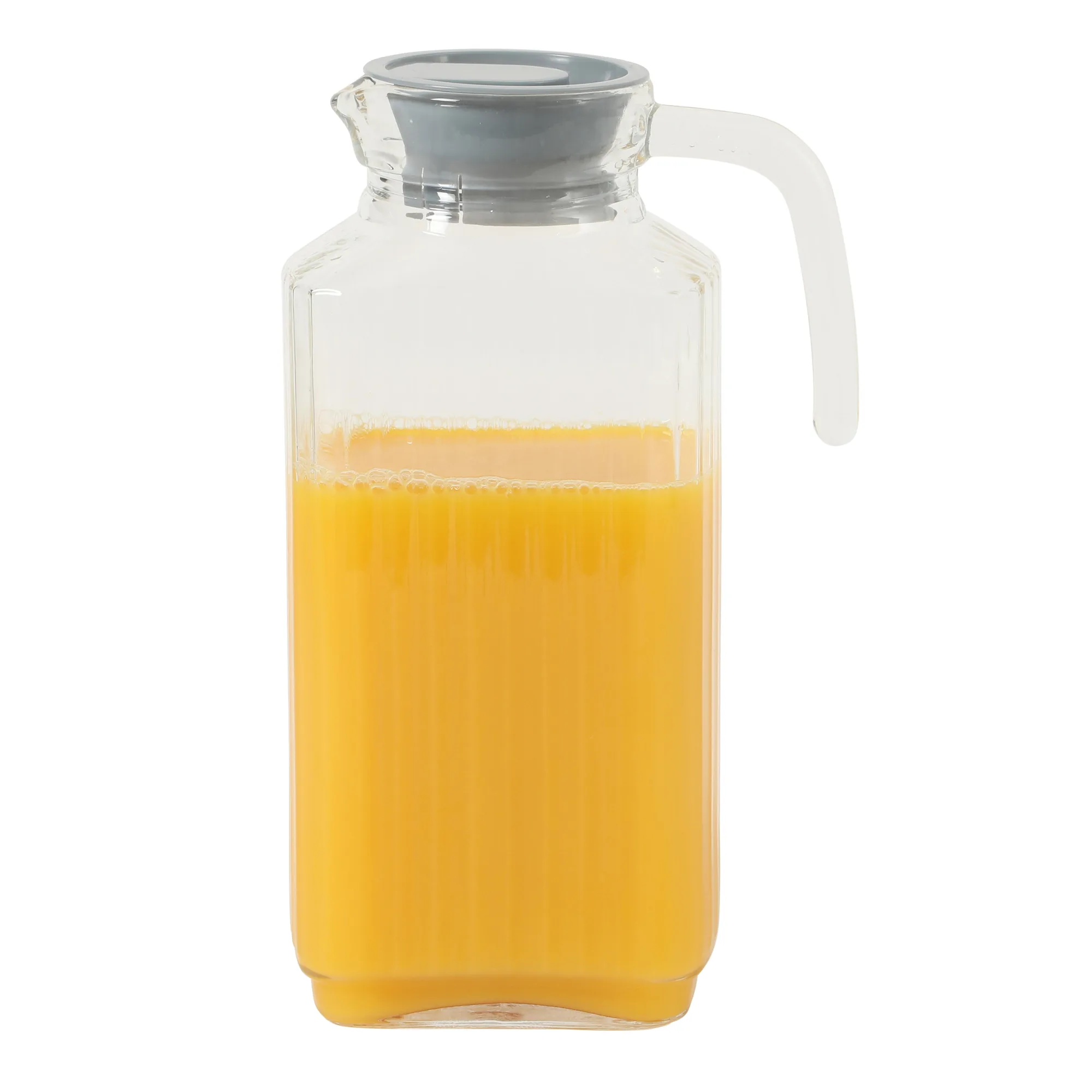
Gibson Home Raintree Glass Pitcher, 61 oz (1.8L) – Clear Water & Juice Pitcher with Lid and Easy-Pour Handle, Soda Lime Glass