Quick answer
For everyday cooking, start with a mild barley miso (mugi miso) for soups and sauces, then experiment with richer brown rice miso (genmai miso) or bold hatcho miso when you want deeper flavor.
Why miso type matters for daily use
Miso is not one ingredient — the base grain (rice, barley, or soybean-only) and aging time create very different flavors and salt levels. A miso that works beautifully in a hearty winter stew may overpower a light salad dressing.
Barley miso (mugi miso) is the most versatile for Western kitchens. It is mild, slightly sweet, and blends into soups, marinades, and sauces without dominating. Brown rice miso (genmai miso) is nuttier and works well in heartier dishes. Hatcho miso is dark, intense, and best used sparingly.
Pouch vs. jar: practical differences
Miso is a living fermented product. Pouches are lighter and easier to squeeze out, but jars offer a better seal for long-term storage. If you cook miso infrequently, a jar may keep the paste fresher. For frequent use, pouches are convenient and reduce waste.
Unpasteurised vs. pasteurised miso
Unpasteurised miso contains live enzymes and probiotics, which can aid digestion. However, it must be refrigerated and used within a few months. Pasteurised miso has a longer shelf life and a more consistent flavor, but loses some of the live cultures. For everyday cooking, either works — just check the label.
How to choose your miso: decision rules
- Start with barley miso for versatility: Barley miso (mugi miso) is the most beginner-friendly. It is mild, slightly sweet, and blends into soups, dressings, and marinades without clashing with other flavors. Use it for everyday miso soup, simple sauces, and light glazes.
- Choose brown rice miso for nutty depth: Brown rice miso (genmai miso) has a fuller, nuttier taste. It works well in heartier dishes like miso ramen, braised vegetables, or as a spread. If you find barley miso too mild, this is the next step.
- Use hatcho miso sparingly for bold umami: Hatcho miso is dark, salty, and intensely savory. Because it is so concentrated, use half the amount you would of other misos. It shines in robust stews, rich marinades, or as a secret ingredient in chili and braised meats. Start with a small amount and taste — hatcho miso can easily overwhelm a dish.
- Match the miso to the cooking method: For raw or lightly cooked dishes (dressings, dips), use unpasteurised miso to preserve live enzymes. For long-simmered soups or braises, any miso works, but hatcho miso holds up best to prolonged heat.
Product facts
-
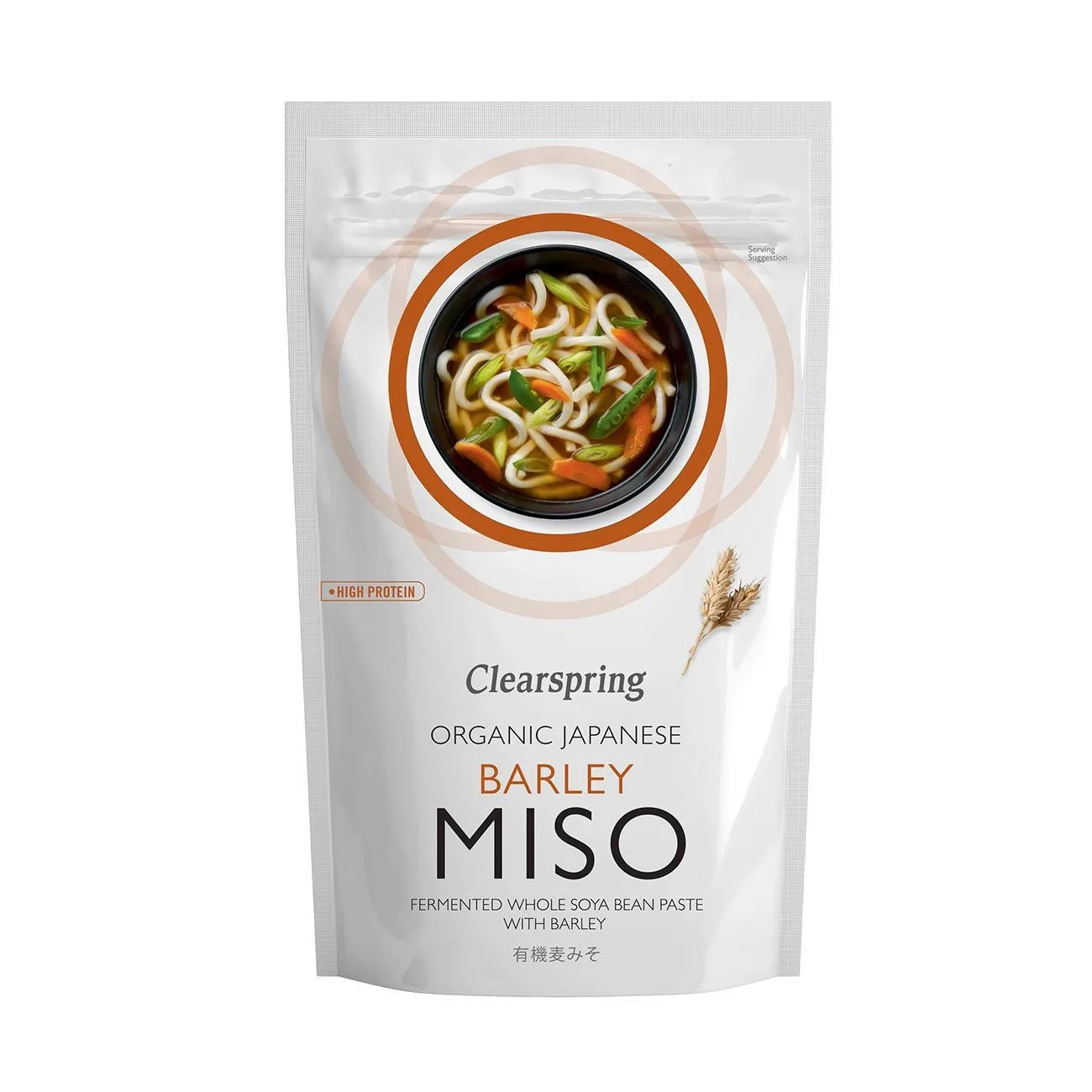
Organic Japanese Barley Miso Pouch 300g: This barley miso (mugi miso) is fully aged in cedarwood kegs for 1 to 2 years. The long aging in wood gives it a balanced, mellow flavor that works in soups, sauces, and baked dishes without overpowering other ingredients.
Organic Japanese Barley Miso Pouch 300g
-
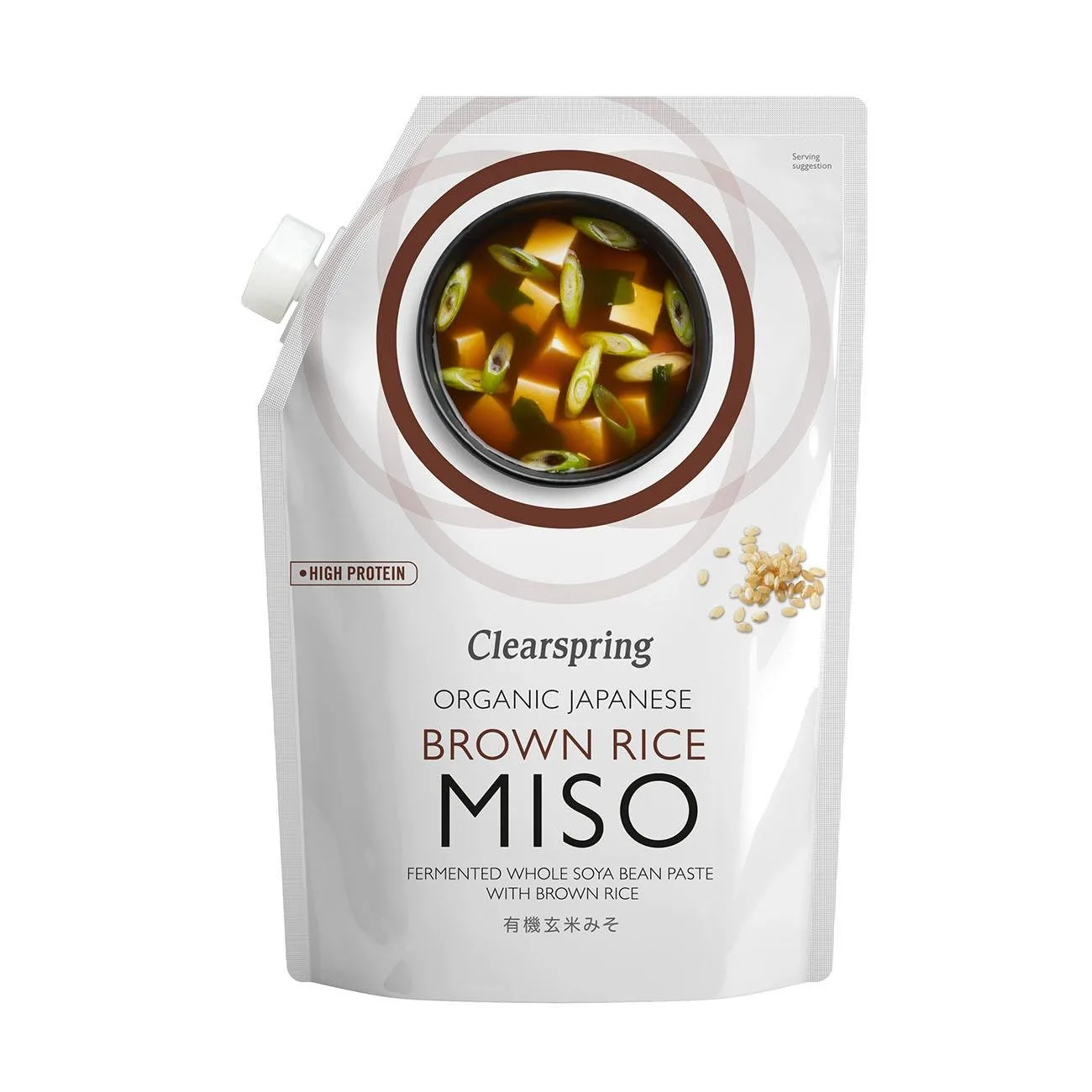
Organic Japanese Brown Rice Miso Pouch 300g: This brown rice miso (genmai miso) uses whole soybeans and brown rice for a wholefood nutritional profile. The nutty, robust taste makes it a good choice for heartier recipes like miso ramen or grain bowls where you want more depth.
Organic Japanese Brown Rice Miso Pouch 300g
-
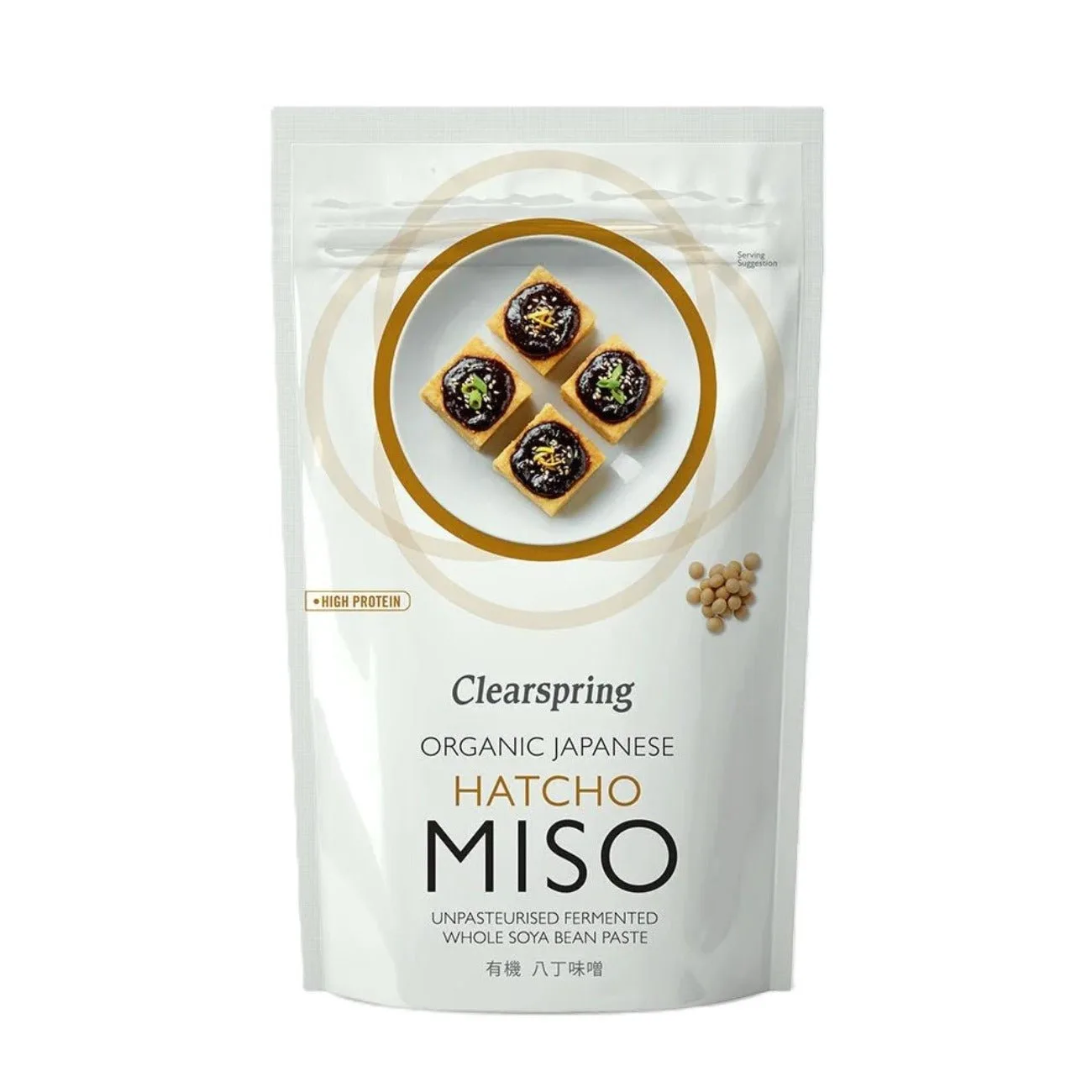
Organic Japanese Hatcho Miso Unpasteurised 100% 300g: This 100% soybean hatcho miso is aged up to 3 years and has twice the protein of barley or brown rice miso. Its intense, concentrated flavor means a little goes a long way — ideal for adding umami punch to stews, glazes, or marinades.
Which miso fits your kitchen?
Best for
- Everyday cooks who want one versatile miso for soups, sauces, and dressings — barley miso (mugi miso)
- Home cooks exploring deeper, nuttier flavors in grain bowls or ramen — brown rice miso (genmai miso)
- Umami lovers who want a concentrated punch for stews, glazes, or marinades — hatcho miso
Not for
- Anyone who needs a mild, all-purpose miso — hatcho miso is too intense for everyday use
- Salad dressings or light sauces where a delicate flavor is needed — hatcho miso will overpower