Quick answer
A peeling knife (also called a tourne knife) has a short, curved bird's-beak blade that makes it easier to follow rounded surfaces than a straight paring knife. Choose the WÜSTHOF Gourmet for value, the Classic for a traditional full-tang build, the Classic Ikon for an ergonomic upgrade, or the Ikon for a premium balanced feel.
Peeling knife vs. paring knife: why shape matters
A paring knife has a straight or slightly curved blade and excels at general detail work like trimming, slicing small fruit, or deveining shrimp. A peeling knife uses a distinct bird's-beak curve that lets the blade rock around the contour of potatoes, apples, or round vegetables. That curve also helps you remove a thinner layer of peel, preserving more of the vitamins just under the skin.
If you regularly peel rounded produce or need to cut decorative tourne shapes, a dedicated peeling knife is a practical addition. For everyday chopping and slicing, a paring knife remains more versatile.
Handle and balance: matching your grip
Peeling knives are small — blades range from about 2 1/4 to 3 inches — so handle shape and weight matter more than length. A heavier handle shifts the balance toward your palm and can reduce hand fatigue during repetitive peeling. A lighter, more blade-forward design gives you finer control for delicate work.
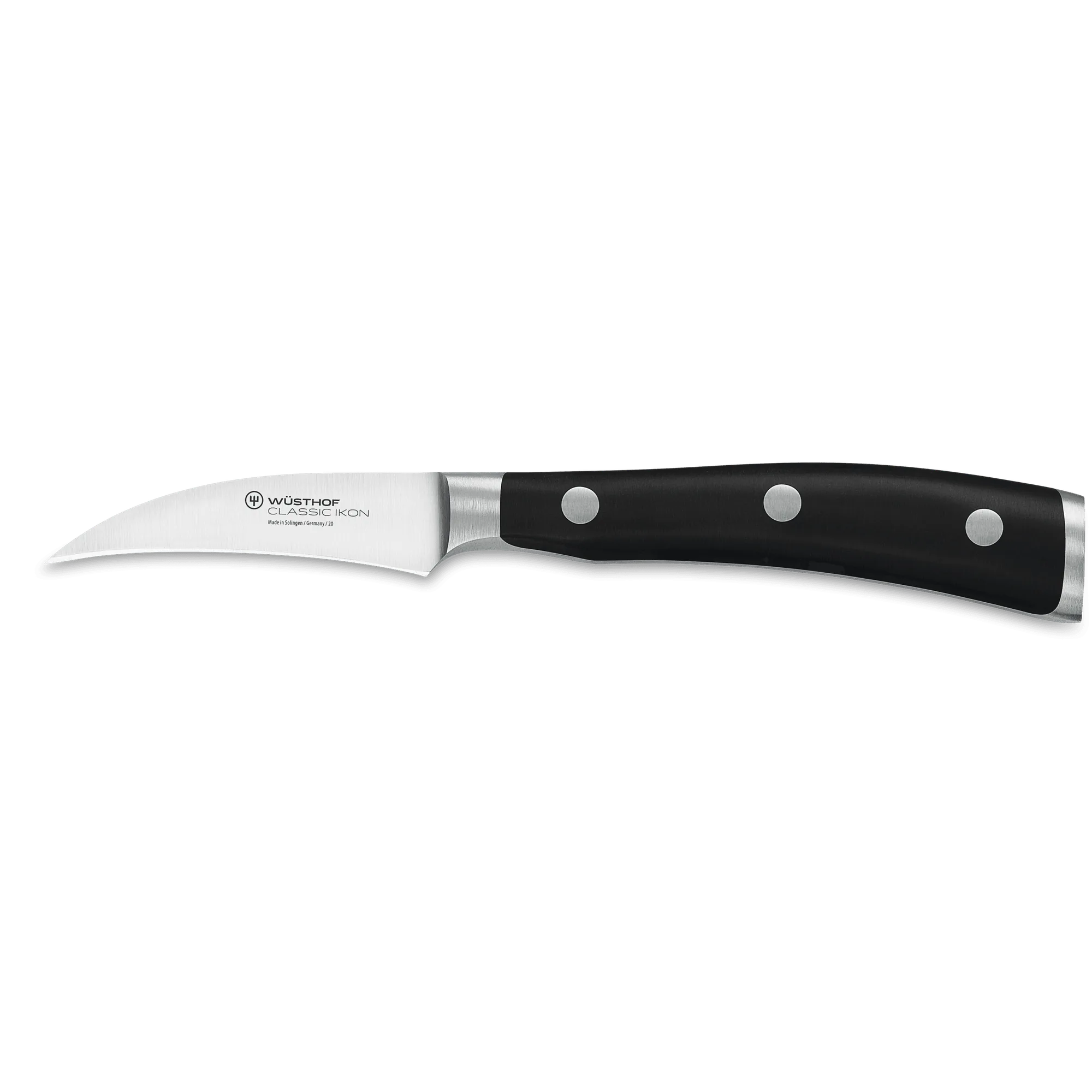
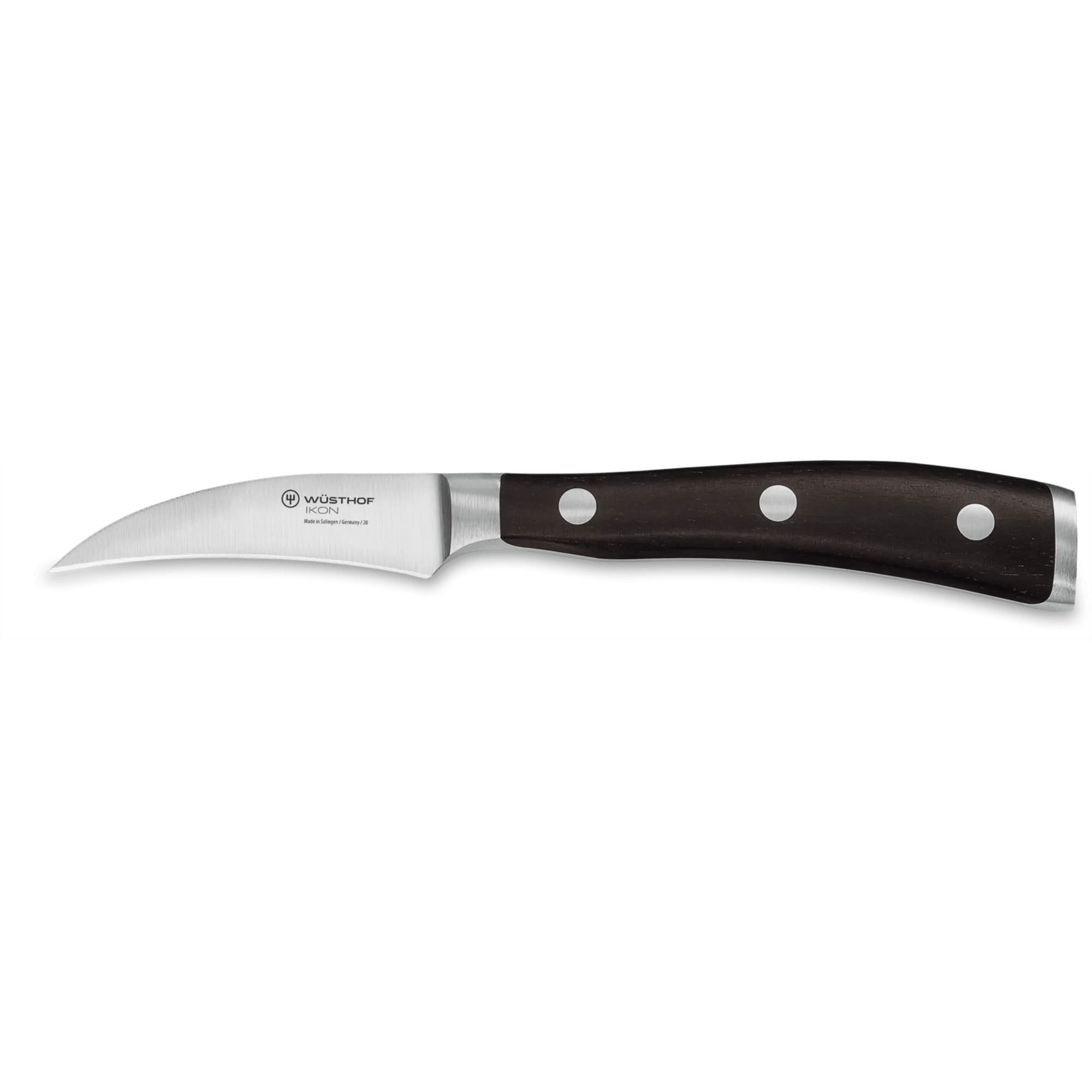
WÜSTHOF offers three handle profiles. The Classic series has a traditional triple-riveted synthetic handle with a full tang. The Classic Ikon adds a more sculpted, ergonomic curve that fills the palm. The Ikon uses a contoured handle with a pronounced bolster that some cooks find more secure. The Gourmet series uses a lighter, injection-molded handle without a full tang, which lowers the price significantly.
Edge retention and maintenance trade-offs
All WÜSTHOF peeling knives are forged from high-carbon stainless steel and have a plain (straight) edge. A straight edge is easier to sharpen at home with a whetstone or honing rod than a serrated blade, and it produces cleaner, more precise cuts. The trade-off is that a plain edge requires more frequent honing to maintain peak sharpness.
If you prefer minimal maintenance, a straight-edge peeling knife still works well because the short blade sees less abuse than a chef's knife. A few quick passes on a honing steel before each use will keep it ready.
How to pick the right peeling knife
- 1. Decide your budget: If you want a capable peeling knife for under $25, the Gourmet 2 1/4" is a solid choice. If you prefer a full-tang forged knife that will last decades, budget $60 or more for the Classic or Classic Ikon.
- 2. Choose your handle preference: For a classic riveted handle, pick the Classic. For an ergonomic curve that reduces hand strain, choose the Classic Ikon. For a premium contoured grip with a bolster, go with the Ikon. For a lightweight, budget-friendly handle, the Gourmet works well.
- 3. Match blade length to your typical produce: A 2 1/4" blade is nimble for small potatoes, shallots, and apples. A 2 3/4" or 3" blade gives you more edge for larger items like sweet potatoes or butternut squash. If you mostly peel small fruit and vegetables, the shorter blade is more maneuverable. If you also peel larger produce, go longer.
- 4. Confirm the edge type suits your sharpening routine: All WÜSTHOF peeling knives have a plain straight edge. If you already own a honing rod and whetstone, this is ideal. If you prefer a knife that never needs sharpening, a peeling knife is not the right tool — look for a serrated blade instead.
WÜSTHOF peeling knife options at a glance
-
Gourmet 2 1/4" Peeling Knife: The Gourmet 2 1/4" Peeling Knife has a bird's-beak curved blade and an injection-molded handle. It is priced at USD 22.05 (compare at USD 35.00). This is the most affordable entry point into a dedicated peeling knife — ideal if you want the curved blade shape without investing in a full-tang handle.
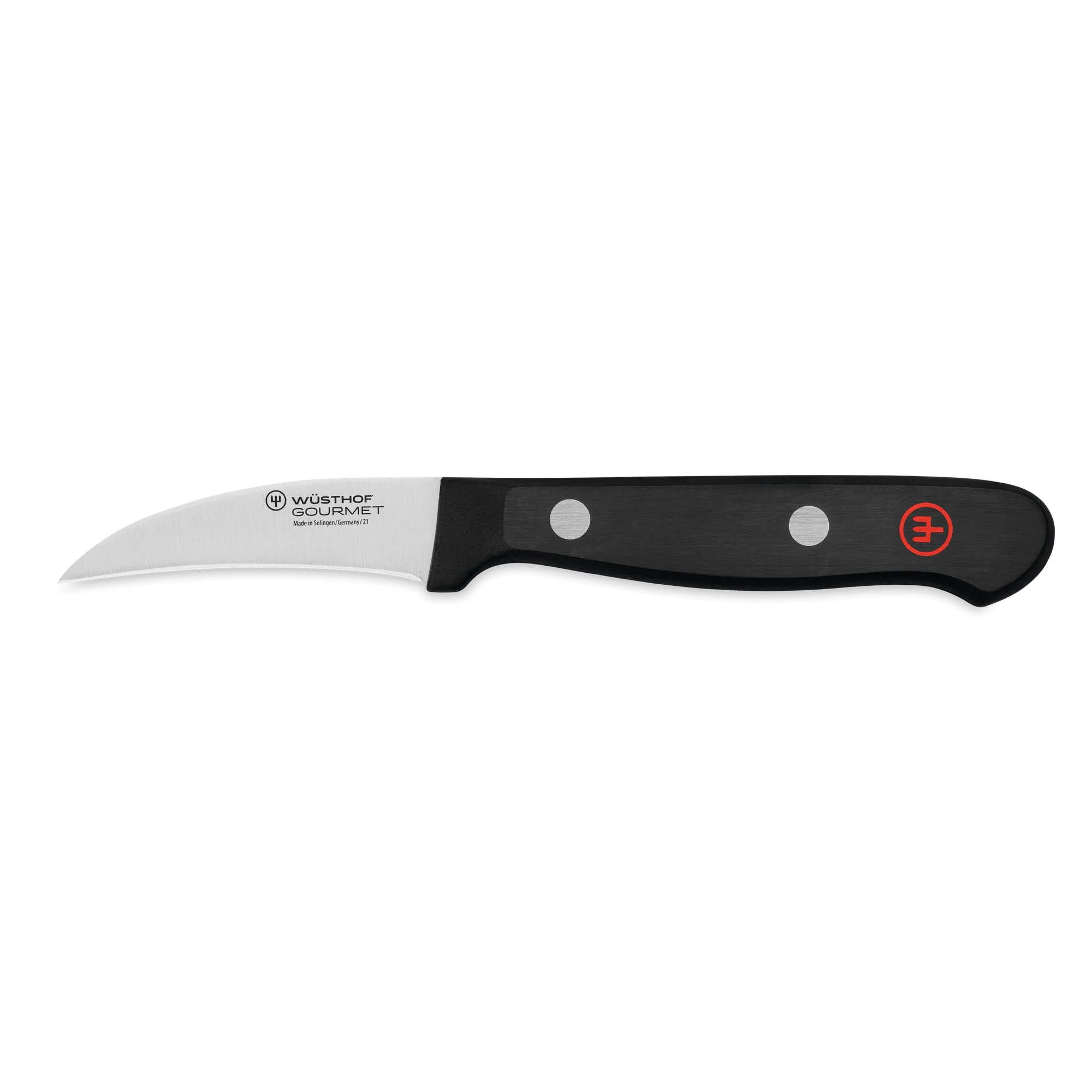
Gourmet 2 1/4" Peeling Knife
-
Classic 2 3/4" Peeling Knife: The Classic 2 3/4" Peeling Knife has a forged full-tang blade with a traditional synthetic handle and a plain edge for precise cuts. The full tang adds durability and a balanced weight that many home cooks prefer, and the slightly longer 2 3/4" blade offers a bit more reach for larger produce.
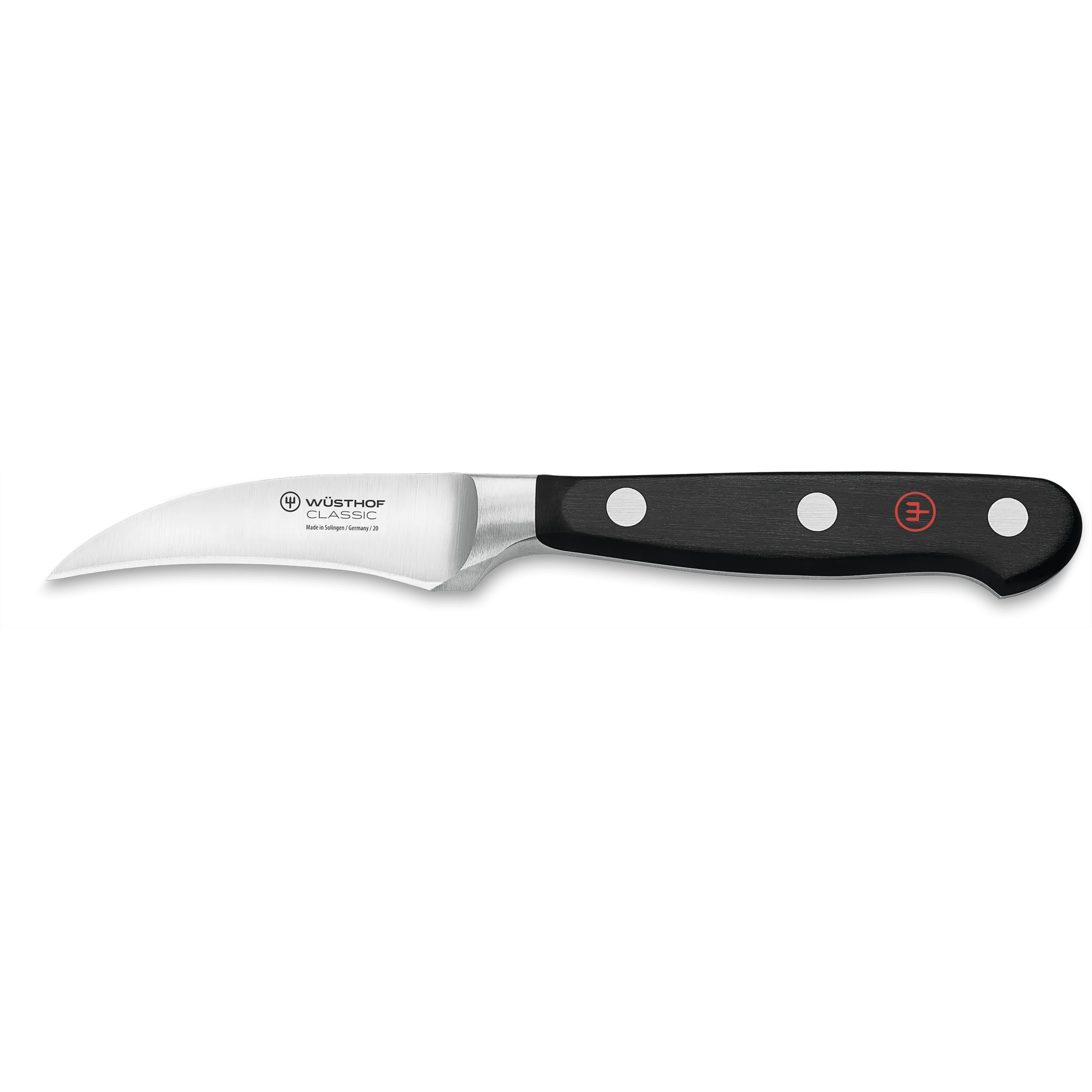
Classic 2 3/4" Peeling Knife
-
Classic Ikon 2 3/4" Peeling Knife: The Classic Ikon 2 3/4" Peeling Knife shares the same blade geometry as the Classic but uses an ergonomically contoured handle. If you experience hand fatigue during long prep sessions, the sculpted handle provides a more comfortable grip without changing the cutting performance.
-
Ikon 3" Peeling Knife: The Ikon 3" Peeling Knife has a 3-inch bird's-beak blade and a contoured handle with a pronounced bolster. The longer blade and bolster-forward balance suit cooks who want maximum control and a premium feel, though it is the most expensive option at USD 136.80.
Which peeling knife fits you?
Best for
- Home cooks who peel potatoes, apples, or round vegetables at least once a week
- Cooks who want a dedicated precision knife for tourne cuts or decorative work
- Anyone upgrading from a straight paring knife who wants a more efficient peel
Not for
- Cooks who only need a general-purpose small knife for chopping and slicing
- Anyone who prefers a serrated blade for tomatoes or bread
- Budget shoppers who want a single knife that does everything