Quick Answer
For a custom ring, choose a natural ruby with vivid red color, minimal visible inclusions, and a carat weight that fits your design and budget. Prioritize color saturation over size, and be prepared to trade perfect clarity for a more affordable stone.
Color Quality: The Most Important Factor
Ruby color is graded by hue, saturation, and tone. The most desirable hue is a pure, vivid red, often described as pigeon's blood. Stones with orange or purple undertones are less valuable but can still be beautiful in a custom ring. Saturation should be strong, not dull or brownish. Tone should be medium to medium-dark—too light and it looks pink, too dark and it loses brilliance.
Clarity and Inclusions
Natural rubies almost always have inclusions (internal flaws). Unlike diamonds, rubies are not graded on a flawless scale. Small, eye-visible inclusions are common and acceptable, especially in larger stones. What matters is whether the inclusions affect the stone's durability or are distracting in the setting. In a custom ring, you can often hide inclusions under prongs or in a bezel.
Carat Weight vs. Size
Ruby carat weight does not directly translate to size because ruby is denser than diamond. A 1-carat ruby will appear smaller than a 1-carat diamond. For a custom ring, consider the visual size (length and width in millimeters) rather than just carat weight. The ruby we offer, for example, is 1.11 carats and measures 8.1x6 mm—a good size for a statement ring.
Hardness and Durability
Ruby is a variety of corundum and ranks 9 on the Mohs hardness scale, making it excellent for everyday wear. Only diamond is harder. This means a ruby is suitable for rings that are worn daily, but you should still avoid hard knocks and harsh chemicals. For a custom ring, a protective setting like a bezel or a low-profile prong setting can extend the stone's life.
Decision Rules for Choosing a Ruby
- Color first, size second: Always prioritize vivid red color over larger carat weight. A smaller, intensely colored ruby will look more valuable than a larger, dull stone.
- Accept minor inclusions: Natural rubies with eye-clean clarity are rare and expensive. For most custom rings, small inclusions that don't affect durability are a fair trade-off for a better color or larger size.
- Match the setting to the stone: A pear or oval ruby like the one we offer works well in a halo setting or as a solitaire. Ensure the setting protects the stone's corners and edges, especially for softer cuts. Ask for a video or a loupe view to inspect inclusions and color distribution before committing.
- Consider the ring's wear: If the ring will be worn daily, choose a ruby with no surface-reaching fractures and a setting that shields the stone from impacts. For occasional wear, you have more flexibility.
- Verify the stone's origin and treatment: Most rubies on the market are heat-treated to improve color. This is standard and acceptable. Ask the seller about any treatments and request a certificate if possible.
Product Facts
-
Ruby 1.11ct – SOLD: This 1.11ct ruby pear shows swirls of purple and crimson, and the photos look somewhat superimposed due to its vivid color. The unique color swirls and high saturation make this ruby a standout choice for a custom ring, but you should request a video to confirm the stone's appearance in different lighting.
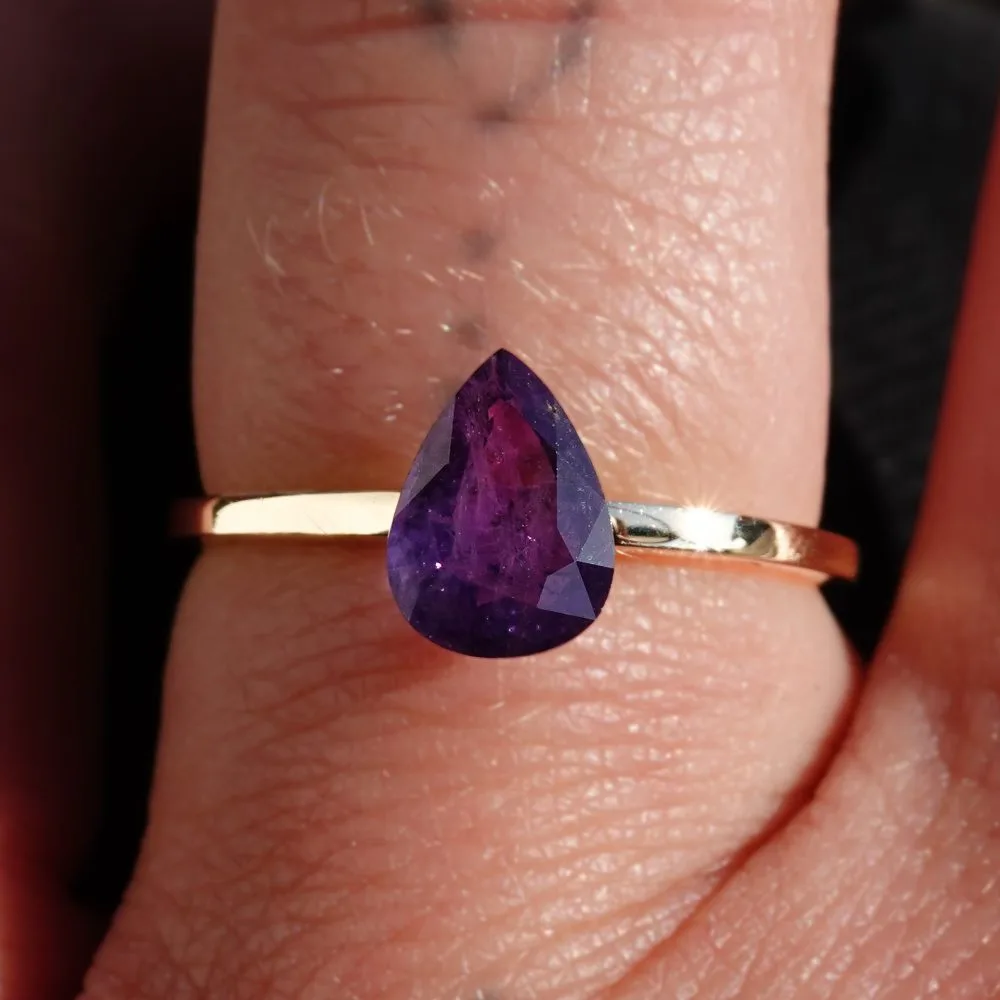
Ruby 1.11ct – SOLD
Who Should Choose This Ruby?
Best for
- Buyers who want a vivid, unique-colored ruby with character (e.g., purple-crimson swirls)
- Those designing a custom ring that can accommodate a pear shape and 8x6 mm size
- Shoppers who are comfortable with natural inclusions and want a more affordable stone
Not for
- Buyers who require a perfectly eye-clean ruby (look for a higher-grade stone at a higher price)
- Those who prefer a classic round or oval ruby in a standard size (consider other shapes or sizes)