Quick answer
For most kids, a tempered glass screen protector with an anti-scratch coating and easy bubble-free install is the best balance of protection and value. If your child uses a tablet before bed, consider a blue light blocking screen saver like Babiators' Screen Savers to help reduce eye strain.
Material matters: tempered glass vs. plastic film
Tempered glass screen protectors offer superior impact and scratch resistance compared to plastic films. They feel more like the original screen and usually install without bubbles. However, they can be slightly thicker and may add a bit of weight.
Plastic film protectors are thinner and cheaper, but they scratch more easily and can bubble during installation. For a toddler's tablet that gets dropped and dragged, tempered glass is the more durable choice.
Fit and coverage: full screen vs. edge-to-edge
A full-coverage screen protector that matches your tablet's exact dimensions is key. Edge-to-edge protectors cover the entire front, including the bezels, which helps prevent chips and cracks at the edges. Some protectors leave a small gap for cases; check compatibility with your tablet case before buying.
Blue light blocking: a smart add-on for bedtime use
If your child uses a tablet in the hour before sleep, a blue light blocking screen saver can help. High blue light exposure may interfere with falling asleep and contribute to eye strain. Babiators’ Screen Savers block 55% of blue light and use the same Navigator frames kids love, making them a familiar, easy-to-use option.
How to pick the right screen saver for your child's tablet
- Check tablet model and size: Measure your tablet's screen diagonally and verify the protector is made for that exact model. A wrong size leaves edges exposed or blocks the camera/sensors. Write down your tablet model number before shopping.
- Choose material based on usage: Tempered glass for high-impact protection (drops, rough play). Plastic film for basic scratch protection on a rarely moved tablet.
- Decide on blue light blocking: If your child uses the tablet within an hour of bedtime, a blue light blocking screen saver can help reduce eye strain and support better sleep. For daytime-only use, a standard clear protector is sufficient. Blue light blocking is a nice-to-have, not a must-have for every kid.
- Look for anti-scratch and easy install features: An oleophobic coating resists fingerprints and smudges. A self-healing layer can reduce minor scratches. Bubble-free installation kits or alignment frames save frustration. Read reviews to confirm the protector is easy to install without bubbles.
Screen saver options at a glance
-
Screen Savers: Think Pink! Navigator: Babiators’ Screen Savers block 55% of blue light and are built into Navigator frames that kids already enjoy wearing. This means your child gets blue light protection in a familiar, comfortable frame—no extra device to fuss with.
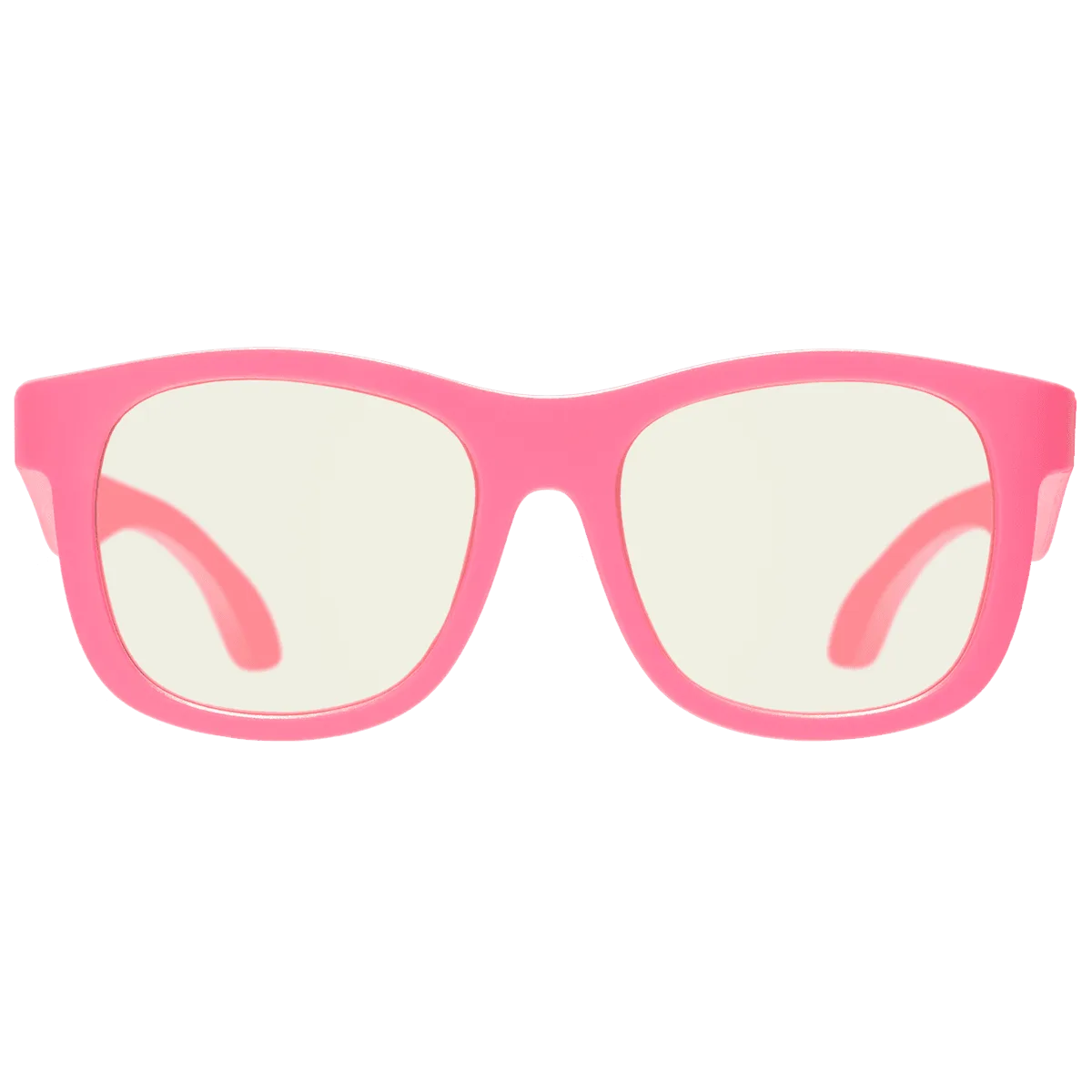
Screen Savers: Think Pink! Navigator
Which screen saver is right for your child?
Best for
- Parents who want maximum drop and scratch protection for an active toddler's tablet
- Families where the tablet is used before bedtime and blue light reduction is a priority
Not for
- Parents who want the thinnest possible protector with no added bulk
- Families that only use the tablet in bright daylight and don't need blue light filtering