What makes a silicone bib different from cloth
Silicone bibs are a practical alternative to cloth bibs for messy meals. They are made from flexible, waterproof material that wipes clean or goes straight into the dishwasher. Unlike fabric bibs that can soak through or stain, silicone creates a barrier that keeps your baby's clothes dry. The trade-off is that silicone bibs are less breathable and can feel heavier, so they are best suited for mealtime rather than all-day wear.
When choosing a silicone bib, the key features to compare are the material quality, the fit adjustment, and the spill-catching design. A bib that fits well and collects dropped food saves you cleanup time and keeps your baby more comfortable.
A farm-themed silicone bib that covers the basics
-
Hudson Baby Silicone Bibs, Life Is Better On The Farm: Crafted from durable, flexible material, designed to grow with your baby while keeping clothes spotless. The flexible silicone adapts as your baby grows, so the bib remains useful through different stages, not just one size.
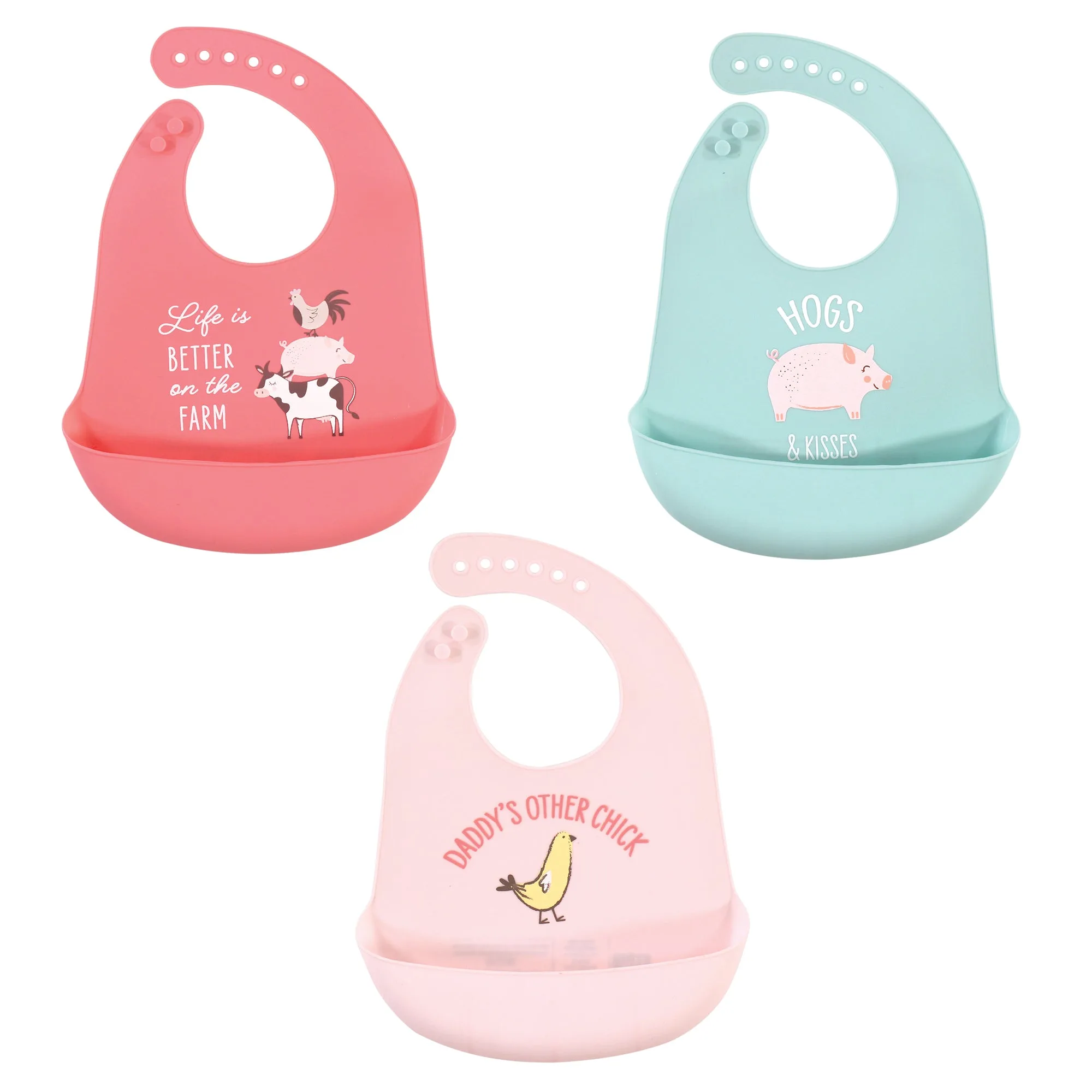
Hudson Baby Silicone Bibs, Life Is Better On The Farm
-
Hudson Baby Silicone Bibs, Life Is Better On The Farm: Soft, food-grade silicone ensures maximum comfort for your little one. Food-grade silicone means the material is safe for contact with food and gentle against baby's skin, reducing the chance of irritation.
-
Hudson Baby Silicone Bibs, Life Is Better On The Farm: Features an adjustable neck strap for a snug, secure fit. An adjustable strap lets you tighten or loosen the bib to fit your baby's neck comfortably, which helps prevent food from slipping down inside.
-
Hudson Baby Silicone Bibs, Life Is Better On The Farm: Deep front pocket effectively catches dropped snacks and mealtime messes. A deep pocket means less food ends up on the floor or in your baby's lap, making cleanup faster and reducing waste.
What to check before you buy a silicone bib
Start with the material. Look for food-grade silicone, which is free from BPA and other common additives. The bib should be flexible enough to fold for storage but sturdy enough to hold its shape, especially the pocket area.
Next, consider the fit. An adjustable neck strap is important because babies grow quickly, and a bib that is too loose can let food through. The strap should fasten securely without being uncomfortable.
Cleanup method matters too. Silicone bibs that are dishwasher-safe save you time, but hand washing is also effective. Check that the bib can be wiped clean easily after every meal.
Finally, think about the design. A fun print like a barnyard theme can make mealtime more engaging for your baby, but the practical features—material, fit, and pocket—are what determine whether the bib works well day after day.
Silicone bib vs. cloth bib: when each makes sense
- Silicone bib: Waterproof, easy to wipe or dishwasher-clean, durable, and often has a built-in pocket. Best for wet or messy foods like purees, yogurt, or soup. Less breathable and heavier than cloth.
- Cloth bib: Lightweight, breathable, and comfortable for all-day wear. Good for dry snacks or light drooling. Soaks through with liquids, stains easily, and requires laundering.
How to care for a silicone bib
Silicone bibs are low-maintenance. After each meal, rinse the bib under warm water or wipe it with a damp cloth. For a deeper clean, place it on the top rack of the dishwasher. Avoid using abrasive scrubbers that could scratch the surface. Store the bib flat or rolled to keep the pocket open and ready for the next meal.