Quick answer
Look for a 100% silicone pacifier that is free from BPA, PVC, and phthalates, with ventilation holes for safety, and designed for your baby's age range (0-12 months).
Why silicone is the safest material for pacifiers
Silicone is non-toxic, hypoallergenic, and does not contain BPA, PVC, or phthalates—chemicals that can leach from plastic alternatives. A one-piece silicone design also eliminates small parts that could become choking hazards.
Unlike latex, silicone does not degrade as quickly with repeated sterilization, making it a durable choice for daily use. However, silicone can feel firmer than latex, so some babies may need a few days to adjust.
Ventilation holes and safety features
Ventilation holes allow air to circulate behind the pacifier shield, reducing the risk of skin irritation and moisture buildup. Some designs include larger holes that double as attachment points for a pacifier holder or clip.
Always inspect the pacifier before each use. Discard it at the first sign of deterioration, such as cracks or sticky residue, to prevent small pieces from breaking off.
Age-appropriate sizing and fit
Most silicone pacifiers are labeled for 0-12 months, but the nipple shape and shield size can affect how well your baby accepts it. Look for a shield that is wide enough to prevent the entire pacifier from fitting into your baby's mouth but not so large that it covers the nose.
If your baby rejects a particular shape, try a different silhouette. Some pacifiers have a symmetrical nipple that stays upright in the mouth, while others are angled to follow the natural curve of the palate.
How to choose a silicone pacifier: decision rules
- Check the material: Choose 100% silicone pacifiers labeled BPA-, PVC-, and phthalate-free. Avoid latex if your baby has a known allergy or if you want a longer-lasting option.
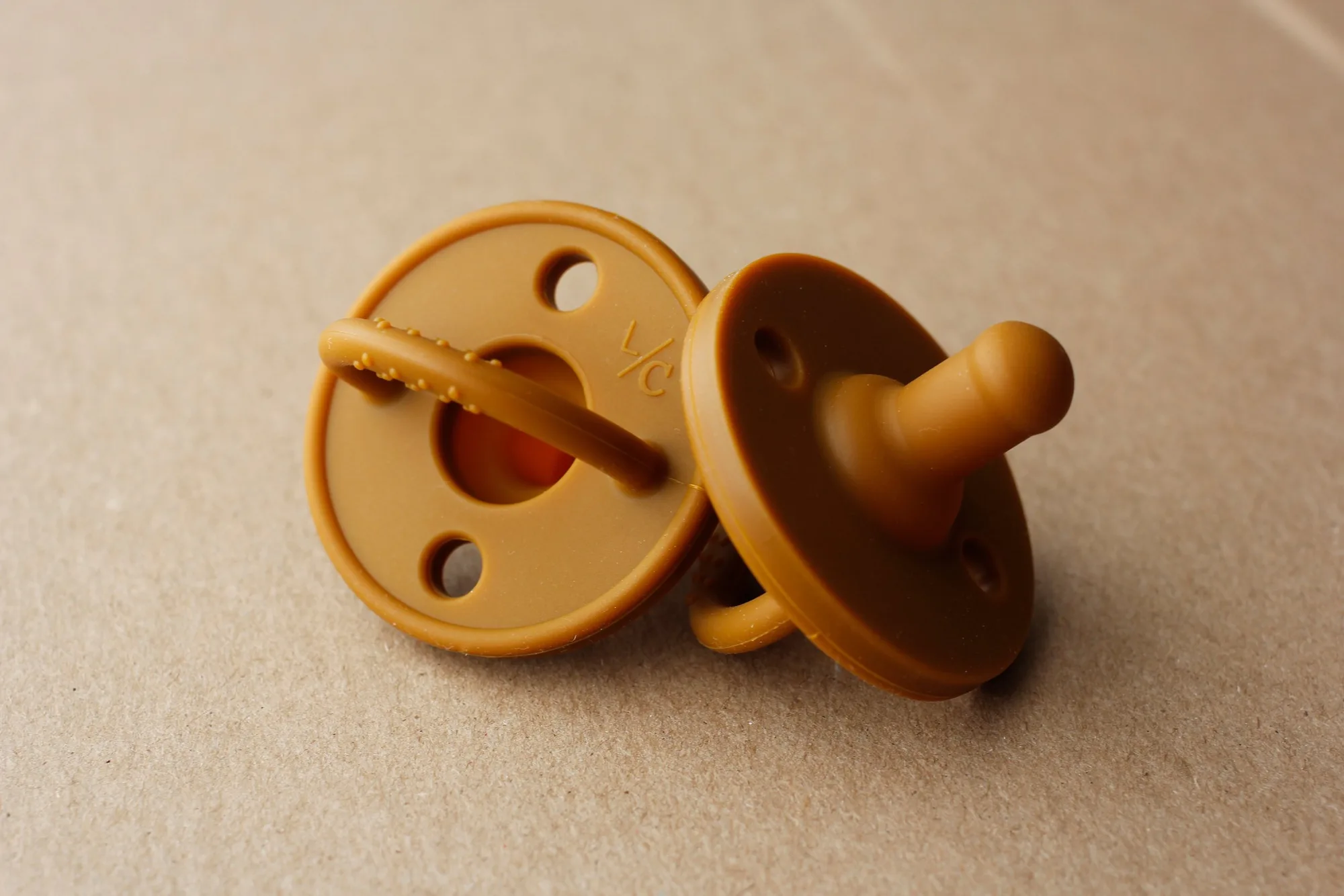
- Look for ventilation: Select a pacifier with at least two ventilation holes in the shield. Larger holes also allow you to attach a pacifier holder or clip. A pacifier with large air holes (like the Silicone Pacifier | Clay) makes it easier to keep clean and attached.
- Sterilize before first use: Boil the pacifier in water for 3 minutes, then let it air dry. Repeat this step before the first use only; daily washing with warm soapy water is sufficient afterward. Always inspect the pacifier for cracks or sticky spots before each use and discard it at the first sign of wear.
- Match the age range: Most silicone pacifiers are designed for 0-12 months. Confirm the size on the packaging. A pacifier that is too small can be a choking hazard; one that is too large may not fit comfortably.
Product facts
-
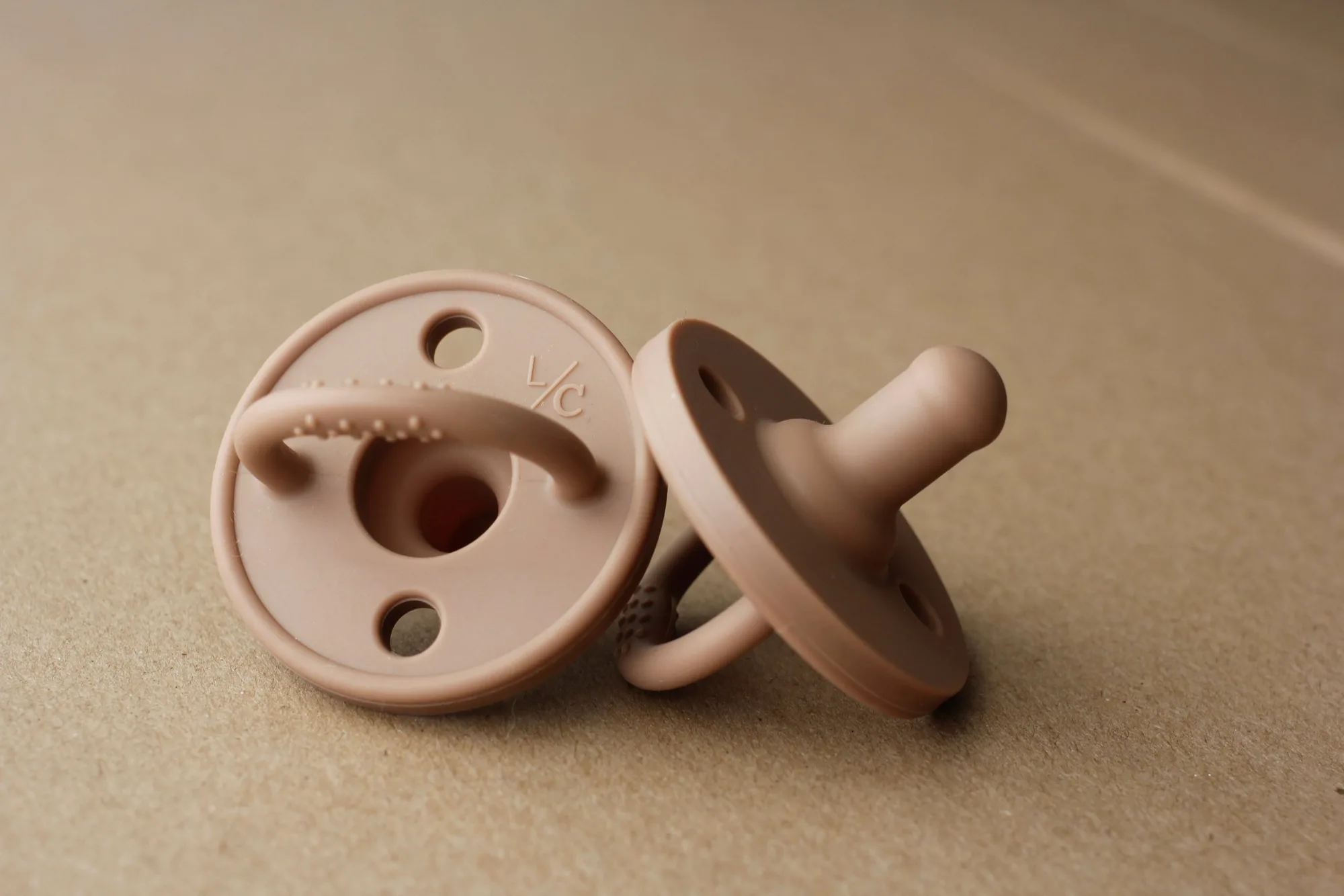
Silicone Pacifier | Truffle: Made from 100% silicone, free from BPA, PVC, and phthalates. Lightweight with two holes for ventilation. Suitable for 0-12 months. CPSIA tested and certified. You get a safe, breathable pacifier that is easy to sterilize and meets rigorous safety standards for your baby's first year.
Silicone Pacifier | Truffle
-
Silicone Pacifier | Clay: 100% silicone with large air holes that provide extra ventilation and a place to attach a pacifier holder. Measures 2.1" x 2.2". CPSIA tested and certified. The larger holes improve airflow and give you the option to secure the pacifier with a clip, reducing the chance of it falling on the floor.
Silicone Pacifier | Clay
Who this guide is for
Best for
- Parents of newborns up to 12 months looking for a non-toxic, easy-to-clean pacifier
- Caregivers who want a pacifier with ventilation holes to reduce skin irritation
Not for
- Babies who prefer a softer, more flexible nipple (latex may be a better fit)
- Parents seeking a pacifier with a glow-in-the-dark or decorative shield (these features are not available in the silicone options shown)