Quick answer
Silicone pacifiers are a safe, non-toxic choice for soothing your baby. Look for 100% silicone options free from BPA, PVC, and phthalates, and follow proper cleaning and replacement guidelines.
Why material matters for pacifier safety
The material a pacifier is made from directly affects its safety, durability, and how your baby accepts it. Silicone is a popular choice because it's non-porous, hypoallergenic, and doesn't contain common harmful chemicals like BPA, PVC, or phthalates. Latex pacifiers, while softer, can cause allergic reactions and degrade faster. For everyday use, silicone offers a reliable balance of safety and longevity.
When to replace a silicone pacifier
Even the safest pacifier needs regular replacement. Inspect the silicone before each use for signs of deterioration, such as tears, cracks, or sticky spots. Discard and replace immediately if you notice any damage. As a general rule, replace pacifiers every 4-8 weeks, even if they appear intact, to ensure ongoing safety.
Frequently asked questions about silicone pacifier safety
How do I clean a silicone pacifier?
Before first use, sterilize the pacifier by boiling it in water for 3 minutes, then let it air dry. For daily cleaning, wash with warm soapy water and rinse thoroughly. You can also use a dishwasher (top rack) if the pacifier is dishwasher-safe. Always inspect the pacifier before each use. Boil for first use; wash with soap and water for daily cleaning.
Is silicone or latex safer for my baby?
Silicone is generally considered safer for most babies because it is hypoallergenic, non-porous, and free from common allergens. Latex can cause allergic reactions in some infants and degrades more quickly. Silicone also withstands higher temperatures and is easier to clean. However, some babies may prefer the softer feel of latex. If you choose latex, ensure it's natural latex and replace it more frequently. Silicone is hypoallergenic and easier to clean; latex is softer but may cause allergies.
When should I stop using a pacifier?
Most experts recommend weaning from the pacifier between 6 and 12 months to reduce the risk of ear infections and dental issues. However, every baby is different. For safety, always use a pacifier designed for your baby's age range (e.g., 0-12 months). Never attach a pacifier to a string or cord around the baby's neck. Aim to stop pacifier use around 12 months for dental health.
Product facts
-
Silicone Pacifier | Rose: Made from 100% silicone, free from BPA, PVC, and phthalates. Lightweight with two ventilation holes. CPSIA tested and certified for babies 0-12 months. This means the pacifier meets strict safety standards and is designed to reduce the risk of irritation or choking, while the ventilation holes allow airflow to prevent skin irritation around the mouth.
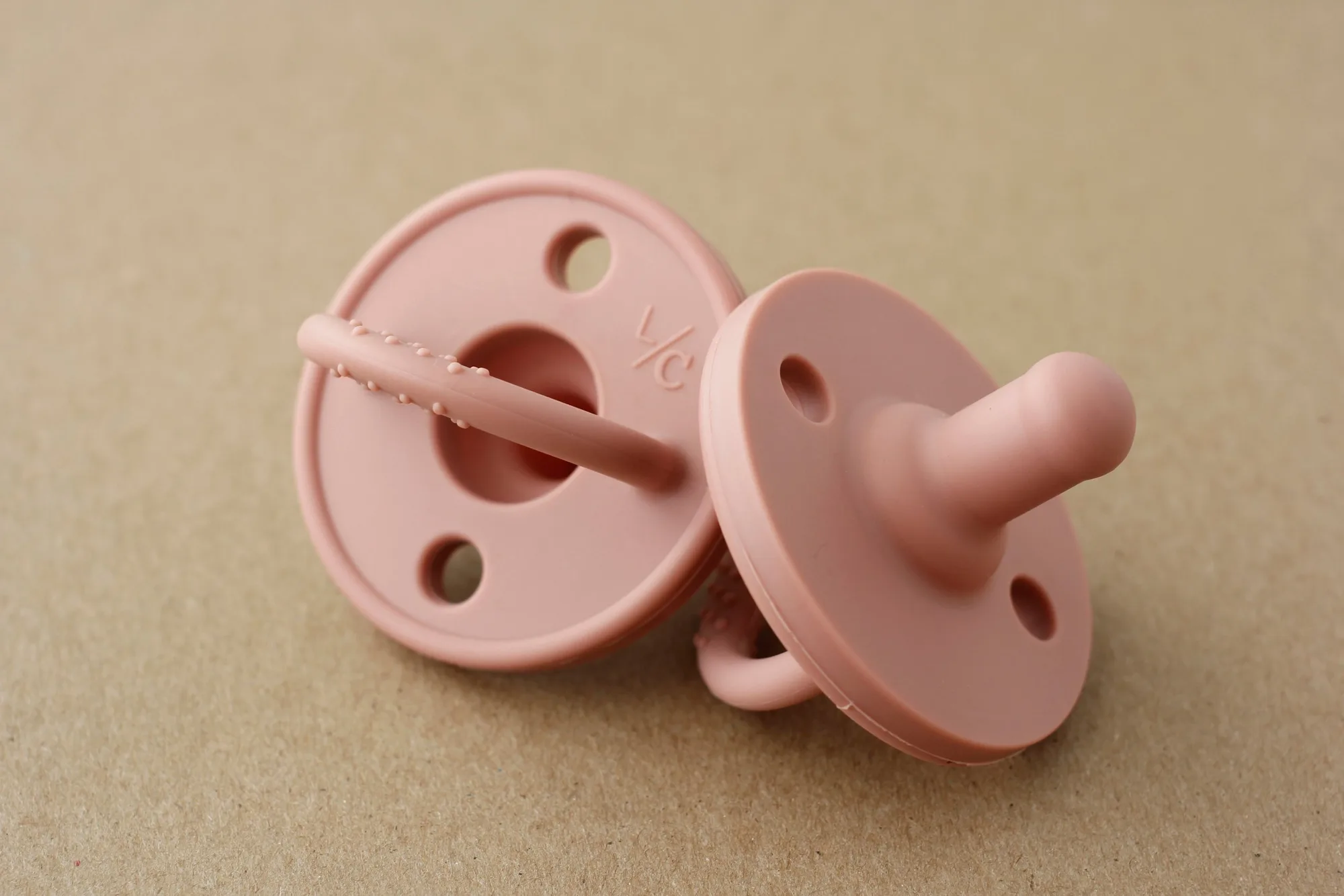
Silicone Pacifier | Rose