Quick answer
For most newborns, choose a square swaddle blanket that measures at least 40 x 40 inches (about 100 x 100 cm). This size provides enough fabric to wrap securely without excess bulk that could loosen.
Why 40 x 40 inches works best
A 40-inch square gives you enough material to create a snug wrap around your baby's torso while leaving the hips and legs room for healthy development. Smaller blankets (like 30-inch receiving blankets) often require tricky folding and may come undone as your baby moves.
Larger blankets (48 inches or more) can create too much excess fabric, which increases the risk of loose material near the face. The sweet spot for a standard newborn (7-9 pounds) is a square between 40 and 44 inches.
Fabric stretch matters for size fit
A blanket's effective size changes with its stretch. A 40-inch muslin swaddle may feel larger than a 40-inch cotton flannel because muslin has a slight give that helps the wrap conform to your baby's shape. Stretchy fabrics allow a snugger swaddle without needing a bigger square.
If you prefer a non-stretch fabric like organic cotton, consider going up to 42-44 inches so you can still achieve a secure wrap without pulling the fabric too tight.
When a smaller blanket is okay
Preemie or very small newborns (under 6 pounds) may be safely swaddled with a 30- to 35-inch blanket, but you'll need to fold it carefully to avoid loose fabric. As soon as your baby reaches average newborn weight, switch to a 40-inch blanket for better safety and ease of use.
How to choose the right size: decision rules
- Measure your baby's weight first: For newborns 7-9 lbs, a 40 x 40 inch square is the standard. For babies under 6 lbs, a 30-35 inch square may work temporarily. For babies over 9 lbs, consider a 44-inch square or a larger swaddle blanket designed for bigger infants.
- Check the fabric's stretch: Stretchy fabrics (like muslin or bamboo blends) allow a snug wrap with a 40-inch square. Non-stretch fabrics (like standard cotton) may need a 42-44 inch square to achieve the same security without pulling tight. If the blanket feels too stiff to wrap easily, try a larger size or a stretchier fabric.
- Test the swaddle safety: After swaddling, ensure you can fit two fingers between the blanket and your baby's chest. The fabric should not bunch near the face or neck. If you have excess fabric, the blanket is too large; if the wrap feels loose, the blanket may be too small or not stretchy enough. A proper fit means the swaddle stays snug after 10-15 minutes of gentle movement.
Swaddle blanket size in practice
-
Ditsy Floral Swaddle Blanket: This dainty ditsy swaddle blanket is lightweight and breathable, yet supportive with stretch for a snug swaddle. The built-in stretch helps the 40-inch square conform closely to your newborn, reducing the need for complicated folding and keeping the swaddle secure as your baby wiggles.
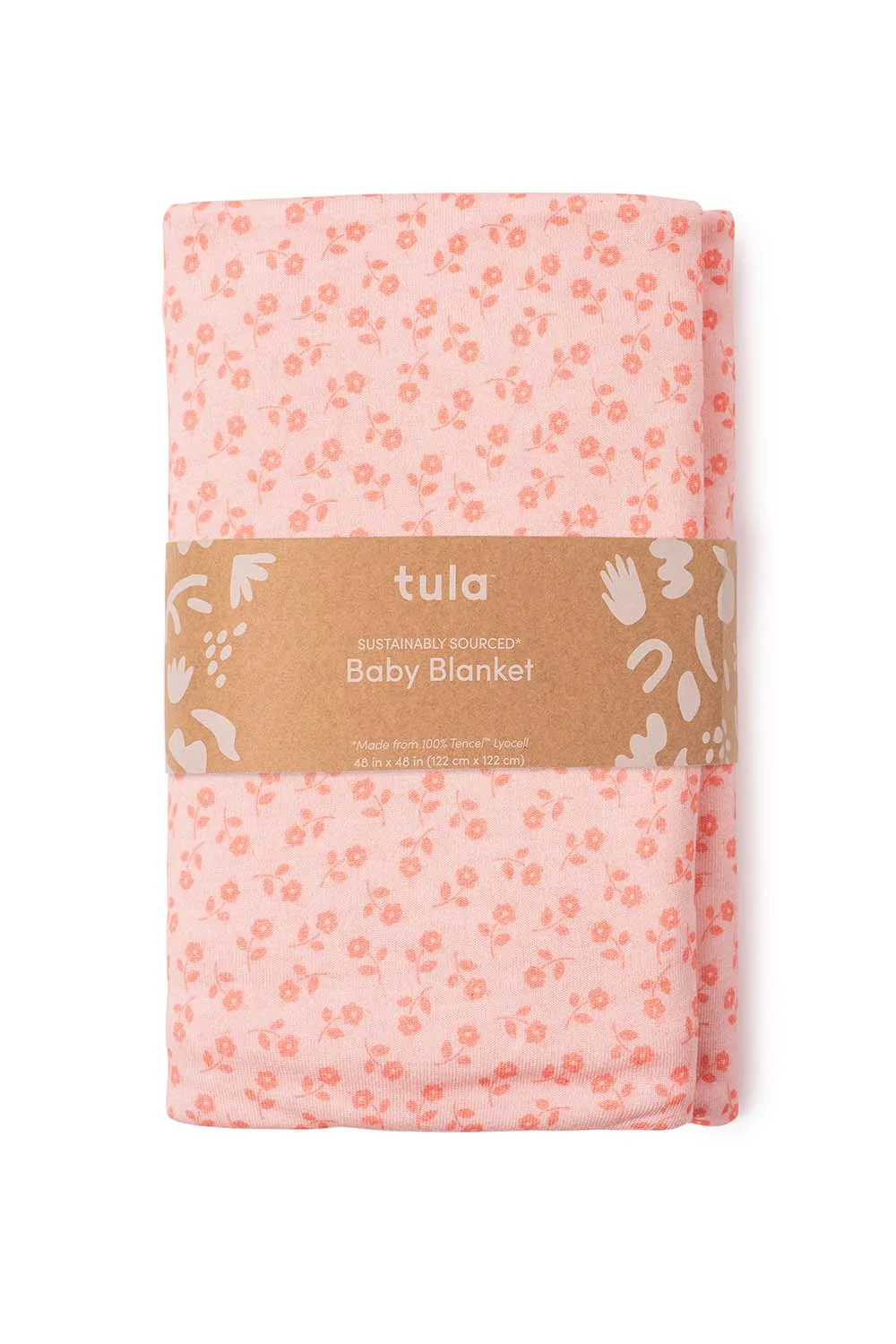
Ditsy Floral Swaddle Blanket
Who this size guide is for
Best for
- Parents of full-term newborns (7-9 lbs) looking for a standard, safe swaddle blanket size
- Caregivers who prefer a stretchy fabric that conforms easily without complicated folding
Not ideal for
- Parents of very large or rapidly growing infants who may outgrow a 40-inch blanket within weeks
- Those who want a multi-purpose blanket for swaddling and later use as a receiving blanket or stroller cover