Quick answer
A solar powered red dot sight extends battery life and gives you a backup power source. Focus on solar panel placement, battery backup type, reticle style, and footprint compatibility to match your shooting needs.
Solar panel placement and visibility
Solar panels on red dot sights are typically mounted on top of the housing. This placement works well when the sight is on a pistol, as the sun is usually overhead or behind you. However, if you shoot in shaded areas or indoors, the solar panel may not gather enough light to power the reticle alone. That’s why a battery backup is essential for consistent performance in all lighting conditions.
Some shooters worry that a top-mounted solar panel adds bulk or creates a glare. In practice, the panel is low-profile and flush with the housing, so it doesn’t interfere with your sight picture or holster fit. The trade-off is that you have to keep the lens clean and free of debris to maintain clear light intake.
Battery backup and power management
A solar powered red dot without a battery backup is a must for a defensive or duty pistol. The Apollo Helios Solar uses a side-mounted CR2032 battery that can be swapped without removing the sight from the slide. This is a practical advantage because you don’t need to re-zero after a battery change. On the other hand, some shooters prefer a top-loading battery for a competition sight where you rarely change the battery often.
The Sirius Solar Pro uses a dual solar and battery power system. This gives you a constant power source whether you are in direct sun or indoors. The 3 MOA dot is fixed at 3 MOA. That is a fine for fast target acquisition but not ideal for a precision at 100 yards. For a general shooting, a adjustable reticle like the Helios Solar lets you switch between two styles on the fly.
Memory function saves your last brightness setting. This is helpful when you switch between sunny and indoor environments. If you are not used to a manual brightness, you may forget to adjust the reticle. A memory function prevents this by restoring the last setting after a battery change.
Footprint compatibility and mounting
The footprint determines which slides you can mount the sight on. The Apollo Helios Solar uses a standard RMSc footprint. This is a common cut for many pistols. This means it ships mount-ready for a wide range of slides. The Sirius Solar Pro uses a RMR footprint. This is a standard for many competition pistols. If you have a full-size pistol, you want a RMR for a wide window. If you have a compact pistol, you may need a RMSc footprint.
Check your pistol slide cut before you buy. Some slides are cut for a specific footprint. You may need a adapter plate if you don’t have the correct footprint. The Helios Solar includes a side-mounted battery for easy battery swaps without removing the sight. This is a nice feature on a closed emitter.
Steps to choose a solar powered red dot
- Check the solar panel placement and housing: Look for a top-mounted solar panel that is flush with the housing. This ensures the panel doesn’t add bulk or interfere with your sight picture or holster fit. A common mistake is assuming the panel works in all lighting conditions; it needs a battery backup for consistent performance indoors or shaded areas.
- Choose a battery backup type: Pick a red dot with a side-mounted or top-loading battery. The side-mounted battery allows swaps without removing the sight, which saves time and preserves zero. A top-loading battery may be easier for some but requires taking the sight off the slide. If you plan to use the sight for defense or duty, prioritize a side-mounted battery for quick changes without re-zeroing.
- Select a reticle style and size: Consider a fixed 3 MOA dot for fast target acquisition on a competition pistol, or a dual reticle with two styles on the fly for flexibility. A fine dot is better for precision shooting but may be slower for close targets. The memory function saves your last brightness setting, so you don’t need to adjust each time you change batteries. For general shooting, a adjustable reticle with memory is convenient. For competition, a fixed 3 MOA dot is common.
- Verify footprint compatibility: Check your pistol slide cut before buying. A standard RMSc footprint fits many compact slides, while an RMR footprint is typical for full-size competition pistols. If your slide is not cut for the sight, you may need an adapter plate. A common mistake is assuming all pistols have the same cut; always verify.
- Consider closed vs open emitter: A closed emitter like the Helios Solar protects the lens from dirt and debris, making it more reliable in harsh conditions. An open emitter like the Sirius Solar Pro offers a wider window and clearer sight picture for competition. The trade-off is that open emitters are more exposed to moisture and dust. If you shoot in dusty or wet environments, a closed emitter is more dependable. For competition where you want the widest view, an open emitter is better.
Product facts
-
Sirius Solar Pro: The Apollo Sirius Solar Pro is a competition-level reflex sight built for shooters who demand the widest possible view, the cleanest sight picture, and rock-solid reliability. This means you get a large high-clarity window for rapid target acquisition and repeatable performance on a full-size pistol.
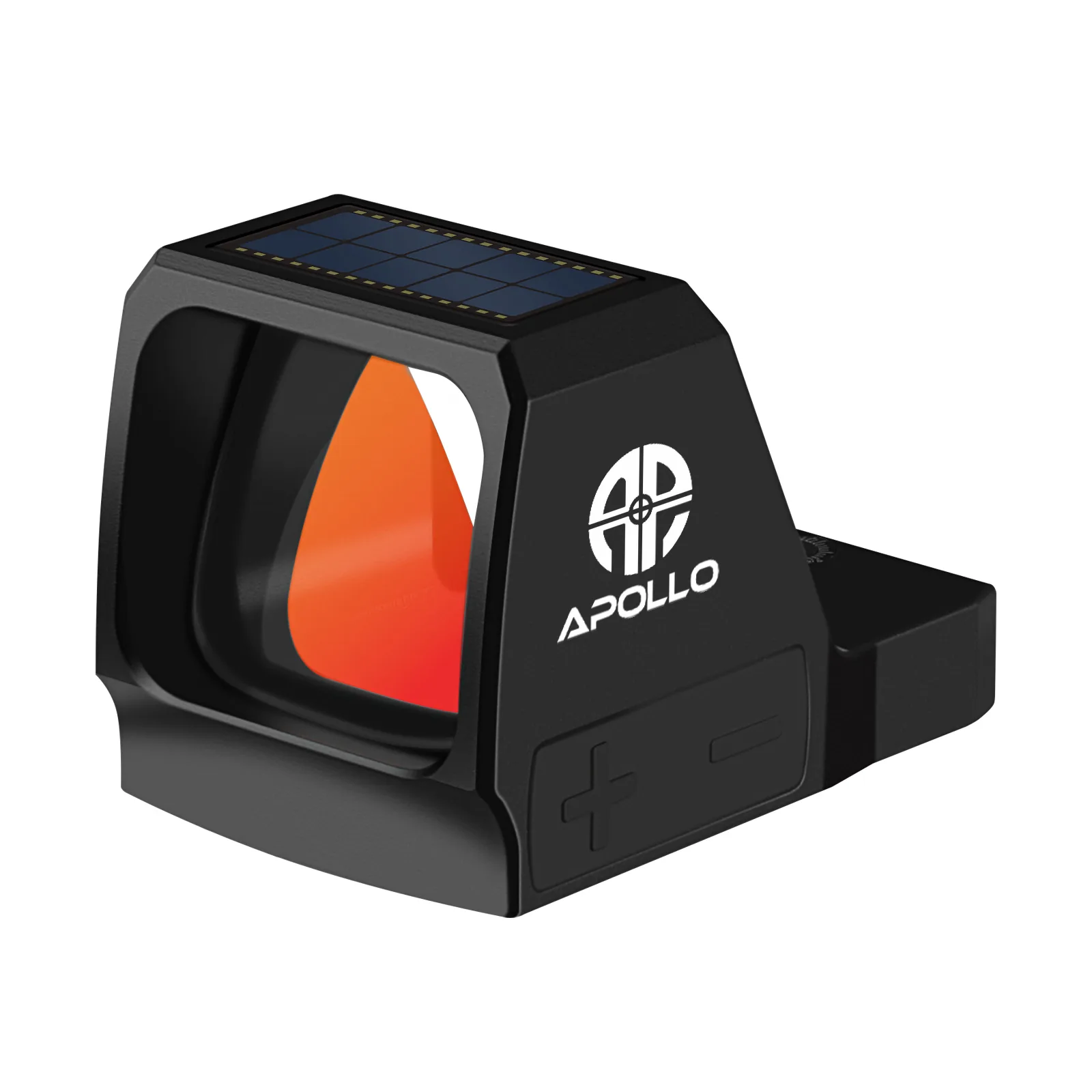
Sirius Solar Pro
-
Helios Solar: The Apollo Helios Solar blends solar-assist reliability with fast, user-friendly pistol performance built on a standard RMSc footprint. It ships mount-ready for a wide range of slides and offers a side-mounted battery for quick battery swaps without removing the sight.
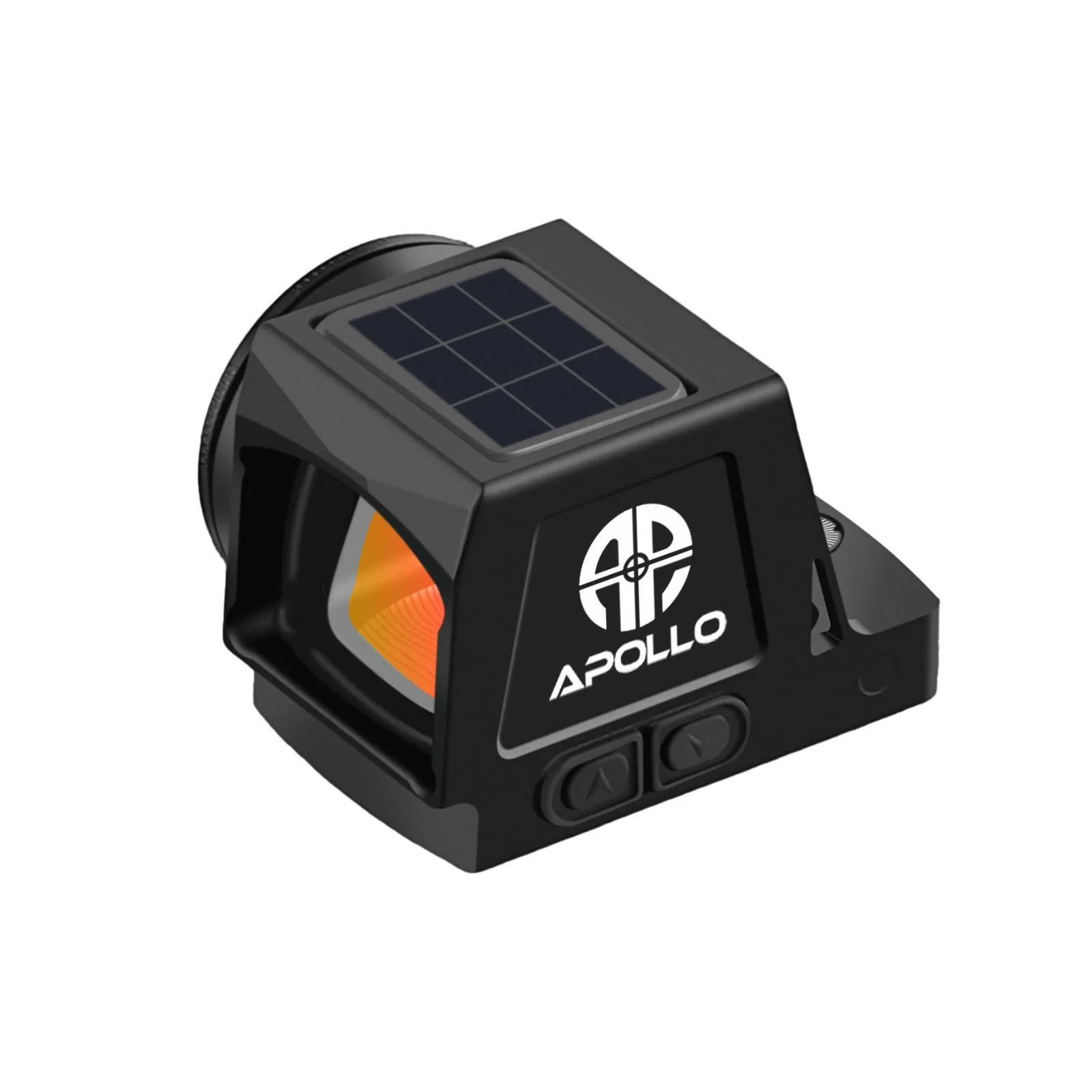
Helios Solar