Quick Answer
To choose a themed jigsaw puzzle, match the piece count to your experience, assess the artwork's color and detail for difficulty, and consider whether you want a collectible bundle or a single puzzle. For a literary theme with artistic flair, the Romeo & Juliet Puzzle & Mini bundle offers both a 1000-piece challenge and a compact 140-piece option.
Why the Theme Matters More Than You Think
The theme of a puzzle is not just decoration—it shapes your entire puzzling experience. A theme you love keeps you motivated through the tedious middle section, while a theme you feel neutral about can turn a fun hobby into a chore. When choosing, think about what you'll enjoy looking at for hours: a favorite book, a historical era, a natural landscape, or a piece of art.
Themed puzzles also make great gifts because they show you paid attention to the recipient's interests. A puzzle based on a beloved story or artwork feels personal, not generic. But the theme alone isn't enough—you also need to consider practical factors like piece count and image complexity.
Piece Count: The First Practical Filter
Piece count is the most obvious difficulty indicator, but it's not the only one. A 1000-piece puzzle is a significant time commitment, often taking several evenings or a full weekend. If you're new to puzzling, starting with 500 pieces or fewer builds confidence. If you're experienced, 1000 pieces or more offers a satisfying challenge.
For themed puzzles, consider the piece count in relation to the artwork. A 1000-piece puzzle with a busy, detailed image can be much harder than a 1000-piece puzzle with large, distinct color blocks. The Romeo & Juliet bundle cleverly includes both a 1000-piece puzzle and a 140-piece mini version, letting you choose your level of commitment or warm up with the smaller one first.
Artwork Complexity: The Hidden Difficulty Factor
The artwork itself is the second major difficulty factor. Puzzles with large areas of similar color—like a night sky or a body of water—are notoriously hard because you can't easily distinguish pieces. Conversely, images with many distinct objects, strong lines, or text are easier to sort and assemble.
When evaluating a themed puzzle, look at the image closely. Does it have a clear focal point? Are there multiple elements that help you identify where a piece belongs? The Romeo & Juliet puzzle features the beautiful artwork from the deck, which includes detailed figures and ornate elements—likely offering visual cues that help during assembly, but also enough complexity to keep you engaged.
Collector Appeal: When a Bundle Makes Sense
Some themed puzzles are released as collectibles, often with unique packaging, high-quality materials, or additional items. These are designed for enthusiasts who value the puzzle as an object, not just an activity. If you're a collector, you might prioritize a puzzle's aesthetic and brand over its piece count or difficulty.
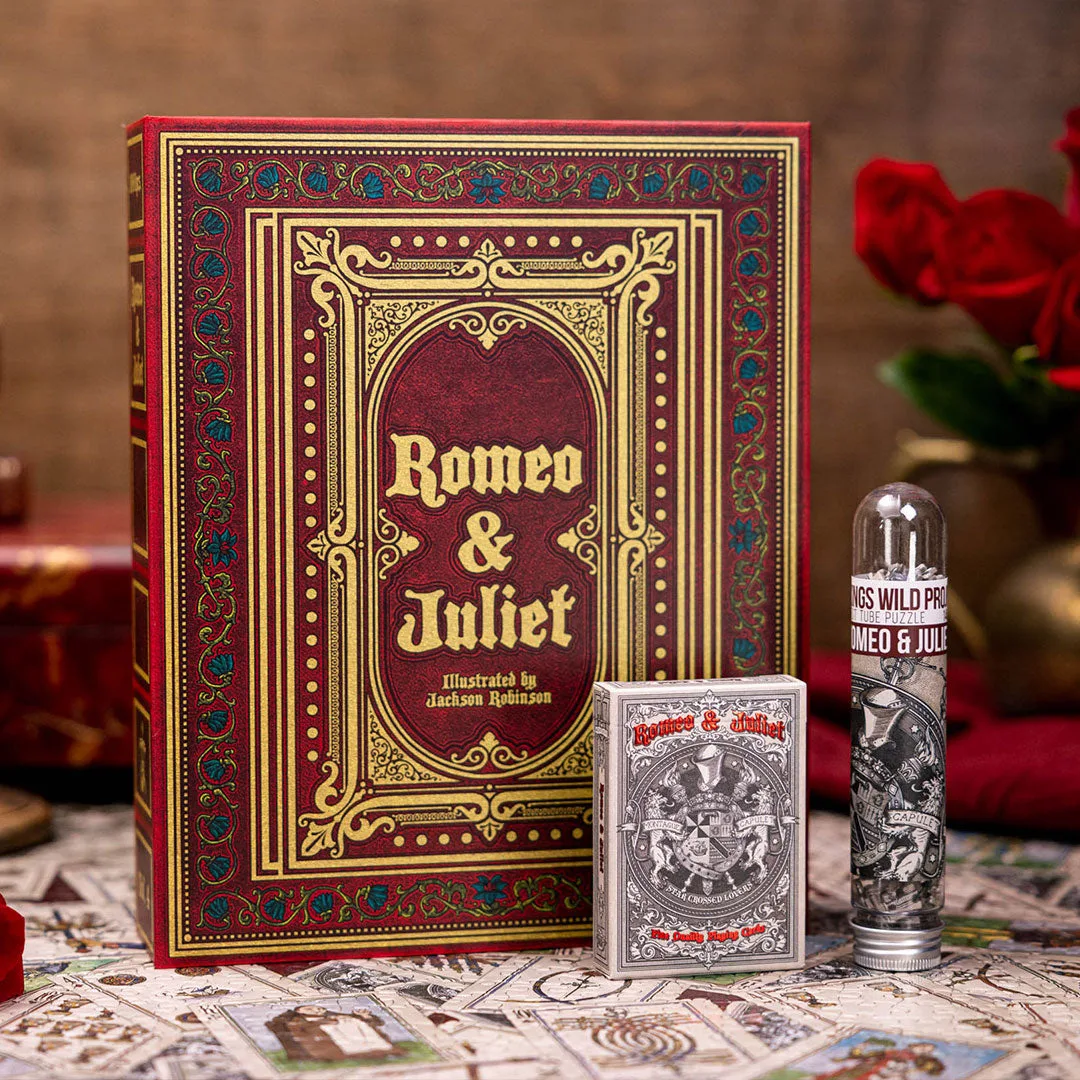
The Romeo & Juliet Puzzle & Mini is a bundle that includes both a 1000-piece jigsaw and a 140-piece test tube puzzle. This gives you two ways to engage with the same theme—a full-size project and a portable mini. For collectors, this bundle offers variety and display potential. For casual puzzlers, it might be more than you need, so consider whether you'll actually use both pieces.
Decision Rules for Choosing a Themed Puzzle
- Match piece count to experience: If you're a beginner or buying for a child, choose 500 pieces or fewer. If you're experienced or want a multi-session project, go for 1000 pieces or more. If you're unsure, a bundle with two piece counts, like the Romeo & Juliet set, lets you try both.
- Evaluate artwork complexity: Look for images with distinct objects, strong lines, or text to make assembly easier. Avoid large areas of solid color if you want a smoother experience. Check the product images for close-ups of the puzzle artwork before buying.
- Consider the puzzle size: Check the finished dimensions of the puzzle. A 1000-piece puzzle typically measures around 18 x 24 inches or larger. Make sure you have enough table space. Measure your available space before committing to a large puzzle.
- Decide if you want a collector item: If you're a collector, look for bundles, unique packaging, or limited editions. If you just want to solve a puzzle, a single standard puzzle is more cost-effective. Ask yourself: will you display this puzzle, or is it just for the experience?
Product Facts
-
Romeo & Juliet Puzzle & Mini: This bundle includes the 1000-piece Romeo & Juliet Jigsaw Puzzle along with the 140-piece Romeo & Juliet Test Tube Puzzle. You get two difficulty levels in one purchase, letting you choose between a long project and a quick, portable challenge.
Romeo & Juliet Puzzle & Mini
Who Should Buy a Themed Puzzle
Best for
- Fans of the theme's subject matter (e.g., Shakespeare, classic art) who want a personal connection
- Puzzlers who enjoy a challenge and have the table space for a 1000-piece project
- Collectors who appreciate bundles with multiple pieces or unique packaging
Not for
- Beginners who might be overwhelmed by a 1000-piece puzzle—start with a smaller piece count
- Those with limited space who cannot accommodate a large finished puzzle
- Budget-conscious buyers who only want a single puzzle, not a bundle