Quick answer
Choose a toy shopping cart that is stable, sized for your toddler, and made from durable, easy-to-clean materials. Prioritize safety features like smooth edges and a low center of gravity.
Stability and Safety Come First
Toddlers are still mastering balance and coordination, so a cart that tips easily can cause frustration or minor accidents. Look for a wide wheelbase and a low basket to keep the center of gravity down. Check that the cart meets safety standards and has no sharp edges or small parts that could be a choking hazard.
Size and Storage: Match the Cart to Your Space and Child
Consider where the cart will live and how your toddler will use it. A cart that is too tall will be awkward to push; one that is too small may be outgrown quickly. Also think about storage—does it need to fit in a corner of the playroom or be transported? If space is tight, look for a cart that is easy to tuck away or has a compact footprint.
Materials and Cleanup: Realistic Trade-Offs
Toy carts come in wood, metal, or plastic. Wood is sturdy and classic but can be heavier and may require more care. Metal with a powder-coated finish is durable and easy to wipe down, but may dent. Plastic is lightweight and easy to clean but can feel less substantial. Think about your child's play style and how much mess you are willing to tolerate—will the cart be used indoors only or also outside?
Decision Rules for Choosing a Toy Shopping Cart
- Check the wheelbase and basket height: Look for a cart with a wide wheelbase and a basket that sits low. This lowers the center of gravity and reduces the chance of tipping, especially when your toddler loads it with heavy toys. If the cart feels tippy when you push it, it will likely tip for your child too.
- Match the cart height to your child: The handle should be at a comfortable height—around waist level—so your toddler can push without hunching or reaching up. Measure your child's height and compare it to the cart's handle height if listed. A cart that is too tall or too short will be frustrating to use and may be abandoned.
- Consider the storage and play space: Decide where the cart will be stored and how much room you have. If space is limited, look for a compact design or one that can be easily moved to a corner. Also, think about whether it will be used indoors, outdoors, or both—this affects material choice. Measure your storage area and consider the cart's footprint before buying.
Product Spotlight
-
Toy Shopping Cart - Garden Blush: The Bebenita floral shopping cart features a wire basket, a padded doll seat, and a garden-fresh floral design in soft pink, peach, and white. The wire basket is easy to see into and clean, while the padded doll seat adds a second play option—your child can push a doll or stuffed animal along on grocery runs.
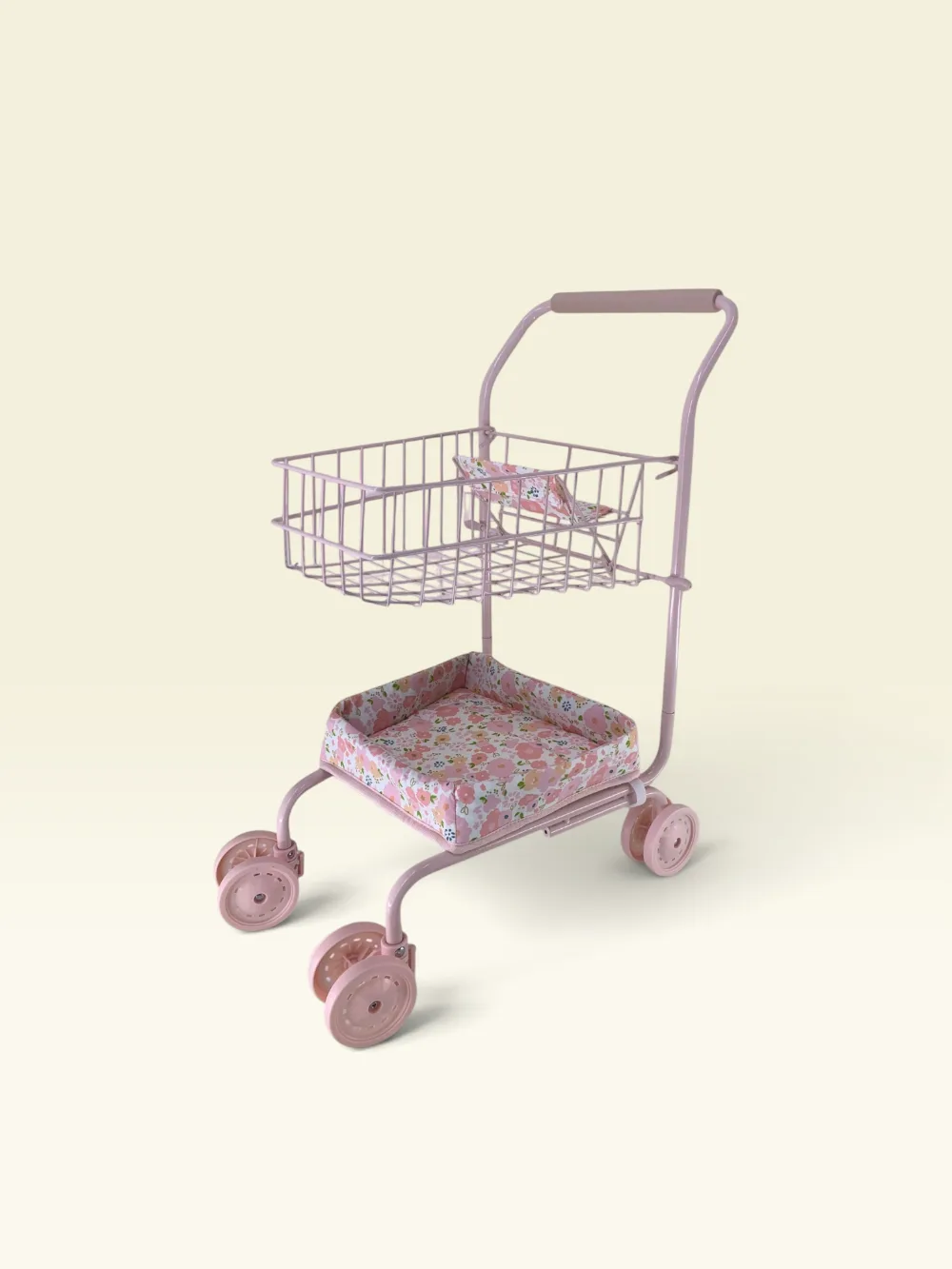
Toy Shopping Cart - Garden Blush
Who This Cart Fits Best
Best for
- Toddlers who love pretend play and role-playing grocery shopping
- Families with space for a larger toy and who want a durable, long-lasting cart
Not for
- Families with very limited storage space who need a collapsible or ultra-compact option
- Toddlers who are still unsteady on their feet and need a push toy with a handle for support