Quick Answer
Choose a travel water bottle that fits your pack's side pocket, matches your hydration needs, and is made from safe, durable materials—like a wide-mouth Nalgene bottle.
Why Bottle Shape and Size Matter for Packing
Not all water bottles fit all packs. A tall, slim bottle may slide into a side pocket, while a wide bottle might only fit in the main compartment. Consider the depth and stretch of your pack's pockets before buying.
Capacity is about trade-offs: a 32 oz bottle holds enough for a full day of hiking but adds weight and bulk. If you carry a hydration reservoir, a smaller bottle might be enough for backup.
Wide-mouth designs are easier to fill from streams or filters and simpler to clean, but they can be bulkier in a pack. Narrow mouths are lighter and sometimes fit better, but they are harder to fill and clean.
Material Safety and Durability
Plastic bottles vary widely in quality. Look for materials that are free of BPA, BPS, BPF, and phthalates, especially if you'll be drinking from them daily.
Tritan Renew is a common material that meets these safety standards and is known for being tough and lightweight. It can handle drops and rough travel without denting like metal bottles.
Stainless steel is another option, but it is heavier and can dent. It also keeps drinks cold longer, which is a plus for some travelers but not essential for others.
Cleaning and Maintenance Considerations
A bottle you can't clean is a bottle you won't use. Wide-mouth bottles are easier to scrub by hand, and many are dishwasher-safe. Check the manufacturer's care instructions.
If you use flavored drinks or electrolytes, a wide mouth makes it easier to add powders and clean residue. Some bottles have special coatings that can be damaged by harsh detergents.
For travel, consider how often you'll be able to wash the bottle. A simple design with fewer parts is easier to maintain on the road.
Decision Rules for Choosing Your Travel Water Bottle
- Check Pack Compatibility: Measure your pack's side pocket depth and width. If the bottle is taller than the pocket, it may fall out. If it's too wide, it won't fit. Choose a bottle that fits snugly but can be removed easily.
- Match Capacity to Usage: For day hikes, 32 oz is a good balance. For longer trips without refills, consider a larger bottle or carry a backup. If you have a reservoir, a smaller bottle can serve as a backup or for mixing drinks.
- Prioritize Safe Materials: Look for bottles labeled BPA-free and free of BPS, BPF, and phthalates. Tritan Renew is a reliable choice. Avoid unknown plastics that may leach chemicals. Check the bottom of the bottle for recycling codes and material labels.
- Choose Wide-Mouth for Versatility: Wide-mouth bottles are easier to fill, clean, and add ice. They work well with most water filters. If you prioritize lightweight and compact, a narrow mouth may be better, but you'll sacrifice convenience.
- Consider Weight and Bulk: A 32 oz bottle adds about a pound when full. If you're ultralight, consider a collapsible bottle or a smaller capacity. If you're car camping, weight matters less.
Product Facts
-
Maxpedition® 32 Oz. Wide-Mouth Nalgene Bottle: The Maxpedition® 32 oz. Wide-Mouth Nalgene Bottle is made from tough Tritan Renew material, free of BPA, BPS, BPF, and phthalates, and is built in the U.S.A. This gives you a safe, durable bottle that can handle rugged travel without worrying about harmful chemicals.
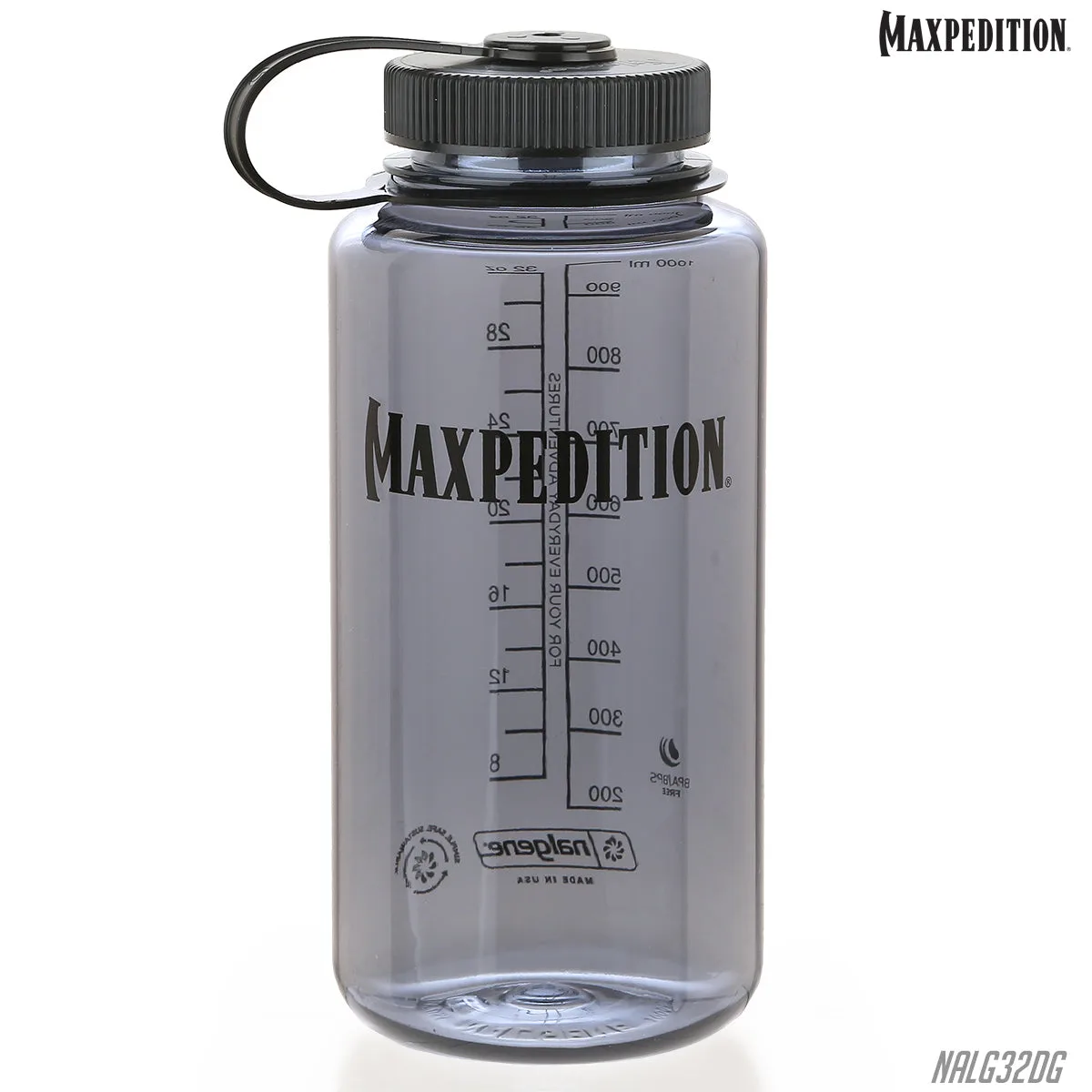
Maxpedition® 32 Oz. Wide-Mouth Nalgene Bottle
Who This Bottle Is For
Best for
- Travelers who need a durable, safe bottle that can handle rough conditions
- Hikers who want a large capacity and easy filling from streams or filters
Not for
- Ultralight backpackers who prioritize minimal weight and bulk
- Those who prefer insulated bottles to keep drinks cold for hours