Quick Answer
Choose a spotting scope tripod that supports at least 1.5 times your scope's weight, extends to your eye level without raising the center column, and uses a fluid pan head for smooth tracking.
Why Load Capacity Matters More Than You Think
A tripod that's rated just above your scope's weight may wobble in wind or when you touch the focuser. The real rule is to pick a tripod with a load capacity at least 50% above your fully rigged spotting scope (including eyepiece and adapter). This buffer keeps vibrations low and makes fine adjustments easier.
For example, a 3-pound spotting scope needs a tripod rated for at least 4.5 pounds. That's why heavy-duty models like the Celestron Regal Premium Tripod are popular: they offer plenty of headroom for most mid-size scopes.
Height and Setup: Avoid the Center Column Trap
Many tripods reach your eye level only by extending the center column. But a raised center column acts like a lever, amplifying shake. Instead, look for a tripod whose legs alone bring the eyepiece to your eye level when you sit or stand comfortably.
The Tele Vue Tele-Pod Aluminum Tripod, for example, adjusts from 28.8 to 60 inches, so most users can set it up without cranking the column. That's a sign of a well-designed tripod for spotting scope work.
Head Type: Fluid Pan vs. Ball Head
For spotting scopes, a fluid pan head is the standard choice. It lets you pan smoothly across a landscape and lock in place with less backlash. Ball heads are more compact but harder to fine-tune for slow, steady tracking.
The Celestron Regal Premium Tripod includes a two-way fluid pan head with an upgraded quick release plate, so you can attach your scope quickly and move it without jerky motions.
Decision Rules for Your Spotting Scope Tripod
- Load capacity: Check the tripod's load rating. It should be at least 1.5 times the weight of your spotting scope with eyepiece and adapter. Weigh your full setup before comparing tripods.
- Height without center column: Set up the tripod with legs fully extended but center column down. The eyepiece should reach your eye level when you're in your normal viewing position. If you must raise the column more than a few inches, the tripod is too short.
- Head type: Choose a fluid pan head for smooth panning and easy locking. Avoid ball heads unless you only need quick, coarse adjustments. Test the head's tension control to ensure it holds your scope without drift.
- Stability features: Look for leg angle locks, a weight hook, and a bubble level. These help you set up on uneven ground and add mass to damp vibration. Hang your backpack from the hook to improve stability in wind.
- Mount compatibility: Ensure the tripod's head or platform matches your scope's mounting thread (usually 1/4"-20 or 3/8"-16). Some tripods offer reversible adapters. Check your scope's thread size before buying; adapters are available if needed.
Two Solid Tripods for Spotting Scopes
-
Celestron Regal Premium Tripod - 82052: The Celestron Regal Premium Tripod comes with a two-way fluid pan head and an upgraded quick release plate. You get smooth panning and fast scope attachment, which is ideal for birding or nature observation.
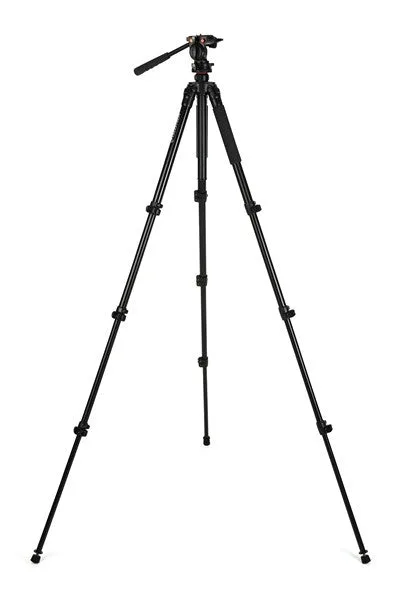
Celestron Regal Premium Tripod - 82052
-
Tele Vue Tele-Pod Aluminum Tripod Only - TPT-3017: The Tele Vue Aluminum Tripod for Tele-Pod Mounts is height adjustable from 28.8" to 60" and features a center column with a weight hook. The wide height range suits both seated and standing users, and the weight hook lets you hang a bag for extra stability.
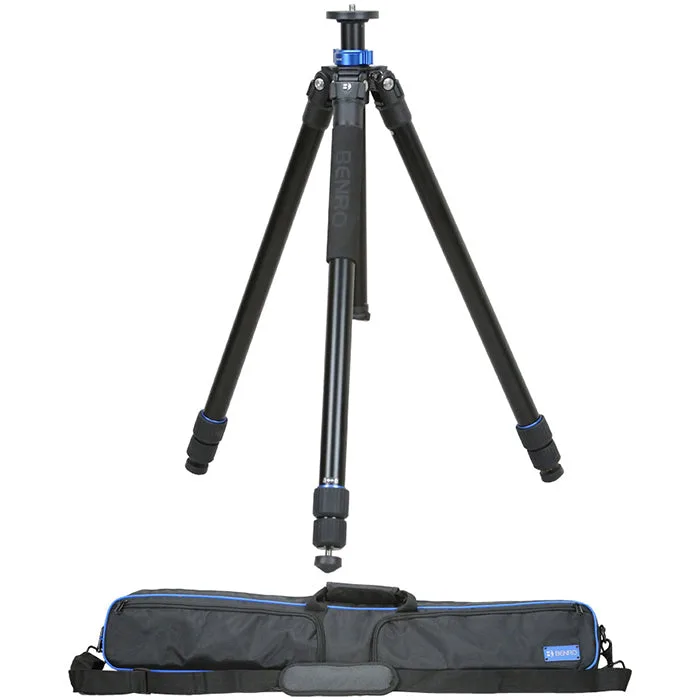
Tele Vue Tele-Pod Aluminum Tripod Only - TPT-3017
Which Tripod Fits You?
Best for
- Birders and nature observers who need smooth panning and quick setup – the Celestron Regal Premium Tripod's fluid head is a great match.
- Users who want a lightweight, height-adjustable tripod for a Tele-Pod mount or threaded mount – the Tele Vue Tele-Pod Aluminum Tripod fits well.
Not for
- Heavy astronomical telescopes over 10 pounds – these tripods are designed for spotting scopes and small scopes, not large optical tubes.
- Users who need a video-style tripod with a separate pan handle – consider a dedicated video tripod instead.