Quick answer
Choose a plush microfiber or chenille wash mitt with a soft, high-nap surface to trap dirt away from paint. Avoid cheap terry cloth or rough materials that can cause swirl marks.
Why mitt material matters for paint safety
The wash mitt is the only thing between your paint and the dirt you're trying to remove. A harsh material or one that doesn't hold enough soapy water can grind grit into the clear coat, causing fine scratches and swirls. Soft, absorbent fibers like microfiber and chenille lift and trap particles, keeping them away from the surface.
Nap length is also key. Longer fibers (around 1.5 inches or more) create a deeper pile that captures debris better than short, flat materials. This is why many detailers prefer chenille or thick microfiber mitts over standard terry cloth.
Microfiber vs. chenille vs. natural wool
Microfiber wash mitts are popular because they are synthetic, non-abrasive, and dry quickly. They come in various pile heights and are machine washable. Chenille mitts, made from long, looped microfiber strands, offer superior dirt-trapping ability and are extremely gentle on paint. Natural wool mitts are traditional and very soft when wet, but they can shed and require more care to avoid odor.
For most modern cars with clear coat finishes, a high-quality microfiber or chenille mitt is the safest choice. Wool is a good option for classic cars with single-stage paint, but it's less convenient for regular use.
How to pick the right wash mitt: decision rules
- Check the fiber type: Choose microfiber or chenille for modern clear coat paints. Avoid cotton terry or rough synthetic blends that can mar the finish.
- Look for a high nap or pile: A nap of 1.5 inches or more provides better dirt-trapping and lubrication. Short-nap mitts are more likely to drag debris across the paint. Measure the pile height if listed; otherwise, look for "plush" or "high-nap" in the description.
- Consider the mitt design: Mitts with a microfiber or chenille surface on both sides offer more washing surface and are easier to rinse. A contoured pocket or elastic cuff helps keep the mitt secure on your hand.
- Prioritize washability: Choose a mitt that can be machine washed and air dried. This extends its life and prevents bacteria buildup that can cause odors and degrade the fibers. Wash your mitt separately after each use with a gentle detergent; never use fabric softener.
- Test for softness: If possible, feel the mitt before buying. It should feel soft and fluffy, not scratchy or stiff. A gentle rub on your forearm can reveal any roughness.
Product spotlight
-
Chenille Wash Pad: The Chenille Wash Pad is an ultra-soft, super-absorbent car-washing tool that can reach and clean any curved contour, flat panel, or intricate detail on your vehicle’s exterior. Its long, plush chenille fibers trap dirt and grit deep inside the pad, preventing them from scratching the paint during a wash.
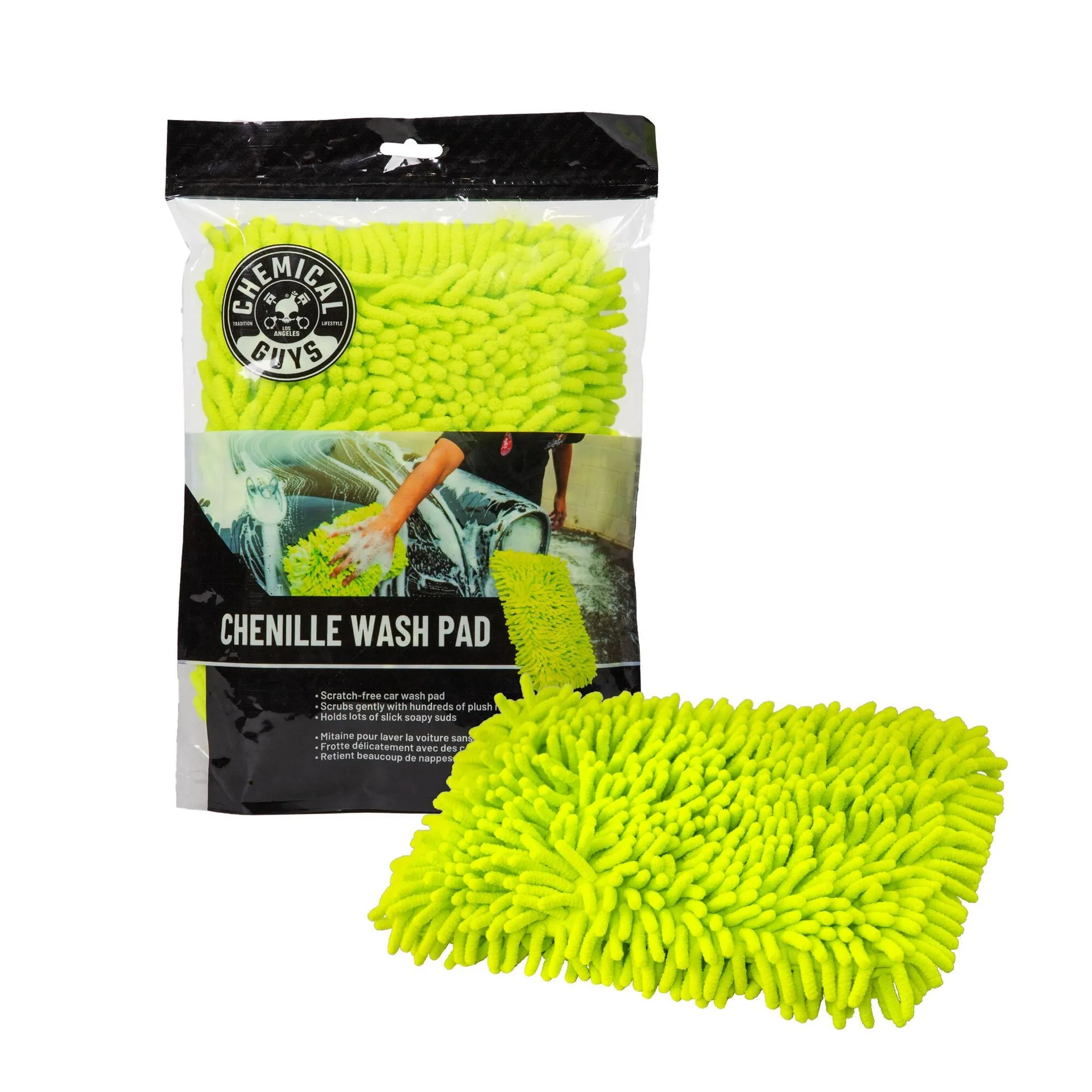
Chenille Wash Pad
Who should use what
Best for
- Daily drivers and modern clear coat finishes: a plush microfiber or chenille mitt like the Chenille Wash Pad
- Enthusiasts who wash frequently: a machine-washable mitt with a high nap for maximum dirt trapping
Not ideal for
- Heavy contamination or neglected paint: use a mitt with a dedicated grit guard and two-bucket method instead of relying solely on mitt material
- Single-stage or vintage paint: natural wool may be gentler than some synthetic mitts, but requires more careful maintenance