Quick answer
For newborns, look for a carrier that supports proper hip positioning (the “M” position) and has adjustable settings to grow with your baby. A 2-in-1 carrier with a hip seat offers flexibility, but ensure the seat width is narrow enough for a newborn’s smaller frame.
Why newborn-specific features matter
Newborns have fragile neck and spine muscles, so a carrier must provide adequate head and neck support. Many carriers include an infant insert or adjustable headrest to keep the baby’s airway clear. Without these features, you risk compromising your baby’s safety and comfort.
Additionally, a carrier that forces the baby’s legs into a dangling position can strain developing hips. Look for a carrier that naturally positions the baby’s knees higher than their bottom—the ergonomic “M” shape—to support healthy hip development.
Trade-offs: hip seat carriers vs. soft structured carriers
Hip seat carriers (like the MiaMily Hipster Plus) combine a seat and a carrier, giving you the option to use the seat alone for quick holds or the full carrier for longer walks. This versatility is handy, but the seat adds bulk and may feel less snug for a very small newborn. Soft structured carriers (SSCs) are typically lighter and easier to adjust for a tiny baby, but they lack the hip seat’s convenience for short carries.
If you plan to carry your newborn for extended periods, an SSC with a wide waistband and lumbar support (like the MiaMily’s design) can reduce back strain. For quick errands, a hip seat carrier might be more practical. Consider your daily routine and how long you expect to wear the carrier.
Decision rules for choosing a newborn carrier
- Check for proper hip positioning: Ensure the carrier supports the baby’s legs in an “M” shape—knees higher than bottom—with a wide enough base to support from knee to knee. Avoid carriers that let the legs dangle straight down.
- Look for adjustable seat width: Newborns have a smaller hip width. A carrier with an adjustable seat or narrow setting will fit better and prevent the baby from sinking too deeply into the fabric.
- Confirm head and neck support: The carrier should have a high back panel or an adjustable headrest that can be raised to support the baby’s head. For newborns, the panel should reach the nape of the neck.
- Consider your carrying duration: If you plan to carry for more than 30 minutes at a time, prioritize a carrier with a padded waistband and lumbar support. For short trips, a hip seat carrier may be more convenient.
- Test the ease of adjustment: A carrier that is difficult to put on or adjust may discourage use. Look for buckles and straps that are easy to reach and tighten, especially if you’ll be wearing the carrier alone. If possible, try the carrier with a doll or stuffed toy before your baby arrives to ensure you can adjust it comfortably.
Product highlights
-
MiaMily Hipster Plus: 2-in-1 Carrier & Hip Seat: The MiaMily Hipster Plus has an ergonomic design that keeps baby’s hips in the optimal “M” sitting position, with knees even at hip level. This supports healthy hip development from the newborn stage onward, reducing the risk of hip dysplasia.
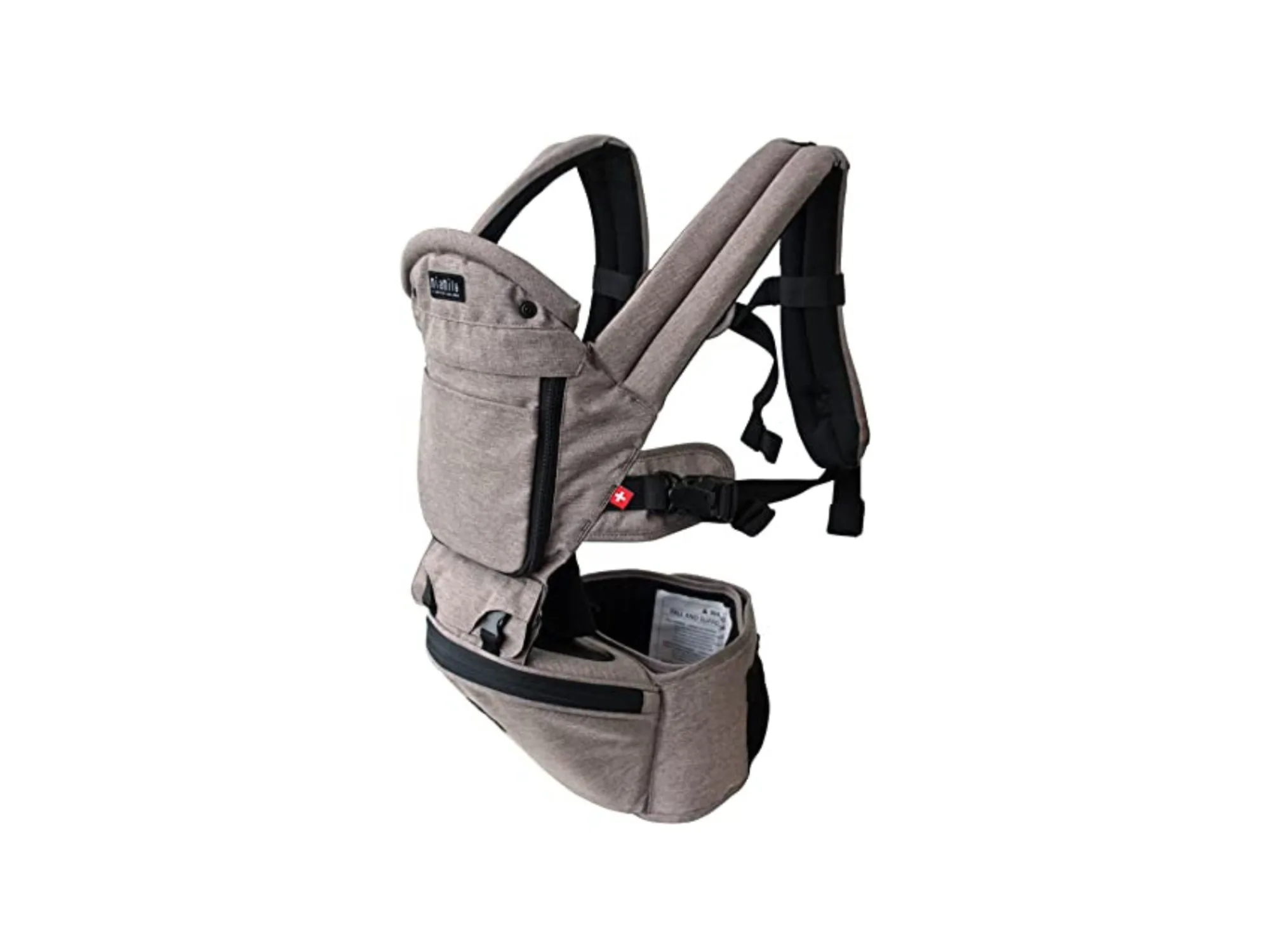
MiaMily Hipster Plus: 2-in-1 Carrier & Hip Seat
-
MiaMily Hipster Plus: 2-in-1 Carrier & Hip Seat: It offers 6 different carry options, multiple safety features, and extra storage. You can adjust the carry position as your baby grows, making the carrier useful from newborn to toddlerhood.
Who should buy what
Best for
- Parents who want a single carrier that works from newborn to toddler and offers multiple carry positions
- Caregivers who value lumbar support for longer babywearing sessions
Not ideal for
- Parents who prefer a minimalist, lightweight carrier for quick trips only
- Those who need a carrier that can be used immediately without any adjustment or insert for a very small newborn (check the minimum weight and seat width first)