Quick answer
For newborns and infants, look for a baby carrier that offers adjustable head and neck support, a wide ergonomic seat, and the ability to adapt as your baby grows without needing extra inserts.
Why adjustability matters for newborns
Newborns grow quickly, and a carrier that fits at birth may not work well at three months. Adjustable carriers let you change the seat width and panel height to maintain proper hip and spine positioning as your baby gains weight and length. This avoids the need to buy a second carrier later.
Breathability and comfort for warm-weather use
Babies can overheat quickly when carried close to your body, especially in summer or during travel. Lightweight, breathable fabrics help regulate temperature and keep both you and your baby comfortable. Mesh panels or thin cotton blends are good options to look for.
Safety certifications and standards
Always check that the carrier meets current safety standards, such as ASTM F2236 in the U.S. or equivalent regulations in your region. A safe carrier will have secure buckles, reinforced stitching, and clear weight limits. Avoid carriers with loose padding or unsecured straps that could shift during use.
Decision rules for choosing a baby carrier
- Check weight and age range: Ensure the carrier supports your baby's current weight and is designed for newborns. Many carriers start at 7–8 lbs, but some require an infant insert for babies under that threshold.
- Look for adjustable seat width: A carrier with a seat that can be narrowed for a newborn and widened as they grow supports healthy hip development (the M-position). Fixed-width seats may not fit small infants properly.
- Verify head and neck support: Newborns lack neck control, so the carrier should have a padded headrest or a high back panel that can be adjusted to support the head when the baby sleeps. This also helps maintain an open airway. If the carrier has a removable hood or sunshade, it can double as neck support for naps.
- Test the harness system: Cross-back or H-back straps distribute weight differently. Try both styles if possible. A well-designed harness should not dig into your shoulders or lower back, even after 30 minutes of wear.
- Consider ease of cleaning: Newborns spit up, drool, and have diaper leaks. A carrier that can be machine-washed or spot-cleaned easily will stay fresh longer. Check the care label before buying.
Product spotlight
-
The Baby Carrier, Black: The Baby Carrier, Black is perfectly adjustable, lightweight, and breathable. It adapts as your baby grows (from newborn to 33 lbs.) so you never need an infant insert. This means one carrier can take you from the first week home through toddlerhood, saving you the cost and hassle of buying multiple carriers.
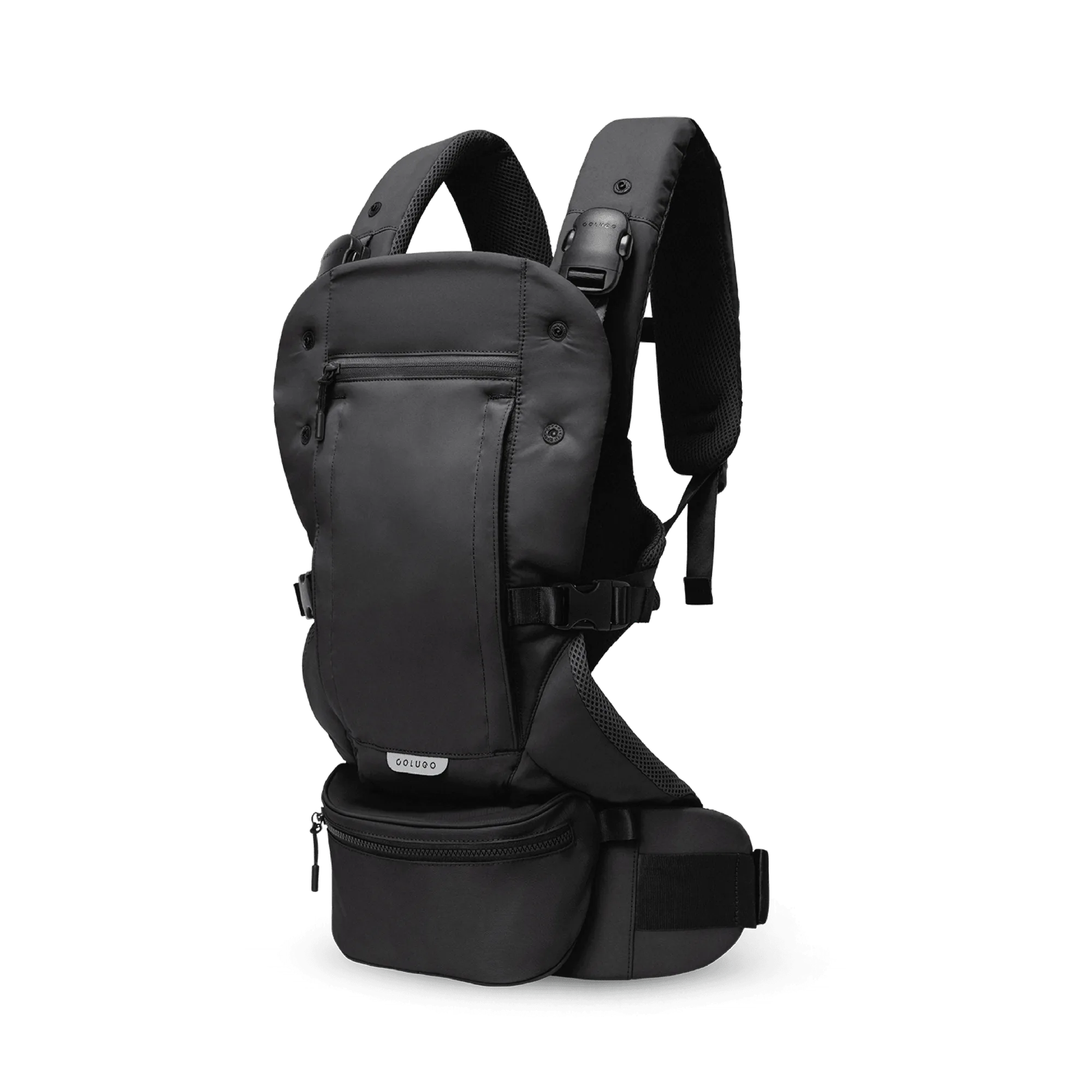
The Baby Carrier, Black
Who this carrier works best for
Best for
- Parents who want one carrier that adapts from newborn to toddler without extra inserts
- Families who prioritize lightweight, breathable carriers for warm-weather or travel use
Not ideal for
- Parents who prefer a structured, heavily padded carrier for long hikes or heavy toddlers near the weight limit
- Those who need a carrier specifically designed for twins or for carrying two children at once