Quick Answer
For first walkers, choose soft-soled, flexible leather shoes that allow natural foot movement and provide a snug but comfortable fit. Prioritize breathable materials and easy closures.
Why Soft Soles Matter for First Steps
When babies start walking, their feet are still developing. Hard or rigid soles can restrict natural movement and make it harder for them to balance. Soft soles allow the foot to flex and grip the ground, which helps strengthen muscles and improve coordination.
Leather is a popular choice because it is soft, breathable, and molds to the foot over time. It also provides a bit of protection without being too stiff. Look for shoes with a flexible sole that you can easily bend with your hands.
The Right Fit: Room to Grow
A proper fit is crucial. Shoes that are too tight can cause discomfort and blisters, while shoes that are too loose can lead to trips and falls. Always measure your baby's feet before buying and check the fit regularly, as feet grow quickly.
A good rule of thumb is to leave about a thumb's width of space at the toe. This allows for natural toe movement and some growing room. Also, make sure the heel doesn't slip and that the shoe stays securely on the foot.
Easy Closures and Secure Straps
First walkers are learning to move, so shoes need to stay on. Velcro straps are a practical choice because they are easy for parents to adjust and provide a secure fit. They also allow for quick changes, which is helpful when your baby is impatient.
T-bar closures and adjustable straps can help keep the shoe in place without being too tight. Avoid shoes with laces that can come undone and become a tripping hazard.
Decision Rules for First Walker Shoes
- Sole Flexibility: Choose shoes with soft, flexible soles that bend easily. Avoid hard, rigid soles that restrict natural foot movement. Test the sole by bending it with your hand—it should flex without much effort.
- Material: Opt for breathable, soft leather that molds to the foot. Avoid stiff synthetic materials that can cause discomfort. Check that the leather is smooth and free of rough seams inside.
- Fit: Measure your baby's feet and leave about a thumb's width of space at the toe. Ensure the heel doesn't slip and the shoe stays secure. Re-measure every few weeks, as baby feet grow quickly.
- Closure: Choose shoes with Velcro or adjustable straps for a secure, easy fit. Avoid laces that can come undone. Make sure the strap is easy to adjust and doesn't press on the top of the foot.
- Seasonal Needs: Consider the weather: breathable sandals for summer, warm booties for winter. Ensure the shoe provides appropriate protection for the season. Have a pair for each season to keep feet comfortable and protected.
Product Options for First Walkers
-
Morris Sneakers | Panda | Off White Leather: Made from the softest premium leather and finished with signature Donsje characters. Soft premium leather is gentle on developing feet and adds a charming touch that kids love.
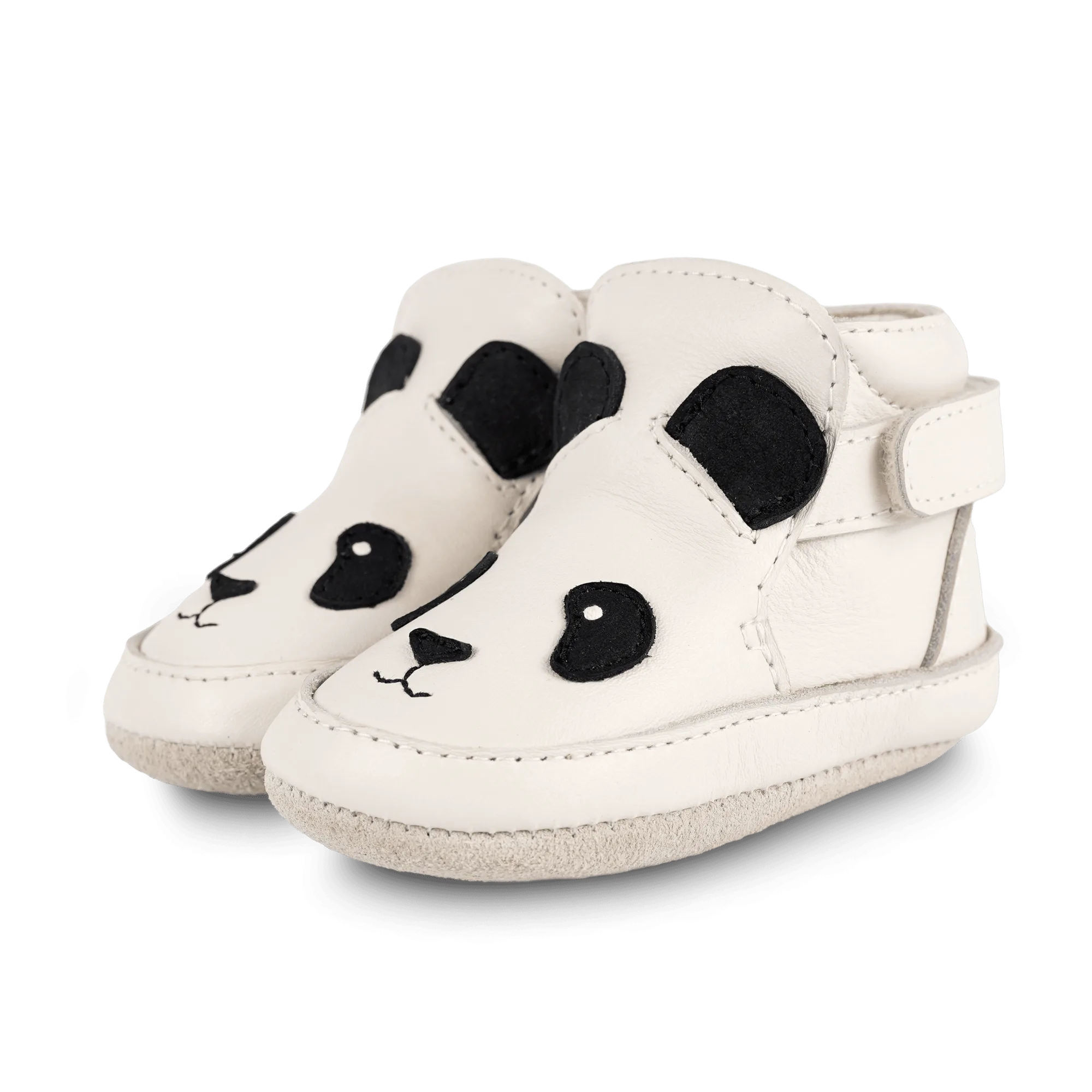
Morris Sneakers | Panda | Off White Leather
-
Kapi Exclusive Booties | Mouse | Praline Leather: Features an easy-to-use Velcro fastening strap and a signature animal-inspired character. The Velcro strap ensures a secure fit that is easy for parents to adjust, ideal for winter wear.
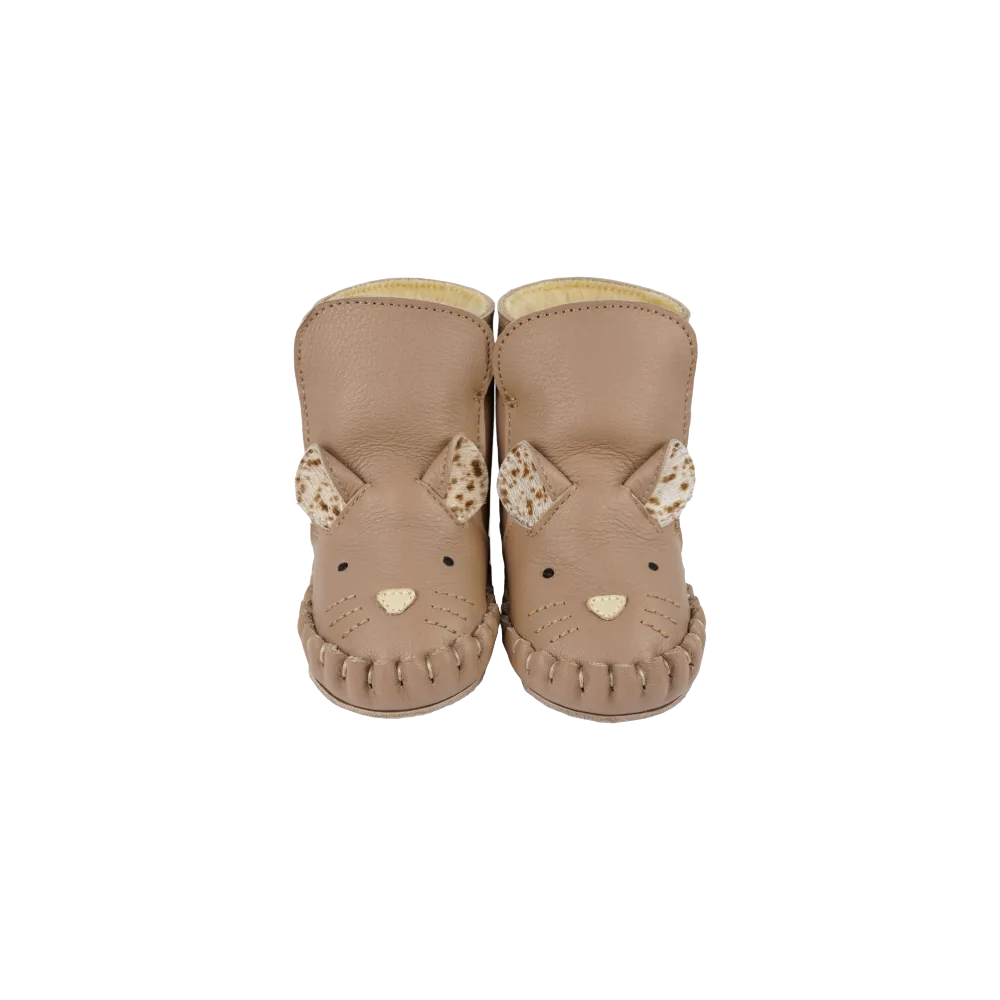
Kapi Exclusive Booties | Mouse | Praline Leather
Who Should Choose What
Best For
- First walkers who need soft, flexible shoes for indoor and outdoor use
- Parents looking for breathable, leather shoes that support natural foot development
Not For
- Toddlers who are already walking confidently and need more structured support for long outdoor walks
- Parents who prefer machine-washable shoes, as leather requires special care