Read the room before you read the label
TOG is a warmth rating, not a season. The same 1.0 TOG bag that feels right in a 72°F nursery in January is too much in a 78°F top-floor bedroom in July. So the first step in choosing a baby sleep bag TOG is not browsing prints — it is finding out how warm your baby's room actually gets overnight.
Put a nursery thermometer where your baby sleeps, away from a radiator, vent or window, and check it a few times during the night. That number, not the calendar, decides which weight you reach for. The rest of this guide maps the three common TOG weights to the room temperatures the supplied product information gives for each.
The three TOG weights and the rooms they cover
Each Loulou Lollipop sleep bag in this guide is rated for a specific nursery temperature band. Start with the band your thermometer lands in, then use the layer underneath to fine-tune within it.
- 0.5 TOG — 75–81°F: The warm-room weight. Built for summer nights, top-floor bedrooms and homes without central air. Sleeveless, in breathable open-weave muslin.
- 1.0 TOG — 69–75°F: The year-round workhorse. The supplied information describes this as the weight you will use about nine months of the year in a typical nursery.
- 2.5 TOG — 61–68°F: The cold-room weight. For cold-snap winters, drafty older homes and basement bedrooms. Below 61°F, the supplied guidance is to raise the thermostat rather than add more bag.
What the 0.5 TOG muslin bag is built for
-
Baby Muslin Sleep Bag 0.5 TOG in Tanboocel® Viscose from Bamboo - Dinosaur Stomp: Rated for nursery temperatures between 75 and 81°F; the supplied information calls it the lightest sleep bag in the line and the one to reach for when a 1.0 TOG starts to feel like too much. If your thermometer sits in that band on summer nights, this is the weight that matches the room instead of fighting it.
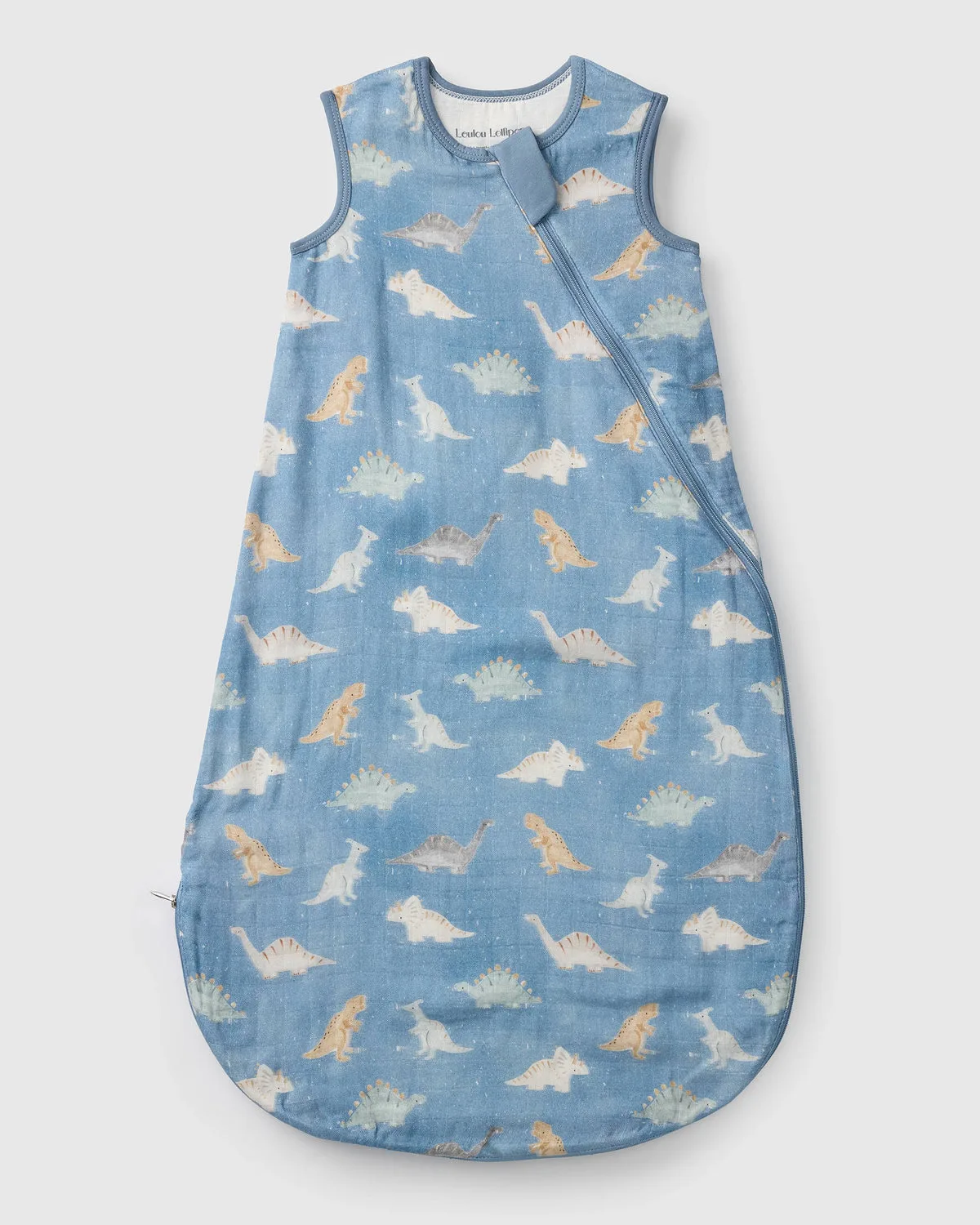
Baby Muslin Sleep Bag 0.5 TOG in Tanboocel® Viscose from Bamboo - Dinosaur Stomp
-
Baby Muslin Sleep Bag 0.5 TOG in Tanboocel® Viscose from Bamboo - Dinosaur Stomp: Tanboocel® bamboo viscose blended with cotton and woven into open-weave muslin, sleeveless on purpose so your baby sheds heat instead of trapping it. Breathability is the point at this weight: a sweaty back at 2 a.m. is often a warmth problem, not a hunger one.
-
Baby Muslin Sleep Bag 0.5 TOG in Tanboocel® Viscose from Bamboo - Dinosaur Stomp: Sizes 0–6M (8–18 lb), 6–18M (18–28 lb) and 18–36M (28–38 lb); the supplied guidance is to size to current weight, not age. A bag that is too long or loose at the shoulders will not fit the way the safe-sleep cut intends, whatever the TOG.
Why 1.0 TOG earns its place most nights
-
Baby Sleep Bag 1.0 TOG in TENCEL™ Lyocell - Smiley Sharks: Rated for a 69–75°F nursery, described as the year-round weight used about nine months of the year. Most US nurseries sit in this band, so this is the weight to buy first if you are only buying one.
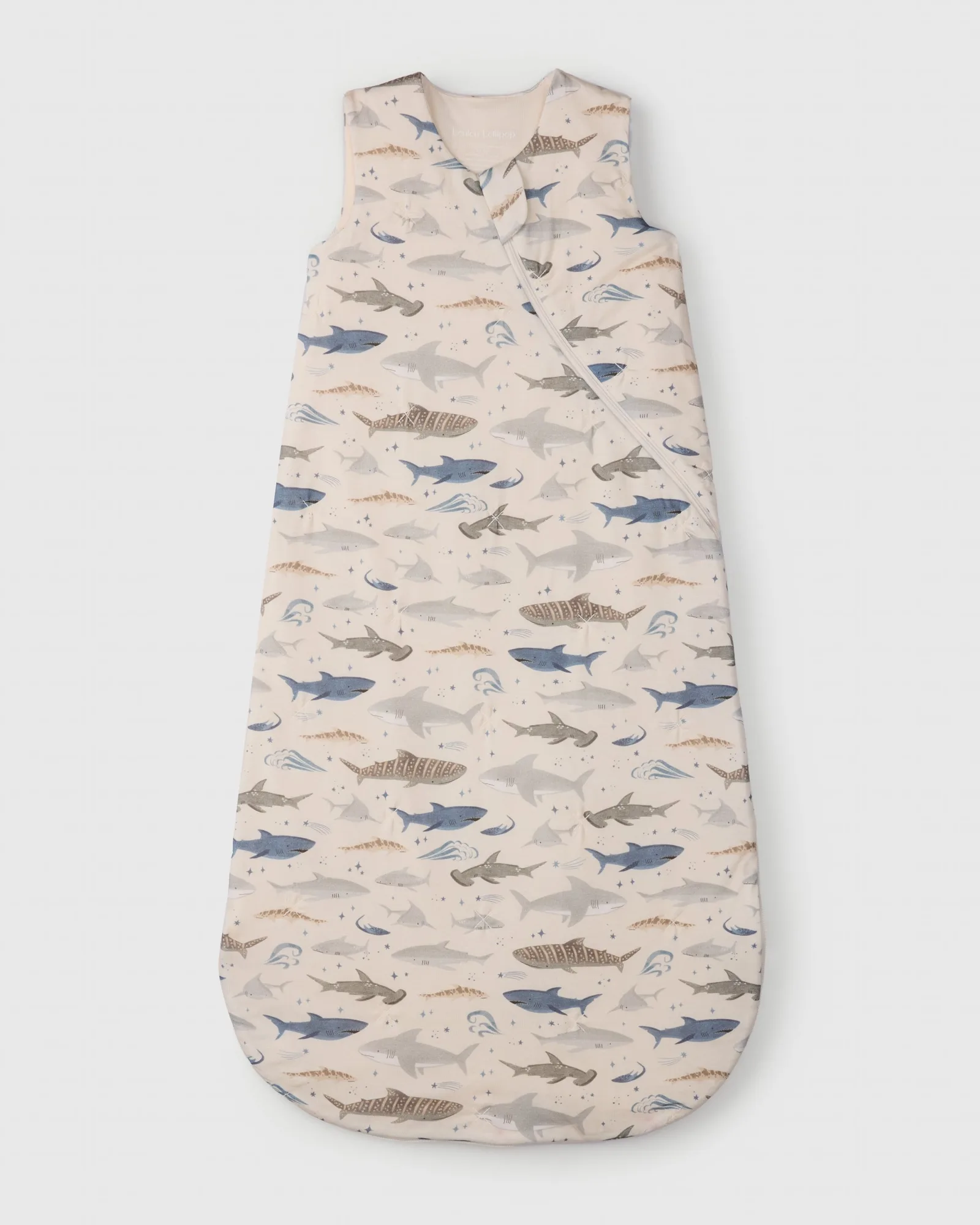
Baby Sleep Bag 1.0 TOG in TENCEL™ Lyocell - Smiley Sharks
-
Baby Sleep Bag 1.0 TOG in TENCEL™ Lyocell - Smiley Sharks: A TENCELTM Lyocell shell over a light layer of DuPontTM Sorona insulation, a plant-based fill that holds warmth without bulk. It is warm enough for a typical night and light enough that the baby is not overheated — the balance that makes a 1.0 TOG bag the everyday choice.
-
Baby Sleep Bag 1.0 TOG in TENCEL™ Lyocell - Smiley Sharks: Supplied layering guidance: a short-sleeve bodysuit at 74–75°F, a long-sleeve bodysuit at 70–73°F, or a sleeper at 69–70°F. This is how you fine-tune a 1.0 TOG bag across its whole range without buying a second weight.
When the nursery drops below 69°F
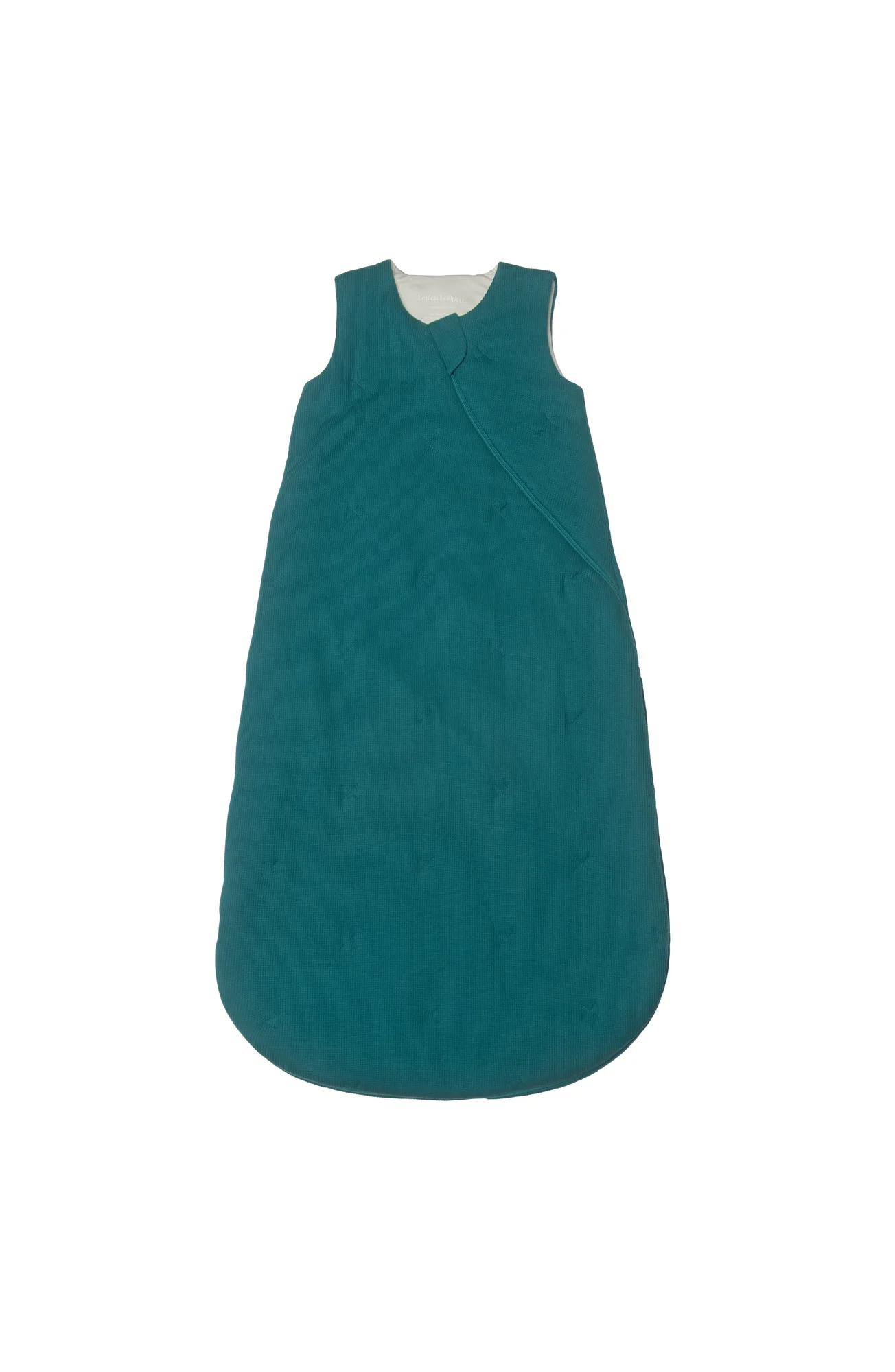
- Waffle Baby Sleep Bag 2.5 TOG in TENCEL™ Lyocell - Peacock: The waffle-knit 2.5 TOG bag is rated for a cold 61–68°F nursery — cold-snap winter, drafty older homes, basement bedrooms. If your overnight thermometer regularly reads in the low 60s, a 1.0 TOG bag plus extra clothing is the wrong tool; this is the weight built for that room.
- Waffle Baby Sleep Bag 2.5 TOG in TENCEL™ Lyocell - Peacock: A waffle-knit TENCELTM Lyocell shell over a fuller layer of DuPontTM Sorona insulation; the waffle weave adds loft and holds warmth without the bulk of a heavier bag. Loft is what makes a cold-room bag warm without turning it into a snowsuit on a six-month-old.
- Waffle Baby Sleep Bag 2.5 TOG in TENCEL™ Lyocell - Peacock: The supplied information notes that doubling a sleeper under a 1.0 TOG bag is a common winter workaround but can overheat a baby faster than a single 2.5 TOG bag. If you are stacking layers to compensate for a cold room, switching to the right TOG is the simpler and safer correction.
A four-step routine for picking tonight's bag
- 1. Check the thermometer: Read the nursery temperature where your baby sleeps, not the thermostat in the hall. Note which band it falls in: 75–81°F, 69–75°F or 61–68°F.
- 2. Pick the matching TOG: 0.5 TOG for 75–81°F, 1.0 TOG for 69–75°F, 2.5 TOG for 61–68°F. If the room is below 61°F, the supplied guidance is to raise the thermostat rather than size up the bag.
- 3. Choose the layer underneath: Within the 1.0 TOG band, the supplied guidance runs from a short-sleeve bodysuit at the warm end to a sleeper at the cool end. Use the same idea to fine-tune the other weights.
- 4. Size to current weight: All three bags use the same weight-based sizing: 0–6M for 8–18 lb, 6–18M for 18–28 lb, 18–36M for 28–38 lb. Check the shoulders fit snugly so the bag cannot slip over the face.
What overheating looks like, and why the fit matters as much as the TOG
A bag that is too warm for the room shows up as a hot, sweaty baby at the back of the neck, restlessness, or a baby who wakes flushed. The supplied information frames the 0.5 TOG muslin as the fix for exactly that 2 a.m. sweaty back in a warm room — breathable muslin moves humidity off the skin instead of trapping it, where fleece would hold heat in.
Fit is the other half of the equation. On all three bags the neck and arm openings are bound in soft fabric and cut snug, which the supplied information identifies as the part that matters most for safe sleep: a neck opening that is too wide can ride up over your baby's face during the night. That is why you size to weight rather than age, and why a bag that is roomy in the body but loose at the neck is the wrong compromise.
All three bags are described as AAP safe-sleep compliant and tested to CPSC, CPSIA and ASTM standards, with material certified to OEKO-TEX Standard 100. The supplied information does not give a tog rating for every possible room temperature, so treat the three bands above as the supported ranges and adjust the layer underneath rather than guessing at a weight in between.
Care that keeps the rating honest
A sleep bag only does its job if the fabric keeps its loft and fit. All three bags are machine wash cold and tumble dry low. Do not bleach. Iron on low only if needed, and do not iron the printed areas on the Smiley Sharks and Peacock bags.
The materials are chosen with washing in mind: the Tanboocel® bamboo viscose in the 0.5 TOG bag is described as getting softer after the fifth wash, and the waffle texture in the 2.5 TOG bag relaxes in the wash and springs back in the dryer while keeping its loft longer than polyester batting. Wash them the way the labels say and the warmth rating you picked stays the warmth rating you get.