Quick answer
Choose baby socks by matching the size label to your baby's age and foot length, then check the cuff and toe seam. A turnover cuff or snug ribbed cuff keeps socks on, and a flat toe seam prevents rubbing. Pick a character or rattle design only after the fit is right.
Why baby socks slip off, and what actually helps
Most sock loss comes from a cuff that is too loose or a size that is too big. Newborn ankles are narrow and have little fat to hold a sock up, so a plain straight cuff often slides down. A turnover cuff gives a double layer of fabric at the ankle, which adds gentle grip without elastic marks. A ribbed cuff works similarly but must not leave a red indentation.
Fabric matters too. Cotton-rich blends with a small amount of elastane hold their shape after washing, while 100% cotton feels soft but can stretch out faster. Neither is wrong; match the fabric to how often you wash and how sensitive your baby's skin is.
Toe seams and inside finishes: the part you cannot see
Turn the sock inside out before the first wear. A thick, raised toe seam can rub against tiny toes, especially in shoes or when your baby is crawling. Flat seams or smoothly finished toes are worth looking for. Also check for loose threads inside; they can wrap around a toe.
This is also where cheap socks often fail. If the inside is rough or the heel is a bulky patch, the sock may be fine for a short outing but not for all-day wear.
When a character or rattle design is worth it
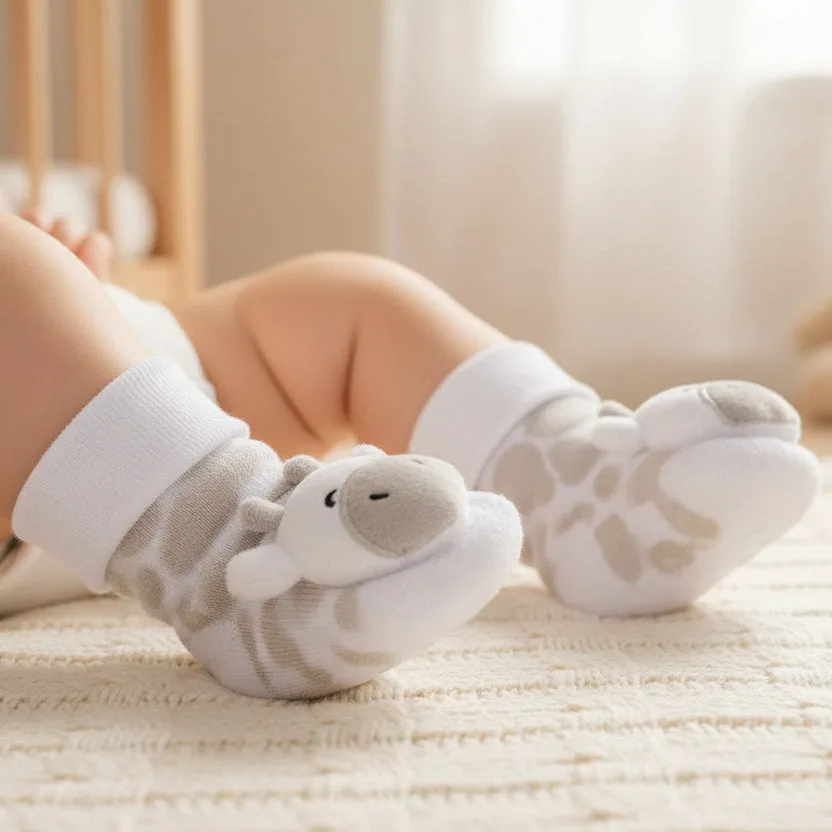
A character sock can make dressing easier because your baby may be more willing to keep it on, and it adds a little fun to everyday outfits. A rattle sock adds gentle sound with movement, which can distract a baby during nappy changes or tummy time. But these features should not replace fit. If the sock does not stay on, the design will not matter.
Keep sensory features for supervised play. A soft built-in rattle is generally fine for everyday wear, but check that it is securely enclosed and not a removable part.
Step-by-step: choosing and checking baby socks
- Measure the foot, then check the size label: Use a soft tape or ruler to measure from the back of the heel to the tip of the longest toe while your baby's foot is flat. Compare that length to the size chart, not just the age range. Age labels are a starting point; foot length is the real check. Common mistake: buying ahead by age alone, which leaves extra fabric that bunches and slides off. If the measurement falls between sizes, size up only if the cuff is adjustable; otherwise choose the smaller size for a snug fit.
- Choose a cuff style that matches your baby's ankles: For newborns and slim ankles, look for a turnover cuff or a ribbed cuff that springs back after stretching. For older babies who are crawling or walking, a snug ribbed cuff is usually enough. Check that the cuff does not leave a mark after ten minutes of wear. Common mistake: choosing a sock with a loose, straight cuff because it looks cute, then finding it at the ankle within minutes. A cuff that stays up without pressing is better than one that is simply tight.
- Turn the sock inside out and feel the toe seam: Run a finger along the inside toe seam. It should be flat and smooth, not thick or raised. Also check for loose threads that could catch a toe. Common mistake: skipping this check and discovering the seam only after your baby is fussy in shoes. If the seam is bulky, use the sock for bare-foot lounging rather than inside shoes.
- Match the fabric to the season and washing routine: Cotton-rich blends with a little elastane hold shape and wash well for everyday wear. Pure cotton is soft and breathable but may stretch out faster. For warmer rooms, a lighter cotton sock is enough; for cooler nights, a slightly thicker cotton-rich sock works. Common mistake: buying all one fabric type and finding some socks sag after a few washes. Buy two or three pairs of the same style you like so one can be in the wash.
- Decide whether a character or rattle feature helps your routine: A character sock can make dressing more cooperative, and a rattle sock can add gentle stimulation during supervised play. But check that any attached feature is securely fixed and that the sock still fits well. Common mistake: choosing a novelty sock that is too big or has a stiff cuff just because the design is appealing. Use rattle socks for play and check them before each wear for loose parts.
Product facts to know
-
Peter Rabbit Baby Socks – Yellow & Navy: Cotton-blend socks in size 6–12 months with a yellow Peter Rabbit design and contrasting navy heels and toes. A good option once your baby is past the newborn stage and you want a character sock with a defined size range.
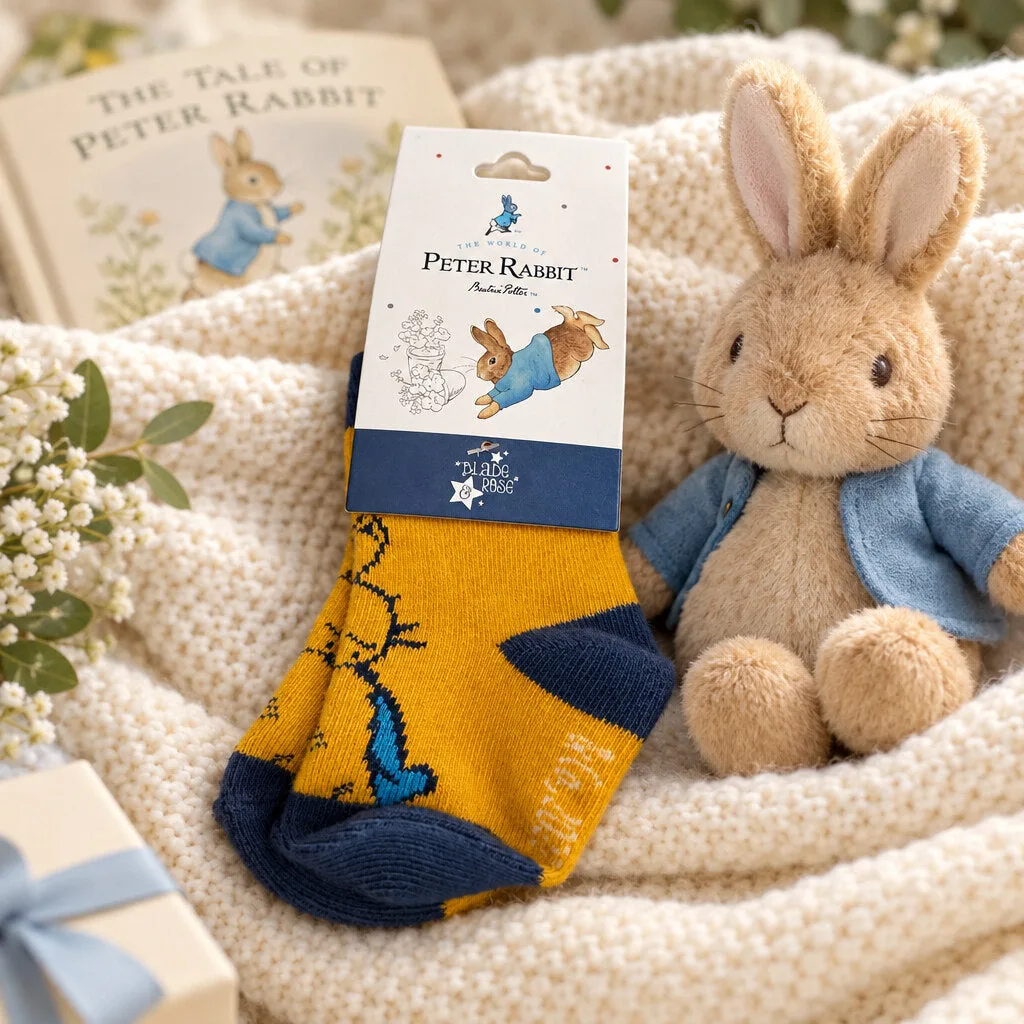
Peter Rabbit Baby Socks – Yellow & Navy
-
Soft Pink Baby Socks with Turnover Age 0-3 Months: 100% cotton newborn socks in soft pink with a classic turnover cuff, sized for 0–3 months. The turnover cuff adds hold for narrow newborn ankles, and the plain cotton suits sensitive skin.
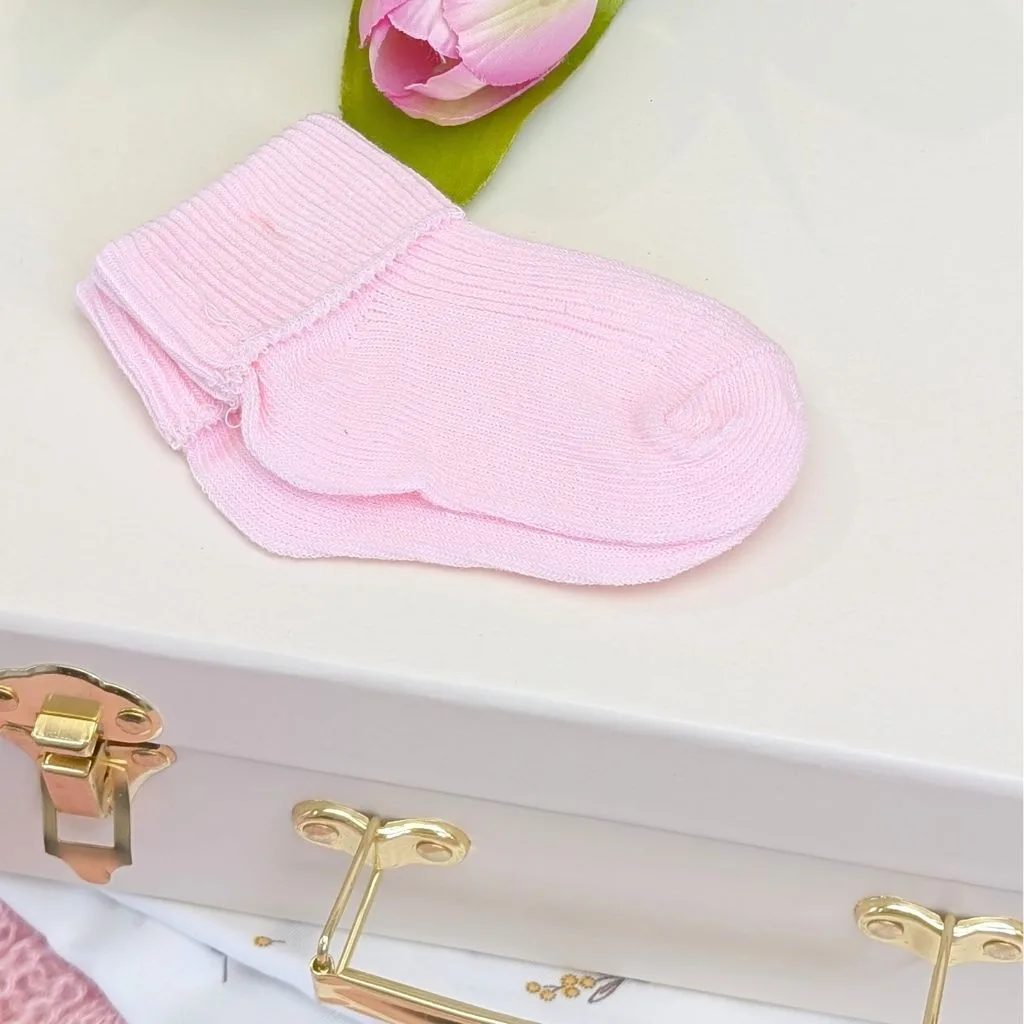
Soft Pink Baby Socks with Turnover Age 0-3 Months
-
Baby Rattle Socks - Grey Giraffe: Unisex giraffe rattle socks with a soft cotton-rich fabric, gentle stretch and a snug cuff. Useful if you want a sock that stays put and adds gentle sensory feedback during supervised play.