Quick answer
Start with your laptop size and your longest daily walk. If you carry a laptop plus books, choose a backpack with a dedicated padded laptop compartment and at least two other compartments. If you commute by bus, train, or bike, prioritize anti-theft zippers and a stable, padded back panel. If you fly home often, choose a ScanSmart model that lays flat at security.
A campus backpack has to survive more than a semester. It holds a laptop, charger, notebooks, a water bottle, and whatever else the day throws in. The right one keeps your electronics safe and your shoulders comfortable from the first lecture to the last library session.
This guide gives you decision rules instead of a list of features. You will match backpack types to real student routines, check fit before you buy, and see how specific SWISSGEAR models solve common campus problems.
Match the backpack to your laptop size first
Your laptop decides more than any other item. A 13-inch ultrabook fits almost any student laptop backpack, while a 17-inch gaming laptop needs a larger compartment and more padding. Measure your laptop diagonally before you shop, and check the backpack's stated laptop size. If the listing does not give a size, treat that as a limitation and look for a model that does.
The SWISSGEAR Fusion Pro Laptop Backpack is built around a 17-inch laptop and adds a felt-lined, hard-shell exterior pocket for eyewear. That matters if you carry a large screen and want your glasses protected without a separate case. For smaller laptops, a compact model such as the SWISSGEAR Mini 1900 ScanSmart Laptop Backpack keeps the load tighter and easier to manage on crowded paths.
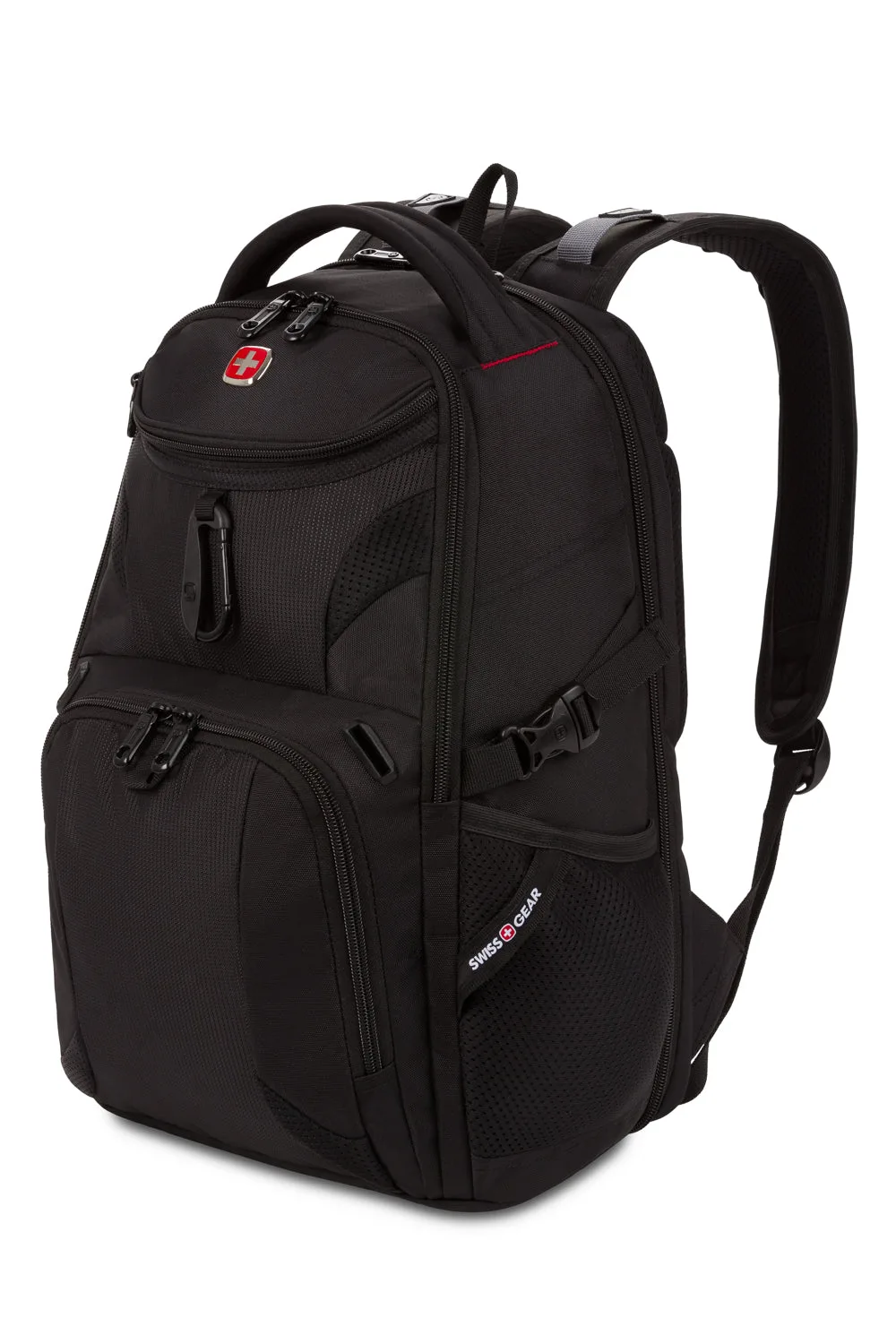
SWISSGEAR Mini 1900 ScanSmart Laptop Backpack
- Measure your laptop diagonally, then compare it to the backpack's stated laptop size.
- A dedicated laptop compartment with a stay-in-place strap prevents sliding during a fast walk.
- If you carry a tablet too, look for a separate tablet pocket rather than stacking both in one sleeve.
Choose compartments based on your daily load
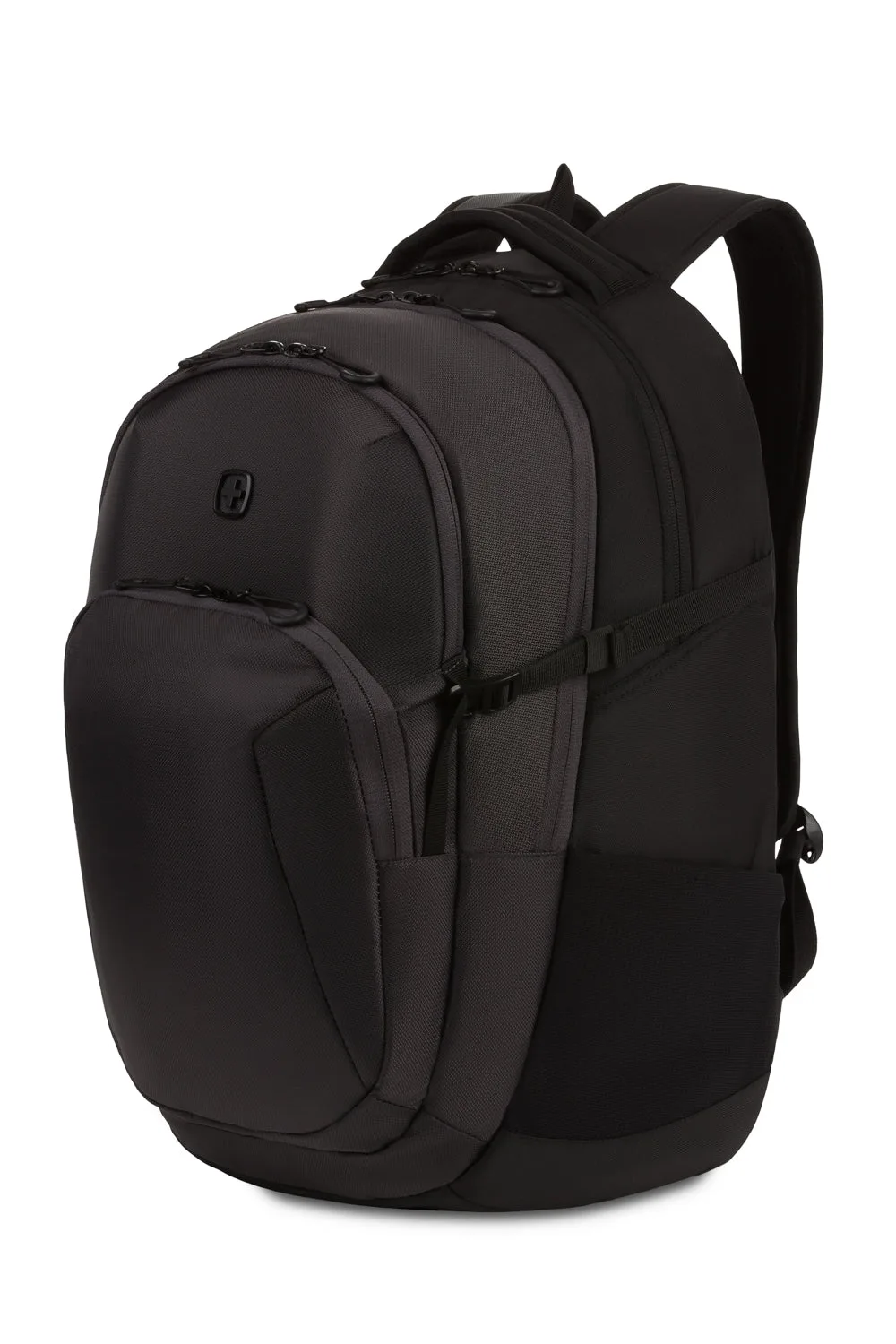
Count what you actually carry each day. One laptop, one charger, one notebook, and a water bottle need fewer compartments than a design student's sketchbook, markers, and a camera. More compartments help organization but add weight and bulk. The SWISSGEAR Cecil Laptop Backpack uses three individual compartments, one with a stay-in-place laptop strap, which suits a student moving between dorm rooms and study group meetings.
If your day includes papers and books, a file pocket saves time at the door. The SWISSGEAR Mini 1900 ScanSmart Laptop Backpack includes a spacious main compartment with a file pocket and an RFID-protected organizer pocket. That combination keeps documents separate from cables and protects cards from electronic scanning.
- Three compartments is a practical ceiling for most students; more can mean lost items.
- An RFID-protected organizer pocket is useful if you carry transit or access cards.
- A gusseted organizer keeps pens and small items from spilling when the bag opens.
Fit and carry comfort for long campus days
Campus days are long, so fit matters as much as storage. Adjust the shoulder straps so the backpack sits against your upper back, not hanging low. A padded back panel and a trolley strap help on days when you stack the bag on rolling luggage. The SWISSGEAR Fusion Pro Laptop Backpack includes a padded back and a trolley strap for secure stacking.
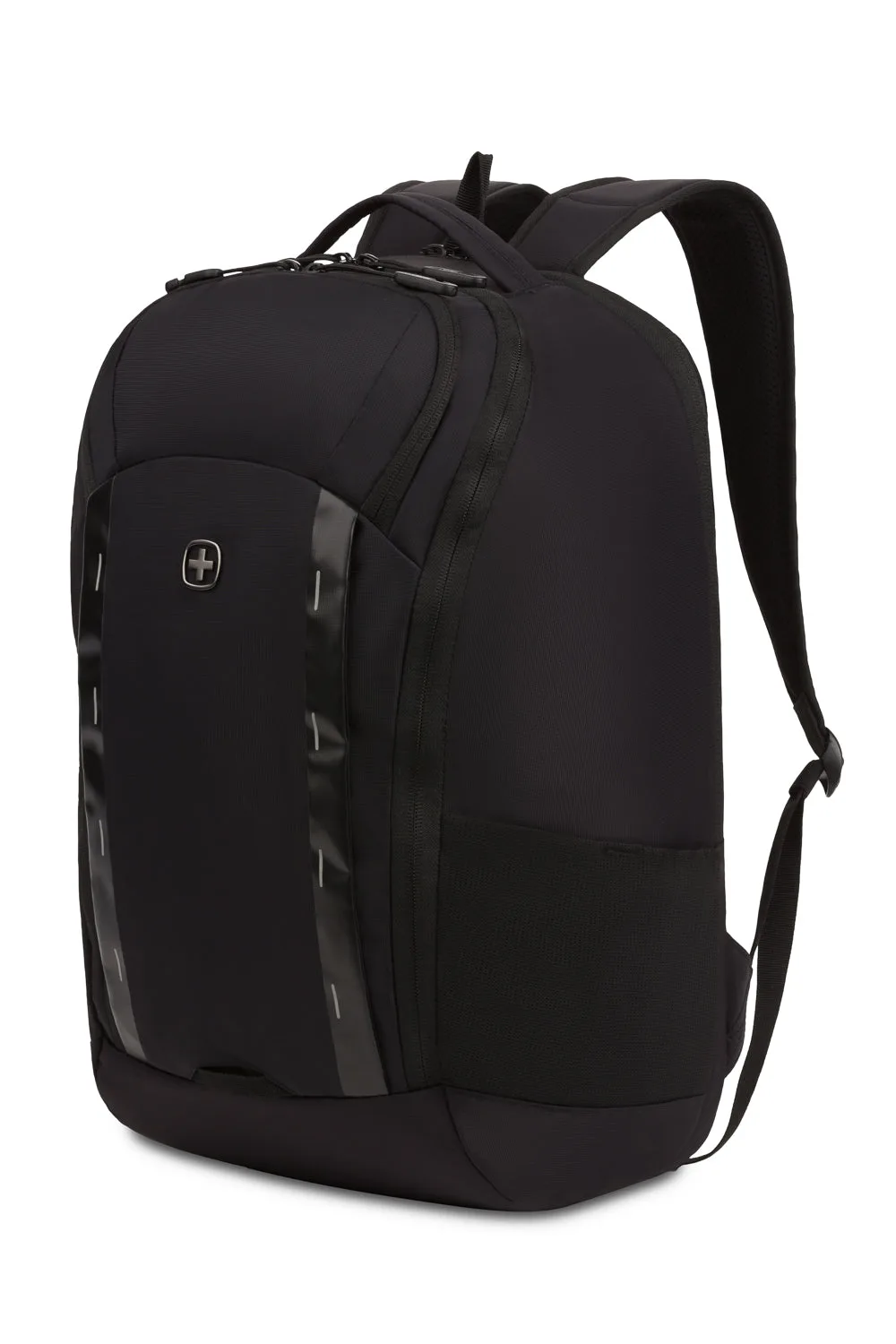
If you walk or bike, a stable bag beats a roomy one. Look for a model that holds its shape when partly empty. The SWISSGEAR Viibe Pro Laptop Backpack uses anti-grab zipper pulls and robust nylon loops for urban commuting, which adds security on public transport without turning the bag into a locker.
- Tighten straps until the bag sits high and close to your back.
- A padded back panel reduces pressure from a heavy laptop.
- Anti-grab zippers and loops are worth it if you commute on crowded buses or trains.
Security and weather: small features that matter
Theft and rain are the two most common ways a campus backpack fails. Anti-grab zipper pulls make it harder for someone to open your bag from behind. A water-resistant base or fabric helps in a sudden downpour, though no backpack is fully waterproof. The SWISSGEAR Viibe Pro Laptop Backpack is designed for urban commuting on public transport, where quick access and security both count.
For travel between home and campus, a ScanSmart compartment lets you lay the bag flat at security without removing your laptop. The SWISSGEAR Stride ScanSmart Laptop Backpack and the SWISSGEAR Mini 1900 ScanSmart Laptop Backpack both use this design. That saves time at airport checkpoints and keeps your electronics cradled during the process.
- Anti-grab zippers are a real benefit on crowded transit.
- ScanSmart layouts are for students who fly or take trains with a laptop.
- No backpack is fully waterproof; pack electronics in a sleeve or dry bag for heavy rain.
When to choose a travel-style campus backpack
Some students need one bag for class and weekend trips. A travel laptop backpack adds an expandable clothing compartment and accessory bags, which replaces a separate duffel for short trips. The SWISSGEAR Voyager USB 21.5" Travel Laptop Backpack includes a spacious expandable clothing compartment with clothing straps, an oversized zippered mesh side compartment, and two removable zippered accessory bags.
That design is heavier and bulkier than a pure campus backpack, so choose it only if you travel often. If your week is mostly lectures and library sessions, a lighter daily model such as the SWISSGEAR Cecil Laptop Backpack will feel better on your shoulders.
- A travel laptop backpack replaces a carry-on for short trips.
- Removable accessory bags help you switch between campus and travel loads.
- If you never travel overnight, skip the extra bulk.
Decision rules for your campus backpack
- If you carry a 17-inch laptop: Choose a backpack rated for 17 inches, such as the SWISSGEAR Fusion Pro Laptop Backpack, and check that the laptop compartment has padding on the bottom. A too-small compartment leaves the laptop unprotected and strains the zipper.
- If you commute by bus, train, or bike: Prioritize anti-grab zippers, a padded back panel, and a shape that stays close to your body. The SWISSGEAR Viibe Pro Laptop Backpack is built for this kind of urban commuting. Security and stability matter more than maximum storage.
- If you fly home often: Pick a ScanSmart model such as the SWISSGEAR Stride ScanSmart Laptop Backpack or the SWISSGEAR Mini 1900 ScanSmart Laptop Backpack so you can lay the bag flat at security. You save time at checkpoints and reduce handling of your laptop.
- If you need one bag for class and weekends: Consider a travel-style model with an expandable clothing compartment, like the SWISSGEAR Voyager USB 21.5" Travel Laptop Backpack, only if you travel overnight at least twice a month. Otherwise the extra bulk costs you comfort every day.
Campus backpack options at a glance
- SWISSGEAR Cecil Laptop Backpack: Three individual compartments, one with a stay-in-place laptop strap, plus a second compartment for organization. A straightforward daily driver for students who carry a laptop, notebooks, and small essentials between classes.
- SWISSGEAR Mini 1900 ScanSmart Laptop Backpack: A compact ScanSmart backpack whose back compartment fully unzips and lays flat, with a file pocket and an RFID-protected organizer pocket. Good for smaller laptops and commuters who want security screening without removing the laptop, plus quick access to papers and cards.
- SWISSGEAR Fusion Pro Laptop Backpack: Fits a 17-inch laptop, includes multiple compartments for a laptop, tablet, files, books, and keys, and has a felt-lined hard-shell exterior eyewear pocket. A better match for large laptops and students who want protected storage for glasses and a padded back for long days.
- SWISSGEAR Viibe Pro Laptop Backpack: Anti-Grab zipper pulls and robust nylon loops designed for daily commuting on public transport. Adds a security layer for students who ride crowded buses or trains and want to deter quick theft.
Who each campus backpack fits
Best for
- Students with a 15- to 17-inch laptop who need protected space for books and glasses
- Commuters on crowded public transport who want anti-theft zippers and a stable carry
- Students who fly or take trains and want a ScanSmart laptop compartment
- Students who want one bag for class and short overnight trips
Not for
- Students who carry only a tablet and a notebook; a smaller, lighter bag is easier
- Anyone who wants a fully waterproof backpack; no model here is rated as fully waterproof
- Students who never travel overnight; a travel-style backpack adds unnecessary bulk
Pick your backpack by laptop size, daily load, and how you get to campus. Use the decision rules above to narrow the field, then choose the model that matches your routine. A bag that fits your back and your semester is worth more than one with the most pockets.