Quick answer
Choose a bassinet mattress cover by measuring the mattress itself, not the bassinet frame. Match the cover to the mattress length, width, and depth, then confirm it wraps fully underneath with no loose fabric. If your bassinet uses a non-standard or oval mattress, buy the cover made for that specific model rather than a generic sheet.
A bassinet mattress cover that fits correctly stays flat through the night and keeps its shape after washing. A cover that is too small pops off at the corners; one that is too large bunches under your baby. Both problems are easy to avoid once you know what to measure.
This guide walks through the exact steps to match a cover to your bassinet mattress, including what to check before you buy and how to test the fit after it arrives.
Measure the mattress, not the bassinet
Take the mattress out of the bassinet and measure its length, width, and thickness with a tape measure. Bassinet mattresses vary widely, and the bassinet frame dimensions often include a lip or rim that the mattress sits inside. A cover sized to the frame will be too large for the mattress and will not pull tight.
Write down all three numbers. Depth matters as much as length and width because a cover needs enough fabric to wrap under the mattress and hold. If your mattress is 1 to 2 inches thick, a standard bassinet sheet may work. If it is thicker or has a rounded shape, you likely need a cover made for that specific mattress.
- Measure at the widest point of the mattress, not the middle.
- Check the mattress label or product page for the manufacturer's stated dimensions.
Match the cover shape and corner style
Bassinet mattresses come in rectangles, ovals, and rounded rectangles. A rectangular cover will not stay flat on an oval mattress because the corners have no fabric to grip. Look for a cover that matches the mattress shape exactly, or one that uses an elasticated skirt all the way around rather than just at the corners.
Corner style also affects fit. Fitted covers with deep pockets hold better on thicker mattresses. Flat sheets or covers with shallow pockets can pull free when your baby moves. If the product listing does not state the pocket depth, treat that as a limitation and look for a cover that does.
- Elastic all around the edge holds better than corner-only elastic.
- Avoid covers with ties or loose fabric that can be pulled into the sleep area.
Check safety before you buy
A bassinet cover should fit tightly enough that you cannot pinch loose fabric on the sleep surface. Loose bedding is a suffocation risk for infants, so the cover must stay flat and secure. After making the bed, run your hand across the surface. If you feel wrinkles, folds, or air pockets, the cover is too large or not pulled tight enough.
Also confirm the cover is designed for a bassinet mattress and not for a crib or play yard. Crib sheets are larger and will not fit a bassinet mattress safely. If you are unsure, check the product details for the mattress size it is made for.
- Do the pinch test: if you can pinch fabric on the sleep surface, it is too loose.
- Never layer a waterproof pad or extra sheet under a bassinet cover unless the cover is designed to fit over both.
Buy a spare cover for middle-of-the-night changes
One cover means one accident away from a stripped bassinet at 2 a.m. A spare cover lets you swap the soiled one for a clean one without waiting for laundry. Look for a cover that is machine washable and can go in the dryer on low, since bassinet sheets get washed often.
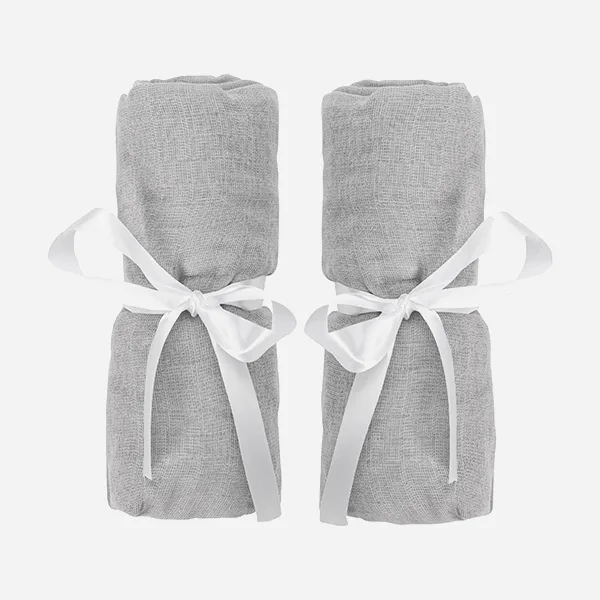
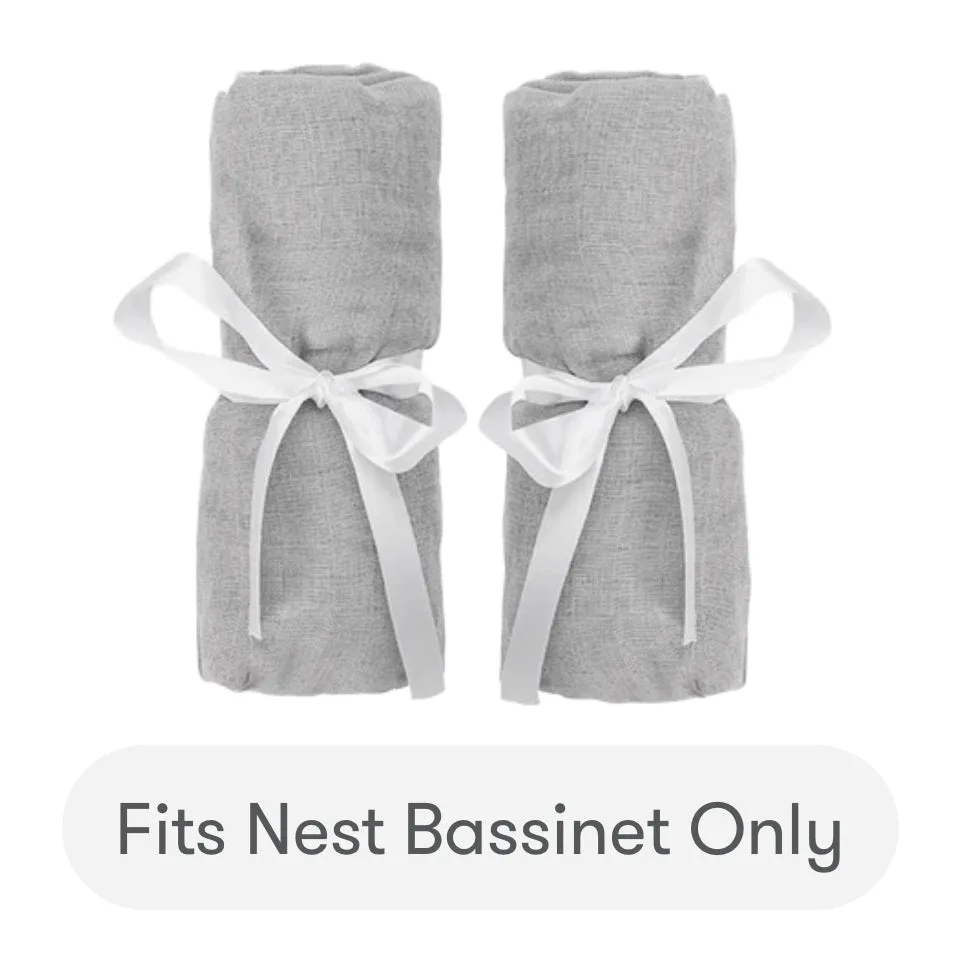
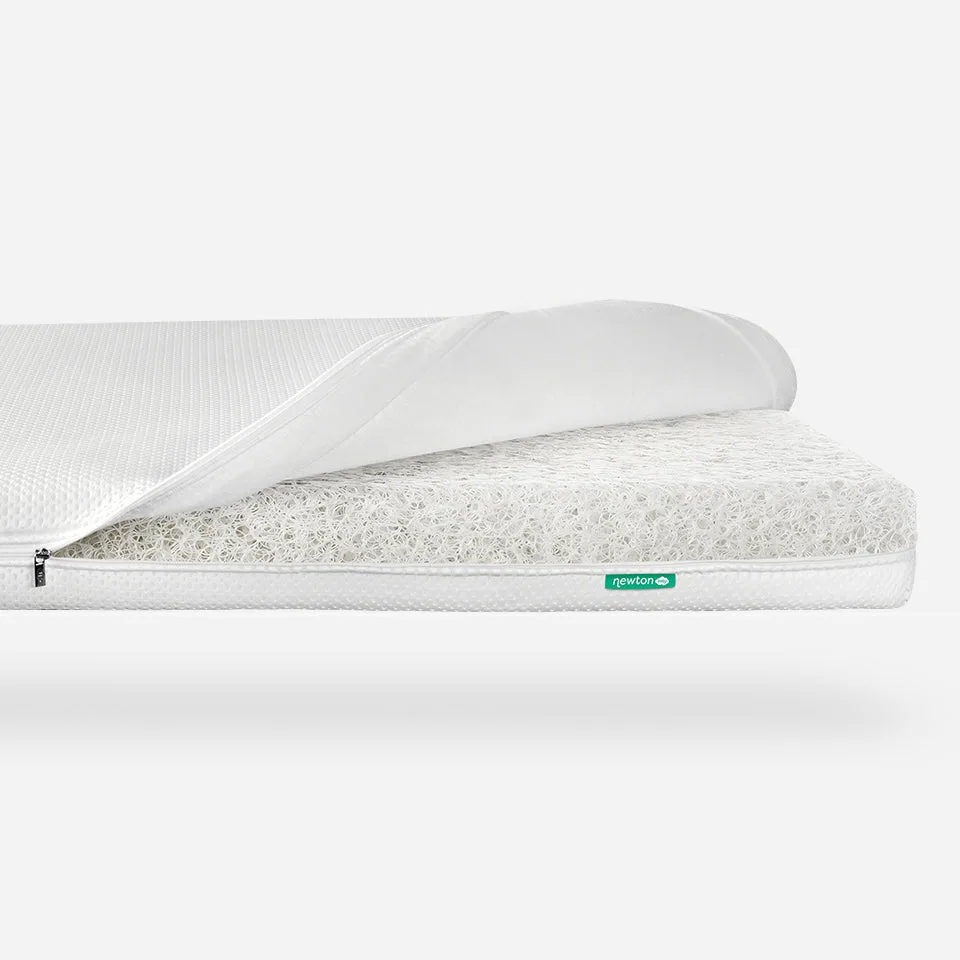
If you already own a Newton bassinet, the Extra Essential Crib Mattress Cover is designed as a quick replacement for the Essential Crib Mattress cover. It is part of the Newton Essentials collection, so it is excluded from sitewide sales and individual promotional offers. That matters if you are timing a purchase around a sale.
- Buy two covers so one is always clean and ready.
- Check the care label before washing; some covers shrink in hot water.
Step-by-step fit check
- Step 1: Measure the bare mattress: Remove the mattress from the bassinet and measure length, width, and thickness at the widest points. Write the numbers down. Checkpoint: if your measurements differ from the product listing by more than half an inch, trust your tape measure.
- Step 2: Match the cover to those measurements: Compare your numbers to the cover's stated fit range. Confirm the shape (rectangle, oval, or rounded) matches your mattress. Mistake to avoid: buying a crib-size sheet and tucking it under a bassinet mattress. It will not stay tight.
- Step 3: Install the cover and test the corners: Pull the cover over all four corners or around the full edge, then lift each corner gently. The cover should stay in place without snapping back. Checkpoint: if a corner lifts easily, the cover is too small or the pocket is too shallow.
- Step 4: Do the pinch and wrinkle test: Run your hand across the sleep surface. You should feel a smooth, flat surface with no folds, ridges, or loose fabric. If you can pinch fabric, stop and try a different size or style before using the bassinet.
- Step 5: Wash it once before regular use: Wash and dry the cover according to its care label, then reinstall it and repeat the corner and pinch tests. Some covers shrink slightly after the first wash. Rechecking the fit now prevents surprises later.
Product facts that affect fit
- Extra Essential Crib Mattress Cover: Ultra-breathable and washable, with a soft, removable eyelet cover designed to quickly replace the Essential Crib Mattress cover when accidents strike. A removable, washable cover lets you swap the top layer without replacing the whole mattress, which is useful when you need a clean sleep surface fast.
- Bassinet & Bedside Sleeper + Original Crib Mattress: A 2-in-1 bassinet and bedside sleeper bundle that pairs with the Original Crib Mattress for the transition to a crib. If you are buying a bassinet and crib setup together, confirm the bassinet mattress dimensions before ordering covers so you do not end up with sheets that only fit one of the two sleep spaces.
A bassinet mattress cover is only safe and useful when it fits the mattress it was made for. Measure first, match the shape and depth, and test the fit after washing. Keep a spare on hand so a middle-of-the-night change never leaves you waiting on laundry.