Quick answer
For most Revell modelers, start with acrylic Aqua Color: it thins with water, has a mild odor, is not flammable, and cleans up easily. Choose enamel Email Color when you need a hard, glossy finish that resists handling, or when you plan to airbrush and want to dilute with Revell Color Mix. If you are unsure, buy one acrylic color and one enamel color and test both on a spare part before committing to a full build.
Choosing between acrylic and enamel paint is one of the first decisions that shapes how your Revell model looks and how pleasant the build feels. The two paint systems behave differently in the bottle, on the brush, and on the plastic, so the right choice depends on your workspace, your tools, and the finish you want.
This guide gives you concrete decision rules instead of vague advice. You will see how Revell Aqua Color and Revell Email Color differ in thinning, cleanup, drying, and airbrush use, and which one fits common situations like brush-painting fine details, spraying large areas, or finishing a model that will be handled often.
How acrylic and enamel paints differ
Acrylic paint uses water as its main thinner, so you can dilute it with water and clean brushes with water before the paint dries. Revell Aqua Color is an acrylic system available in 88 shades in 18 ml containers, with a mild odor and no flammability. That makes it a practical choice for indoor work and for modelers who want simple cleanup without solvents.
Enamel paint is a synthetic resin enamel that does not attack the plastic surface of plastic models, according to Revell. Revell Email Color comes in 14 ml cans and can be diluted with Revell Color Mix, and all colors except signal color can be mixed with each other. Enamels generally dry to a harder, glossier film, which is useful for surfaces that get handled.
- Acrylic: thin and clean with water, mild odor, not flammable.
- Enamel: thin with Revell Color Mix, hard glossy film, mixable except signal color.
When to choose acrylic Aqua Color
Pick acrylic if you paint indoors, want to avoid strong solvents, or need to clean up quickly between colors. Aqua Color can be diluted with water, so you can adjust consistency on the fly for brush-painting details or for filling larger areas. The 88-shade range means you can usually find a close match without mixing, which keeps small projects simple.
Acrylic is also the safer default for beginners because mistakes are easier to correct. If you are brush-painting a figure or adding fine decorations, an acrylic paint that flows well and cleans with water reduces the friction of the learning curve. The trade-off is that some acrylics can lift if you overwork them, so apply thin coats and let them dry between passes.
- Best when you paint at a kitchen table or in a shared room.
- Best when you want water cleanup and a mild odor.
- Use thin coats to avoid lifting the previous layer.
When to choose enamel Email Color
Choose enamel when you want a durable, glossy finish that stands up to handling. Revell Email Color is a synthetic resin enamel that does not attack the plastic surface of plastic models, so it is safe for polystyrene kits. It can be diluted with Revell Color Mix and applied with a brush or a spray gun, which gives you flexibility across small details and large panels.
Enamel is often the better pick for a model that will be picked up, displayed on a desk, or used in a diorama where surfaces get touched. The 14 ml can is a familiar size for hobbyists, and because all colors except signal color can be mixed, you can blend custom shades. The trade-off is longer drying and the need for solvent-based cleanup.
- Best when the finished model will be handled often.
- Best when you want a hard, glossy, enamel look.
- Clean brushes with Revell Color Mix, not water.
Airbrushing with Revell paints
If you already have a little airbrush experience, the Revell Standard Class Spray Gun/Airbrush is designed for painting large and small areas. Airbrush technology is particularly suitable for covering broad surfaces evenly and for soft transitions. Both paint systems can be sprayed when thinned correctly, but the thinner you use matters: water for Aqua Color, Revell Color Mix for Email Color.
For a first airbrush project, acrylic is often more forgiving because cleanup is simpler and the mild odor is easier to manage indoors. Enamel rewards you with a harder film and a glossier finish, but you need ventilation and solvent cleanup. Whichever you choose, test your thinning ratio on a spare part before spraying the model.
- Thin acrylic with water; thin enamel with Revell Color Mix.
- Test spray on a spare part before committing to the model.
- Ventilate well when spraying enamel.
Mixing and matching the two systems
You can use both systems on one model if you plan the order. A common approach is to lay down an enamel base for durability and then use acrylic for fine details and decorations, because acrylic cleans up with water and is easy to touch up. Just make sure each layer is fully dry before adding the next, and avoid mixing the two paint types in the same bottle.
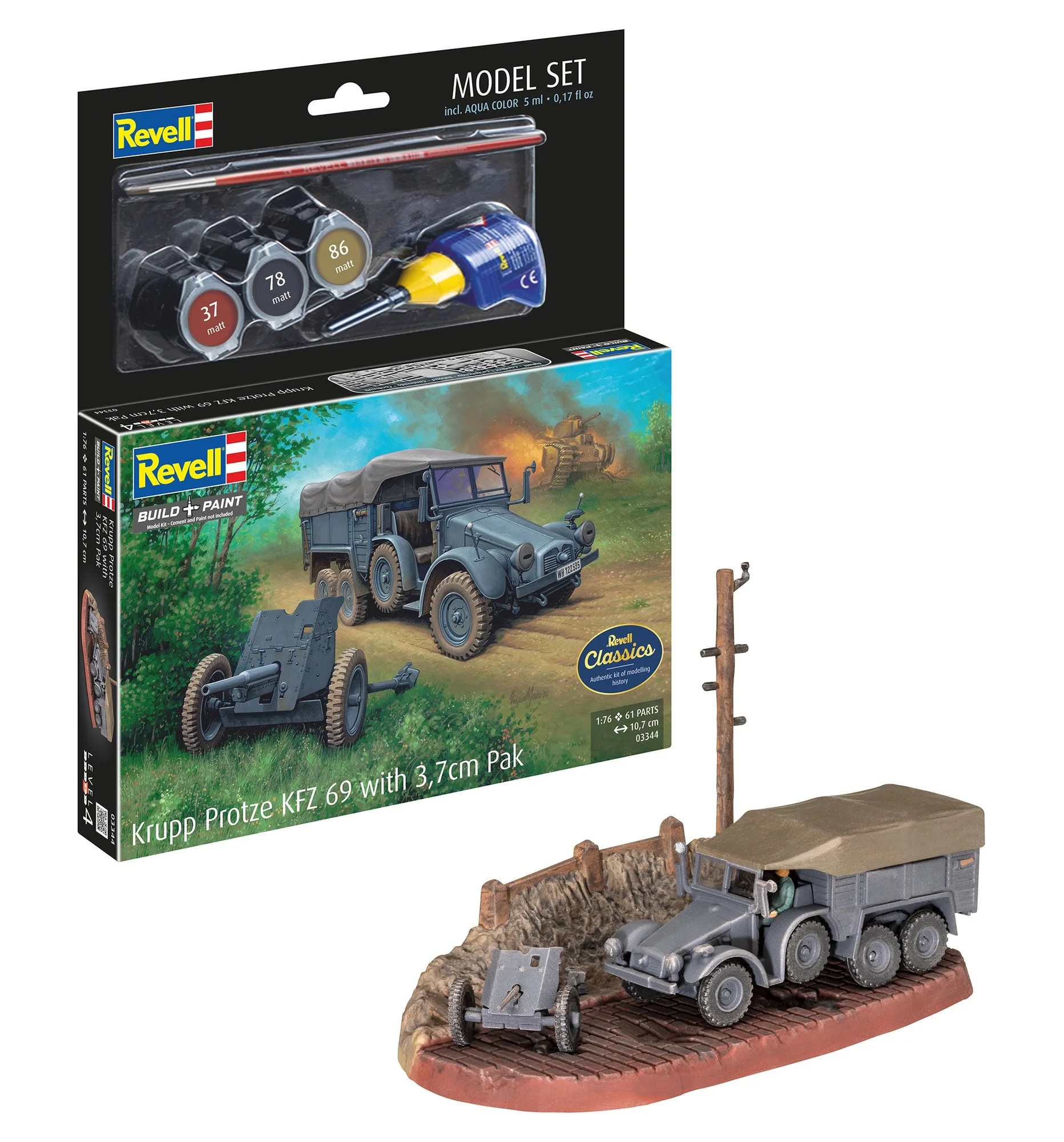
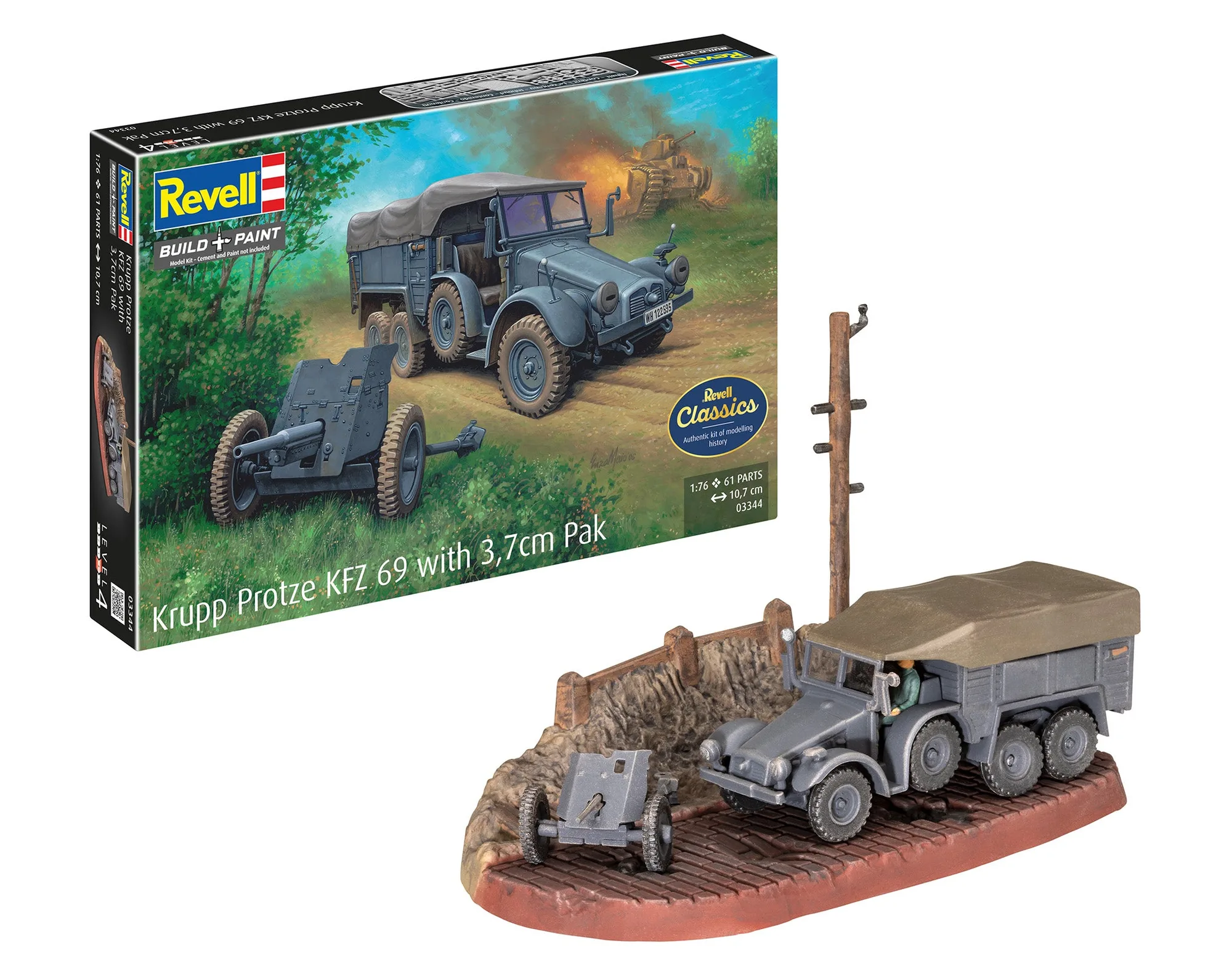
Revell Aqua Color and Revell Email Color are separate systems, so do not assume their thinners are interchangeable. Keep separate brush cups or rinse thoroughly between systems. If you are building a kit that includes basic colors, glue, and brushes, like the Model Set Krupp Protze KFZ 69 with 3.7cm Pak, check which paint type is included before you buy extra colors.
- Use separate brushes or clean thoroughly between systems.
- Do not mix acrylic and enamel in the same container.
- Check included paint type in model sets before buying extras.
Practical buying advice for your first paint order
Start with the colors your instructions call for, then add one or two extras for weathering or details. If you are brush-painting, a few good brushes matter as much as the paint. Revell Painta Standard brushes come in eight sizes, which lets you paint the finest details and decorations without buying a separate detail set later.
Buy small containers first if you are unsure. A 14 ml enamel can or an 18 ml acrylic container is enough for several small models, and it lets you test the system before investing in a full range. If you already own an airbrush, prioritize colors you plan to spray in larger quantities, and keep a dedicated thinner on hand for that system.
- Buy the colors your kit instructions list first.
- Add one or two detail colors for weathering.
- Match your brush size to the area you are painting.
Decision rules for acrylic vs enamel
- You paint indoors and want simple cleanup: Choose acrylic Aqua Color. It thins with water, has a mild odor, and is not flammable, so you can work at a table without solvent fumes. Acrylic is the lower-friction default for beginners and shared spaces.
- You want a hard, glossy finish that resists handling: Choose enamel Email Color. It is a synthetic resin enamel that does not attack plastic model surfaces, and it can be diluted with Revell Color Mix for brush or spray application. Enamel is the better pick for models that will be picked up or displayed openly.
- You plan to airbrush large areas: Match your thinner to your paint: water for Aqua Color, Revell Color Mix for Email Color. The Revell Standard Class Spray Gun/Airbrush suits large and small areas if you already have a little airbrush experience. Test your thinning ratio on a spare part before spraying the model.
- You want to mix custom shades: Enamel Email Color allows all colors except signal color to be mixed with each other. Acrylic Aqua Color offers 88 shades, which may reduce the need to mix. If you enjoy color mixing, enamel gives you more freedom; if you want ready-made matches, acrylic's range helps.
Product facts that affect your choice
- Matt "Bronze Green" (RAL 6031) Aqua Color - 18ml: Revell Aqua Color is an acrylic paint system available in all 88 shades in 18 ml containers; colors can be diluted with water, have a mild odor, and are not flammable. This is the practical case for acrylic: water thinning and mild odor make indoor brush-painting easier, and the 88-shade range reduces the need to mix custom colors.
- Gloss "Fiery Red" (RAL 3000) Email Color - 14ml: Revell Email Color is a synthetic resin enamel that does not attack the plastic surface of plastic models; the 14 ml can can be diluted with Revell Color Mix, and all colors except signal color can be mixed with each other. This is the practical case for enamel: it is safe on polystyrene, can be brushed or sprayed, and mixable colors let you create custom shades for a hard, glossy finish.
- Revell "Standard Class" Spray Gun/Airbrush: Airbrush technology is particularly suitable for painting large and small areas, and the Standard Class spray gun is suitable if you already have a little airbrushing experience. If you plan to spray, your paint choice and thinner choice must match: water for acrylic, Revell Color Mix for enamel.
- Revell "Panta Standard" Paintbrush - Size 3: Revell Painta Standard is the name of the high-quality brushes in eight sizes, allowing you to paint the finest details and decorations. A size-3 brush is a good all-rounder for small to medium areas, and the eight-size range means you can add finer or broader brushes as your projects grow.
Which paint fits your build?
Best for
- Beginners who paint indoors and want water cleanup and a mild odor.
- Modelers who brush-paint fine details and decorations and want easy touch-ups.
- Builders who want a wide range of ready-made shades without mixing.
Not for
- Modelers who need the hardest, glossiest film for a model that gets handled constantly.
- Airbrush users who prefer solvent-based thinning and a longer working time.
- Anyone who wants to avoid buying a separate thinner for spraying.
There is no single best paint for every Revell model, but there is a best first choice for your situation. Start with acrylic Aqua Color if you value water cleanup and a mild odor, and switch to enamel Email Color when you need a harder, glossier finish or plan to spray with Revell Color Mix. Buy one color of each, test them on a spare part, and let the result guide your next order.