Quick answer
Choose a carry-on when your trip is 1–5 days, you want to avoid bag fees and carousel waits, and you can pack to airline size limits. Choose a check-in when you need more than about a week of clothing, travel with bulky gear, or want to bring liquids and shoes without restriction. If you fly a mix of short and long trips, buy a two-piece set so you can take only the carry-on for quick hops and add the medium check-in for longer ones.
The carry-on vs check-in decision usually comes down to three things: how long you are away, what you need to bring, and how much control you want over your bag. A carry-on keeps you moving through the airport and out of the baggage claim line, but it forces you to pack within strict size limits. A check-in gives you room to pack freely, at the cost of a fee on many fares and a wait at the carousel.
This guide gives you concrete rules instead of vague advice. You will see how to match suitcase size to trip length, how to read airline limits before you buy, and which features actually matter when you are choosing between a carry-on or checked luggage. Travelpro products are used as examples where their catalog details make the trade-offs clearer.
Rule 1: Match the suitcase to trip length, not to your closet
For a 1–3 day trip, a carry-on is almost always enough. Pack two outfits plus one spare, wear your bulkiest shoes on the plane, and use packing cubes to compress soft items. For 4–5 days, a carry-on still works if you do laundry or pack versatile layers. Once you pass about a week, or you need formal wear, multiple shoe options, or specialized gear, a medium check-in becomes the practical choice.
A common mistake is buying the largest bag you can find for a short trip. Oversized bags are heavier when empty, harder to lift into overhead bins, and more likely to be gate-checked on full flights. Buy for the trips you actually take most often, then add capacity only when your itinerary demands it.
- 1–3 days: carry-on only, no checked bag fee, no carousel wait.
- 4–5 days: carry-on with laundry access or compression packing.
- 6–10 days: medium check-in, or carry-on plus a personal item.
- 10+ days or bulky gear: medium or large check-in, possibly two bags.
Rule 2: Check airline size limits before you fall in love with a bag
Carry-on size limits vary by airline and by cabin. The safest approach is to compare the bag's published dimensions against the specific airline you fly most, including wheels and handles, because those parts count toward the limit. If a bag is close to the limit, it may fit on one carrier and be gate-checked on another.
Check-in bags have fewer surprises, but weight limits matter more than size on many international routes. Weigh your packed bag at home before the airport. If you routinely pack heavy, choose a check-in with a durable shell and smooth wheels rather than chasing the absolute lightest option, because a cracked or hard-to-roll bag costs more in the long run.
- Measure the bag as the airline measures it: length + width + height, including wheels and handles.
- Check both the carry-on limit and the personal item limit if you plan to bring two bags.
- For international travel, confirm weight limits, not just dimensions.
Rule 3: Let your packing style decide, not your optimism
If you are a disciplined packer who can live out of a carry-on, you will save time and fees on most trips. If you pack last-minute, bring multiple shoes, or travel with kids, a check-in removes the stress of fitting everything into a small space. The honest trade-off is control versus capacity: carry-on gives you control, check-in gives you capacity.
Expansion features change the math. A bag with zippered expansion can grow by about 2 inches when you need extra room, which helps on the return leg when you have souvenirs. Use expansion sparingly, though, because an expanded bag may no longer meet carry-on limits and can be harder to zip.
- Carry-on packers: prioritize compression cubes and a strict toiletry kit.
- Check-in packers: use packing cubes and shoe bags to keep the larger space organized.
- If you buy one bag, choose a carry-on with expansion for flexibility.
Rule 4: Decide whether you need one bag or a set
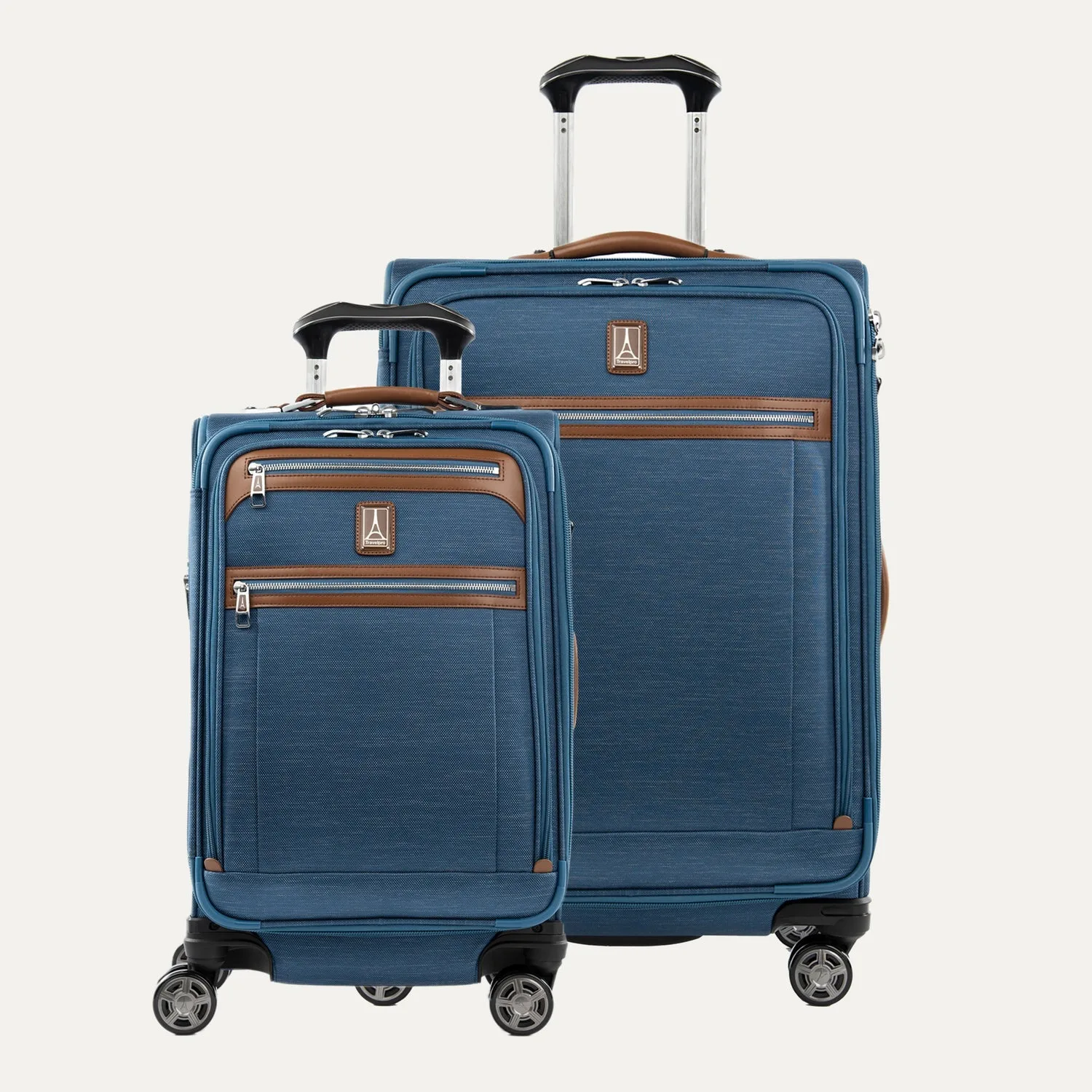
If your travel mixes short and long trips, a two-piece set is often the better buy than a single bag. You take the carry-on alone for weekend trips and add the medium check-in for longer ones. Sets also keep the bags visually matched, which makes them easy to spot and simple to store together.
The trade-off is storage space and upfront cost. A set takes up more closet room and costs more than one bag, so it only makes sense if you will genuinely use both sizes. If you fly almost exclusively short trips, put your budget into one excellent carry-on instead.
- Buy a set if you take at least a few trips per year that need a checked bag.
- Buy a single carry-on if your trips are consistently short.
- Buy a single check-in if you rarely fly and mostly drive or take trains.
Decision rules for carry-on vs check-in
- Trip length rule: 1–5 days: carry-on. 6–10 days: medium check-in or carry-on plus personal item. 10+ days or bulky gear: medium or large check-in. If you are between sizes, size up only when your typical trip is longer than five days.
- Airline limit rule: Compare the bag's published dimensions, including wheels and handles, against the carry-on limit of the airline you fly most. For international routes, check weight limits too. A bag that is close to the limit may be gate-checked on some carriers, so leave a little margin.
- Packing style rule: If you pack light and do laundry, a carry-on saves time and fees. If you pack multiple shoes, formal wear, or kids' gear, a check-in removes the squeeze. Be honest about your last three trips, not your ideal packing self.
- One bag or set rule: Buy a set if you take both short and long trips each year. Buy a single carry-on if your trips are consistently short. Buy a single check-in if you rarely fly. A set only saves money if you will use both sizes; otherwise put the budget into one better bag.
Travelpro examples that show the trade-offs
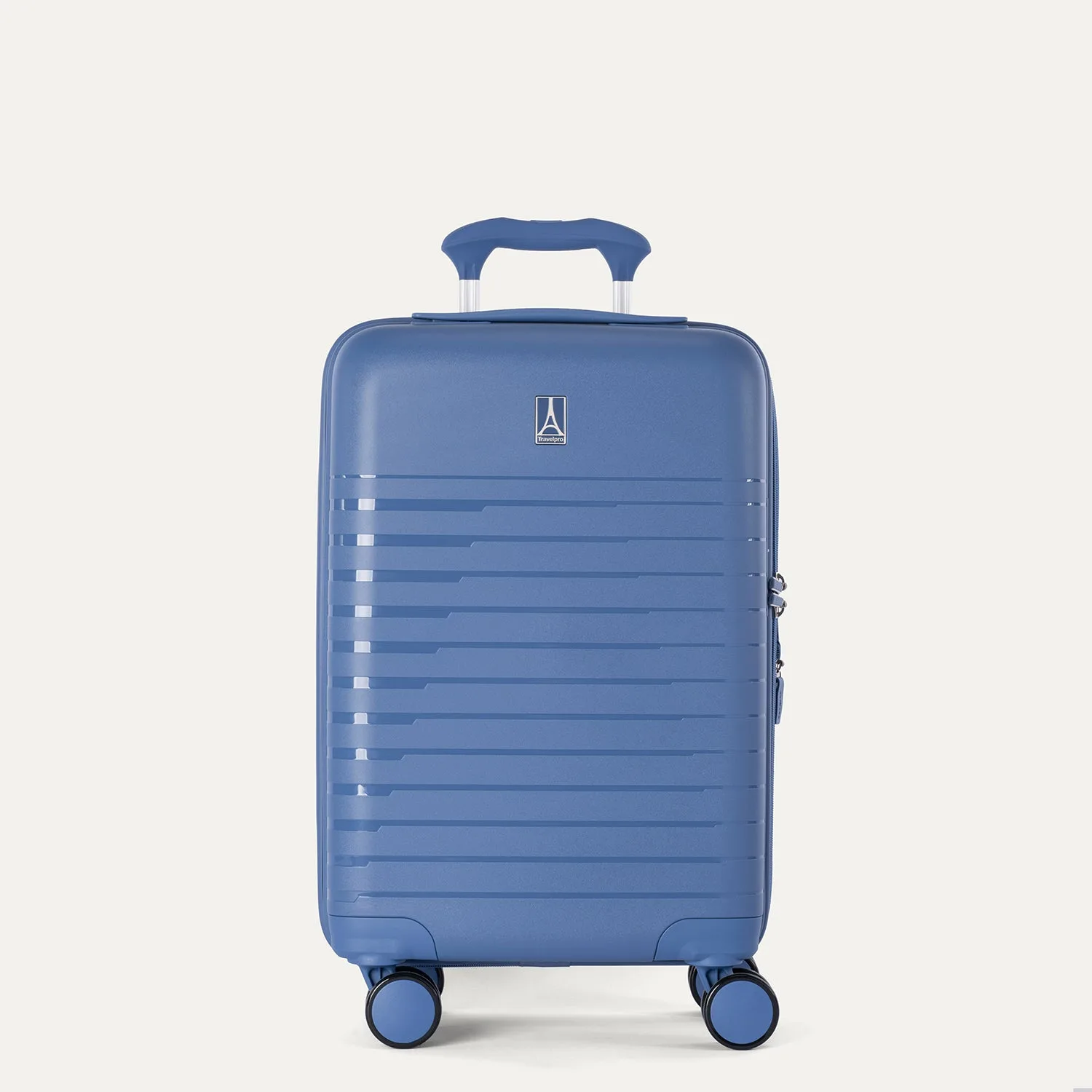
- Optima® Expandable Carry-on Spinner: Built for efficient travel, this carry-on features a lightweight, yet highly resilient polypropylene shell engineered to absorb impact, resist cracking, and return to its original shape, even after cold weather exposure and long-term use. A carry-on takes more handling than a checked bag because you lift it, gate-check it, and squeeze it into overhead bins. A shell that resists cracking and returns to shape is a practical advantage for frequent short trips.
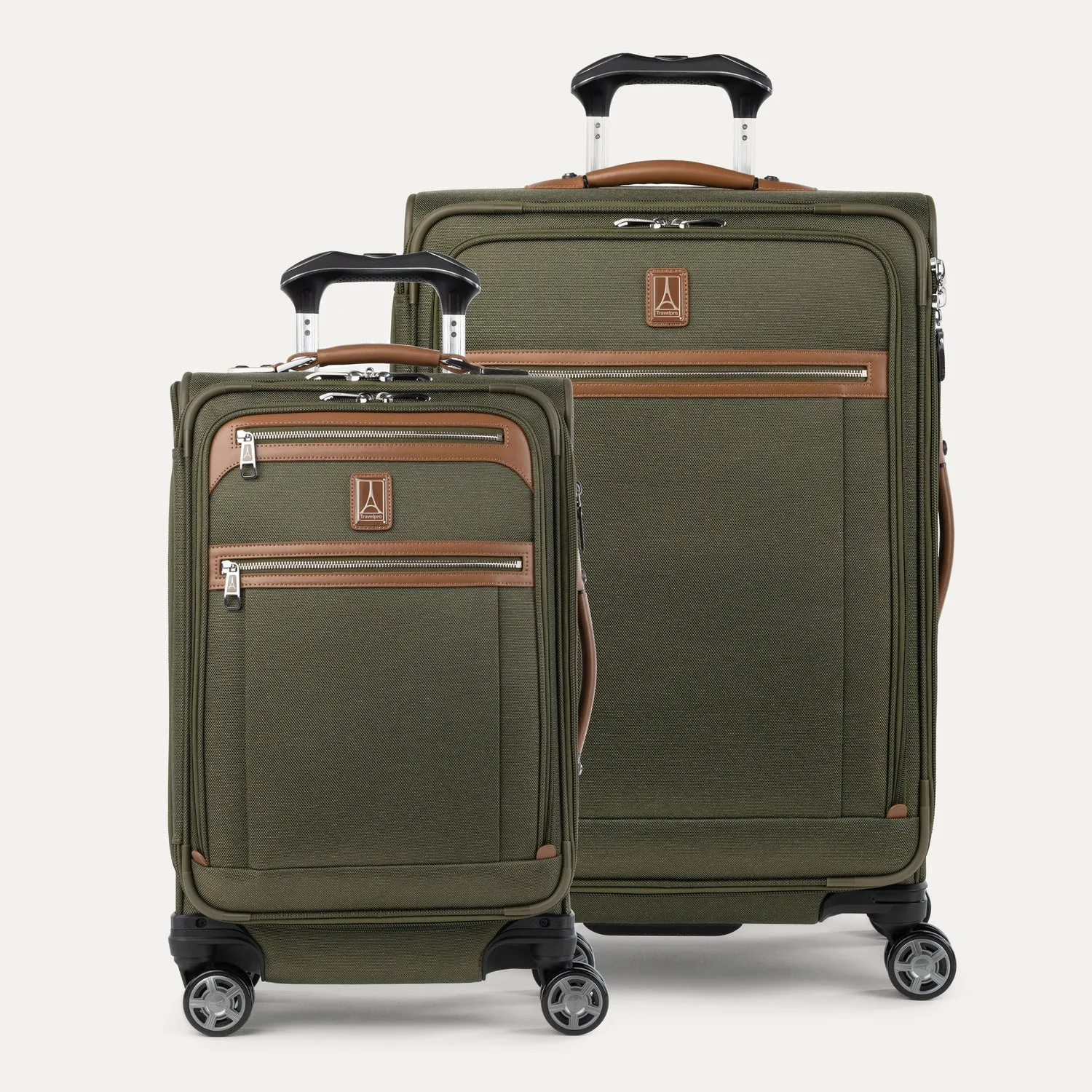
- Platinum® Elite Medium Check-In Hardside Spinner: Its sleek polycarbonate shell resists cracking under pressure, and the bag is built for medium and longer trips with a zippered 2-inch expansion option for increased packing capacity. If your trips run a week or more, a medium check-in with expansion gives you room for layers, shoes, and souvenirs without forcing you into a large bag that is harder to handle.
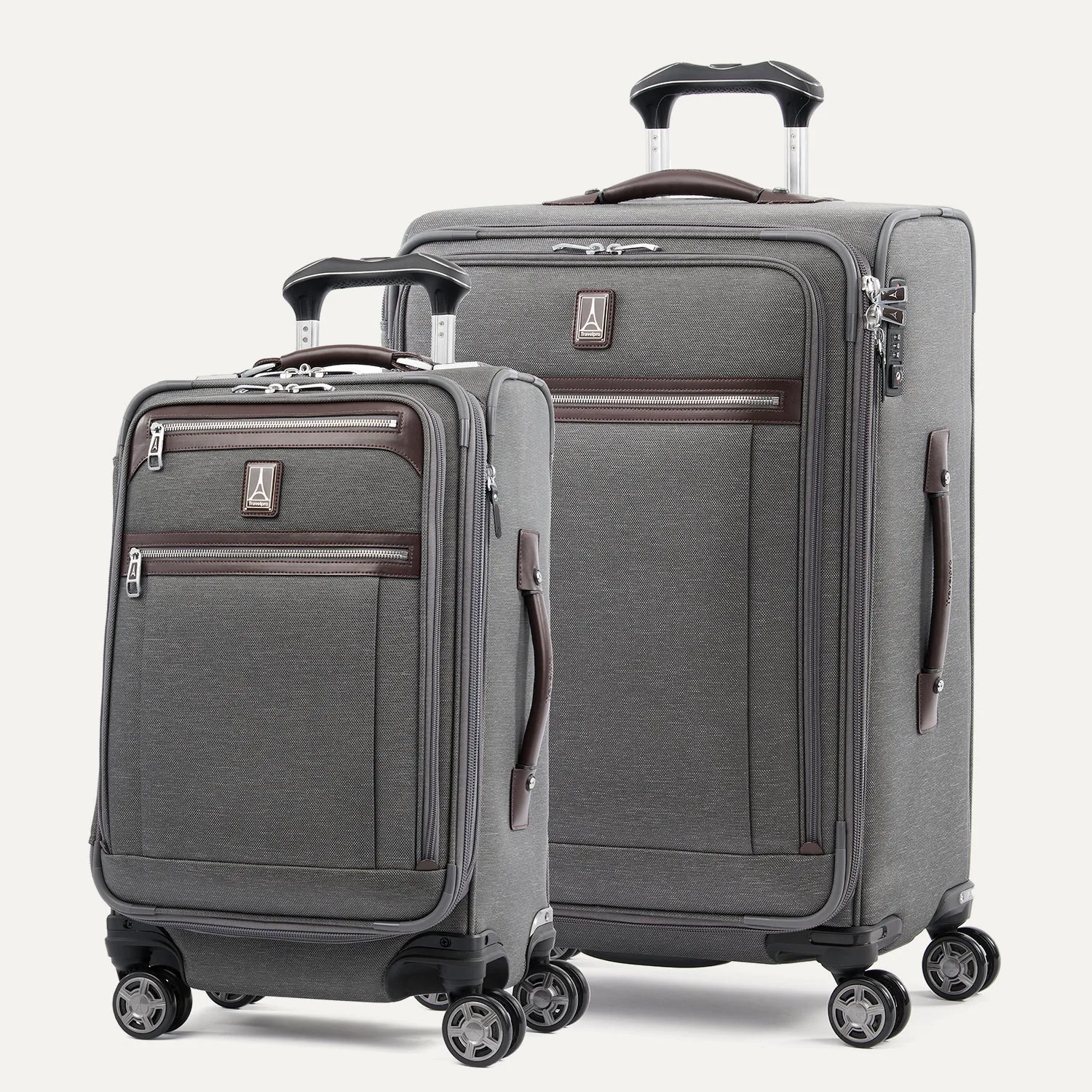
- https://travelproes.com/products/platinum-elite-carry-on-medium-check-in-spinner-set-oli-5a7bc945b898db50b8181604-1634834https://travelproes.com/products/platinum-elite-carry-on-medium-check-in-spinner-set-gre-ef02af84e8fb17631e6cee5c-1634839Platinum® Elite Carry-On / Medium Check-In Set: The set delivers effortless mobility in two premium bags, with a PrecisionGlide® System for precise control and effortless roll on eight MagnaTrac® self-aligning spinner wheels led by a height-adjustable PowerScope handle. A two-piece set covers both short and long trips. Self-aligning spinner wheels and an adjustable handle reduce wrist strain when you are moving through crowded terminals with either bag.
- Roundtrip® Carry-on & Medium Check-in Spinner Set: This set pairs a carry-on and a medium check-in, each with tip-resistant expansion options that increase packing capacity up to 2 inches, plus roomy interiors with built-in organizing compartments and water-and stain-resistant construction. If you want one purchase that handles weekend trips and week-long trips, this set's expansion and organizing compartments make it easier to pack both sizes without adding separate packing accessories.
Who should choose which
Best for
- Frequent short trips where you want to avoid bag fees and carousel waits
- Travelers who pack light, do laundry, or use compression packing cubes
- Mixed short and long trips where a two-piece set covers both needs
Not for
- Trips longer than a week with multiple shoes or formal wear, where a medium check-in is more realistic
- Travelers who pack last-minute and need room to spare
- International itineraries with strict weight limits where a large check-in may exceed the allowance
Start with your most common trip length, confirm the airline size and weight limits you actually fly, and let your packing style break the tie. If you need both a quick-trip bag and a longer-trip bag, a carry-on and medium check-in set is the most flexible purchase you can make.