Quick answer
For most beginners, 10x50 porro-prism binoculars are the best binoculars for stargazing: they balance aperture, magnification, and price. If you have steady hands or want a wider field, choose 7x50. If you need a compact daytime pair that can also show the Moon and bright clusters, a roof-prism 10x42 works, but it gathers less light than a 50mm.
Start with aperture, not magnification
Binocular aperture explained: the second number (the 50 in 10x50) is the diameter of each front lens in millimeters. It sets how much light reaches your eye, so it decides how faint a star or nebula you can see. A 50mm binocular collects roughly 2.5 times more light than a 32mm, which is why 50mm is the usual floor for deep-sky viewing.
Magnification (the first number) only helps after aperture does its job. Too much magnification narrows the field of view and magnifies hand shake, making it harder to hold a star steady. That is why 10x or 7x, not 15x or 20x, is the beginner range.
- Aperture 42–50mm: minimum for satisfying deep-sky views.
- Aperture 50mm: the sweet spot for most beginners.
- Aperture under 40mm: fine for the Moon and bright clusters, limited for faint objects.
10x50 vs 7x50: which magnification for stars?
Binocular magnification for stars is a trade-off between reach and steadiness. A 10x50 shows more detail in the Moon, Jupiter's moons, and tighter star clusters, and darkens the sky background a little better. A 7x50 gives a wider field, a brighter exit pupil, and less shake, which helps if you observe without a tripod or want to sweep the Milky Way.
If you already own a tripod or can brace your elbows, 10x50 is the more versatile choice. If you plan to hand-hold for long sessions, 7x50 will feel calmer and easier to aim.
Porro vs roof prism astronomy: size and cost trade-offs
Porro-prism binoculars have the classic offset, wider body. They are usually cheaper for the same optical quality and often give a slightly brighter, more three-dimensional view. Roof-prism binoculars are straight-barreled, lighter, and more compact, which matters if you also want them for hiking or travel.
For a dedicated astronomy pair, porro prisms usually win on value. For a dual-purpose pair, roof prisms win on portability. Either way, look for fully multi-coated optics and BaK-4 prisms, which improve light transmission and edge sharpness.
Fit and handling: exit pupil, eye relief, and weight
Exit pupil is aperture divided by magnification. A 7x50 gives a 7.1mm exit pupil, a 10x50 gives 5mm, and a 10x32 gives 3.2mm. A larger exit pupil is more forgiving for eye placement and brighter under dark skies, but if you observe from a light-polluted area, a smaller exit pupil can darken the background and improve contrast.
Eye relief matters if you wear glasses: look for at least 15mm, or use fold-down eyecups. Weight matters more than beginners expect, because you hold binoculars up for minutes at a time. A 10x50 porro can weigh over 800g, so a tripod or a monopod can turn a shaky view into a steady one.
No single specification covers all of this, so treat the numbers as a starting filter and then check the feel. If a listing does not state eye relief or prism glass, that is a decision limitation: you cannot judge comfort or brightness from the page alone.
Decision rules for buying stargazing binoculars
- Rule 1: Set a 50mm aperture floor for deep sky: If you want to see nebulae, galaxies, and rich star clusters, choose at least 50mm. Below that, expect the Moon, planets, and bright clusters only. Aperture first, magnification second.
- Rule 2: Pick 10x for reach, 7x for steadiness: 10x50 shows more detail but needs a steady hold. 7x50 is easier to hand-hold and gives a wider field. If you shake, go 7x or add a tripod. Hand-held? Lean 7x. Tripod or braced? Lean 10x.
- Rule 3: Choose porro for value, roof for portability: Porro prisms usually cost less for the same brightness and are fine for a dedicated astronomy pair. Roof prisms are lighter and more compact for travel and daytime use. Dedicated astronomy: porro. Dual-purpose: roof.
- Rule 4: Check eye relief if you wear glasses: Aim for at least 15mm of eye relief or fold-down eyecups. Without it, you will lose field of view and comfort. Glasses wearers: verify eye relief before buying.
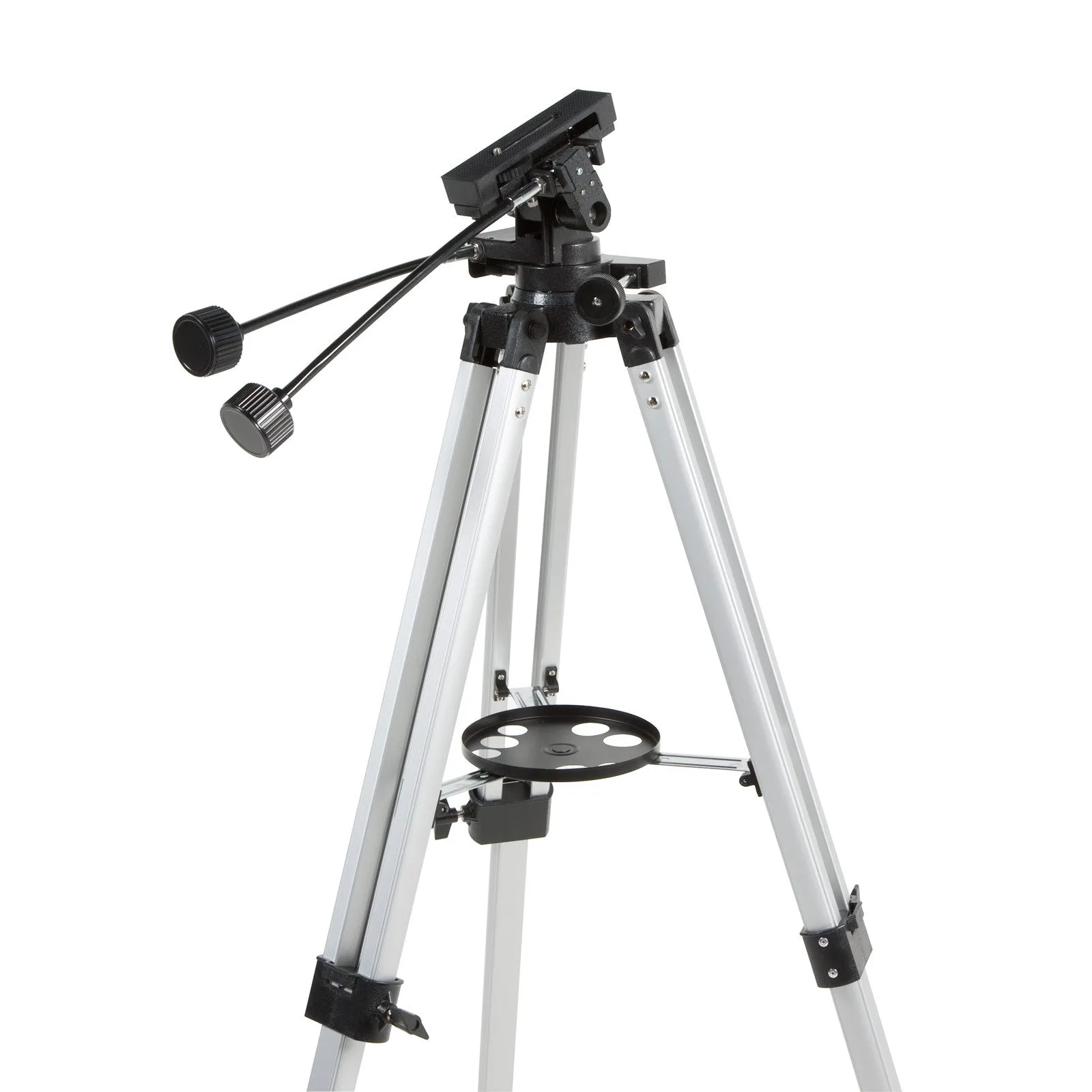
- Rule 5: Budget for a tripod if you go above 10x: Higher magnification amplifies shake. A heavy-duty alt-azimuth tripod with a 1/4-inch x 20 screw and slow-motion controls keeps the view steady. The tripod is not optional at high magnification.
Products that fit these rules
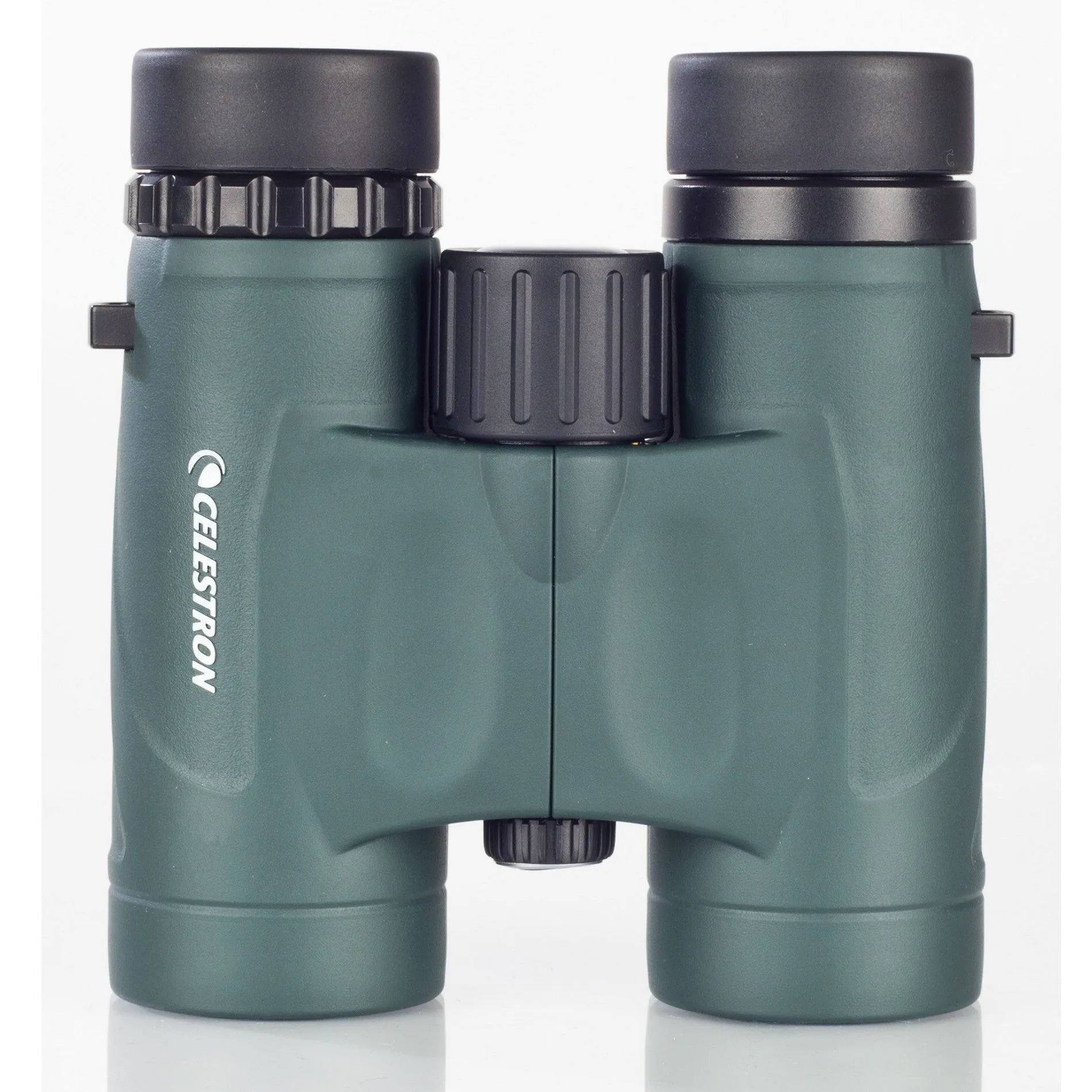
- Celestron Nature DX 10x32 Binoculars - 71331: Celestron Nature DX 10x32 binoculars use fully multi-coated optics and BaK-4 prisms, designed for beginning to intermediate users. A compact, affordable daytime pair that also handles the Moon and bright clusters; the 32mm aperture is the main limit for faint deep-sky objects.
- Celestron Alt-Azimuth Heavy Duty Tripod for Binoculars and Spotting Scopes - 93607: Celestron Alt-Azimuth Heavy Duty Tripod has extendable aluminum legs, a heavy-duty mount head, a sliding 1/4-inch x 20 mounting screw, and slow-motion cables for altitude and azimuth. Turns any binocular or spotting scope into a steady platform, which is the cheapest way to make 10x or higher magnification comfortable for stargazing.
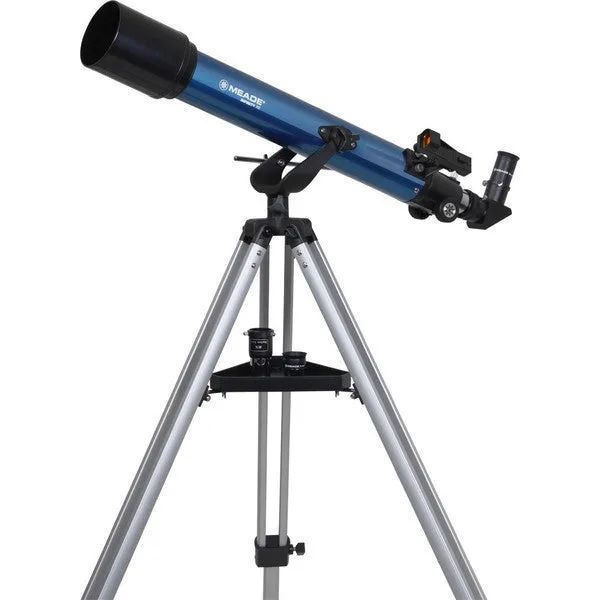
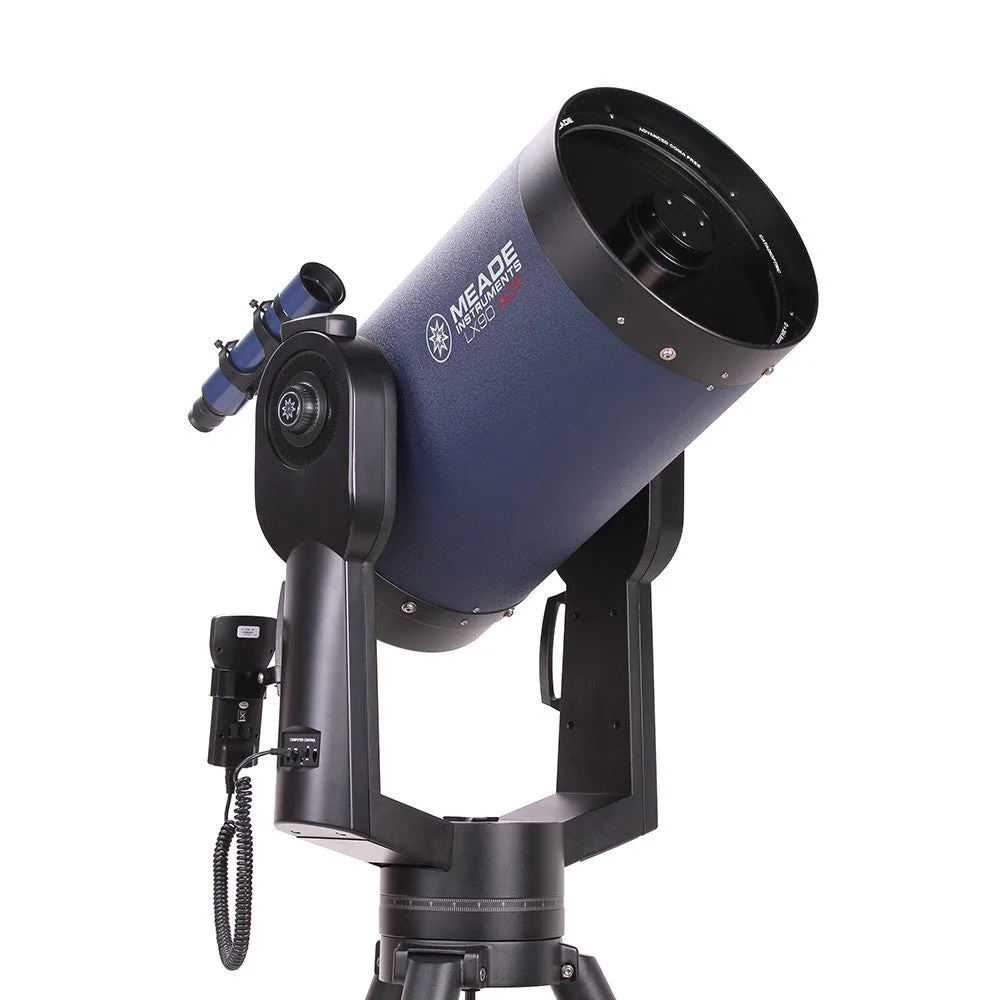
- Meade Infinity 70mm Altazimuth Refractor Telescope - 209003: Meade Infinity 70mm Altazimuth Refractor Telescope includes an altazimuth mount with a built-in slow-motion control rod for tracking celestial objects. If you want more magnification than binoculars give, this is the next step up for lunar and planetary viewing, while binoculars remain better for wide star fields.
Who should buy which
Best for
- Beginners who want one pair for the Moon, planets, and bright deep-sky objects
- Hand-held observers who value a wide field and steady view (7x50)
- Travelers who want a compact roof-prism pair for day and night
- Anyone willing to add a tripod for steadier 10x views
Not for
- Observers chasing faint galaxies and nebulae from a city
- People who expect binoculars to replace a telescope for high-magnification planetary detail
- Users who refuse to use a tripod but insist on 15x or higher magnification