Quick answer
Choose one fabric and color for the group, then let each bridesmaid pick her own size and the silhouette that suits her best. A draped silk kimono like the Samantha silk robe flatters most body types, while a lace robe such as the Camellia adds texture for photos. Order true dress sizes, not a one-size-fits-all, and confirm the robe opens fully in front.
Getting-ready photos look best when the group feels comfortable, not uniform in the wrong way. The trick is to agree on fabric and color, then give each bridesmaid a say in the cut. That way your wedding party robes read as a set in photos while every person wears something that actually fits.
This guide walks through the decisions that matter: fabric weight, robe length, sleeve shape, sizing, and how to mix silhouettes without breaking the visual theme. You will also see how real options from GirlandaSeriousDream.com compare, so you can match a robe to each body type instead of guessing.
Start with fabric, then choose the silhouette
Fabric decides how a robe drapes, and drape is what flatters. Silk and silk chiffon skim the body and fall in soft vertical lines, which is forgiving on almost every shape. Lace is stiffer and more textured, so it adds visual volume; it looks beautiful in photos but can feel less forgiving if someone prefers a smoother line.
A practical rule: pick one fabric family for the whole group, then let each bridesmaid choose between a wrap, kimono, or hooded style in that fabric. A draped kimono with a belt you can tie loosely suits most body types, while a structured lace robe works best for someone who likes a defined, romantic silhouette. If you mix fabrics, keep the color identical so the group still reads as matching bridesmaid robes.
- Silk and silk chiffon: soft drape, flattering vertical lines, good for all body types.
- Lace: pretty texture and photo interest, but adds volume; best when the wearer likes that effect.
- Satin belts: adjustable, so they flatter without pinching.
- If in doubt, choose the softer fabric for the group and add lace as an accent.
Match robe length to height and comfort
Length changes the whole proportion. A floor-length robe creates one long vertical line, which flatters petite and tall bridesmaids alike, but it can be warm and harder to move in while hair and makeup are happening. Knee-length and mid-thigh robes are cooler and easier to wear, though they break the vertical line and can make legs look shorter.
A good compromise for a mixed-height group is a knee-length or mid-calf robe for everyone, or a floor-length style only for those who want it. If you choose one length for the group, ask each bridesmaid to stand in it before the wedding day; hemlines that hit at the widest part of the calf or knee are the least flattering, while hems just above or below those points look better.
- Floor-length: elegant, elongating, best for photos and cooler venues.
- Knee-length: easy to move in, good for warm weather and busy mornings.
- Mid-thigh: casual and cool, but less formal in photos.
- Check hem placement on each person rather than assuming one length works for all.
Sizing: order dress size, not a guess
The biggest fit mistake is ordering one size for the whole party. Bodies vary, and a robe that gaps at the chest or pulls at the hips looks worse than a slightly different size tag. Ask each bridesmaid for her usual dress size and order that, then use the robe's belt or wrap tie to fine-tune the fit.
For wrap and kimono styles, the belt does most of the work: it can be tied loosely for a relaxed drape or cinched for definition. For pull-on or lace styles without a belt, fit matters more, so check the size chart carefully. If a bridesmaid is between sizes, size up in a wrap robe and size down only if the fabric has stretch, which lace and silk generally do not.
- Collect each bridesmaid's dress size privately; avoid public size polls.
- Wrap and kimono robes are the most forgiving because the belt adjusts the fit.
- For belt-free lace robes, follow the size chart closely and size up when between sizes.
- Ask about maternity or body changes early so the robe still fits on the day.
Color and coordination without cloning
One color for the group is the simplest way to look coordinated, and it lets each bridesmaid choose the silhouette that suits her. If you want variety, use one color in two fabrics, or two close shades such as ivory and blush, rather than several unrelated colors. Keep the bride in a distinct shade or fabric so she stands out in getting-ready photos.
Think about how the robes will look against the venue and the bridesmaid dresses. Soft neutrals and blush tones photograph well in most light, while very pale shades can wash out in bright rooms. If you are ordering matching bridesmaid robes as gifts, a wearable color like rose quartz or ivory is more likely to be reworn after the wedding than a bold trend shade.
- One color, many silhouettes: the easiest way to coordinate.
- Two close shades or two fabrics in one color also work.
- Give the bride a different shade or fabric to stand out.
- Choose a color bridesmaids will actually rewear, not just a photo prop.
Details that make a robe photo-ready and reusable
Small construction details decide whether a robe looks polished in photos and survives the morning. A front opening that ties or wraps fully makes it easy to put on over hair and makeup without smudging. Pockets are a quiet luxury for holding a phone or lipstick. French seams and silk-covered buttons signal a finish that holds up to repeated wear.
Sleeve shape matters too. Long, loose sleeves flatter arms and look elegant in motion, while fitted sleeves can feel restrictive. Scalloped lace edges and eyelash trims add romance without bulk. If you want the robe to double as honeymoon loungewear, choose a style with a removable or adjustable belt so it can be worn open or closed.
- Full front opening: easy to put on without ruining hair or makeup.
- Pockets: practical for the getting-ready morning.
- Loose long sleeves: flattering and elegant in photos.
- Removable belt: lets the robe work as loungewear after the wedding.
Decision rules for choosing bridesmaids robes
- If your group has mixed body types: Choose one draped fabric, such as silk or silk chiffon, and let each bridesmaid pick between a kimono, wrap, or hooded style in that fabric. Drape flatters more bodies than structure; keep fabric consistent and let the cut vary.
- If you want lace for photos: Use lace as the group fabric only if everyone likes texture; otherwise make lace the bride's robe and keep bridesmaids in silk. Lace adds visual volume, so it is not the most forgiving choice for every body type.
- If you are ordering for a tall and a petite bridesmaid: Pick a knee-length or floor-length robe and check hem placement on each person; avoid hems that land at the widest part of the calf or knee. One length can work for all if you verify the hem on each body.
- If a bridesmaid is between sizes: Size up in a wrap or kimono robe because the belt adjusts the fit; size up in lace or silk styles without a belt because those fabrics do not stretch. Adjustability comes from the belt, not the fabric.
- If you want the robes reworn after the wedding: Choose a neutral or blush color and a style with a removable or adjustable belt, like a silk kimono or a hooded lace robe with pockets. Wearable color plus adjustable fit equals a gift that lasts beyond the day.
Real robes and what they mean for your group
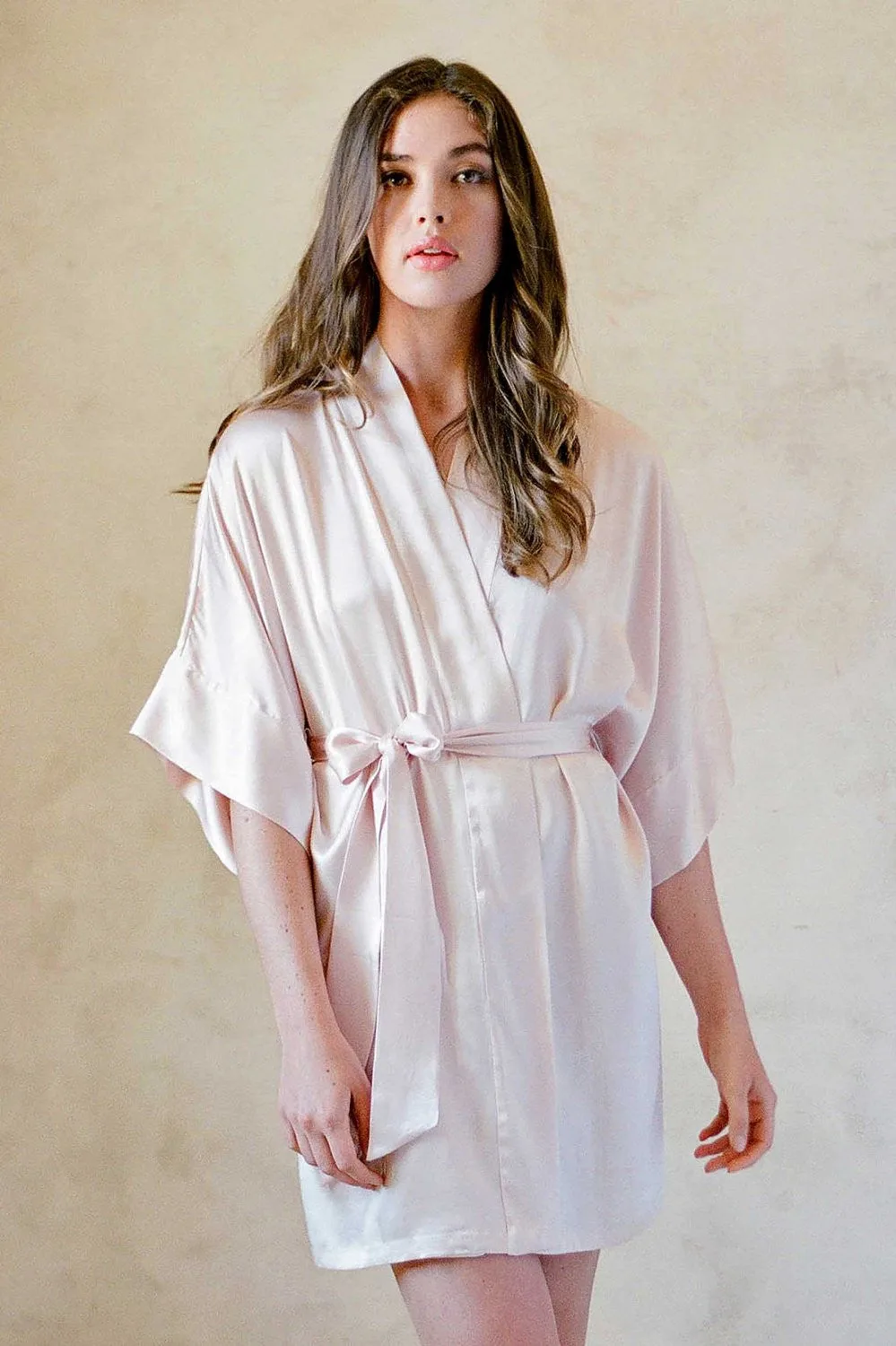
- Samantha Silk Kimono Robe in Rose quartz pink: Made of 100% silk with a soft drape, available in rose quartz pink, and described as a getting-ready bridal robe and honeymoon loungewear. The draped silk kimono cut is the most forgiving silhouette for mixed body types, and the soft pink flatters most skin tones in photos.
- Samantha bridal silk kimono robe bridesmaids robes in Strawberries & Cream colors: The signature Samantha silk robe in a wide range of colors, with an easy draped fit, intended as getting-ready bridal lingerie and honeymoon loungewear. A wide color range lets you keep one flattering silhouette for the whole party while still coordinating with your palette.
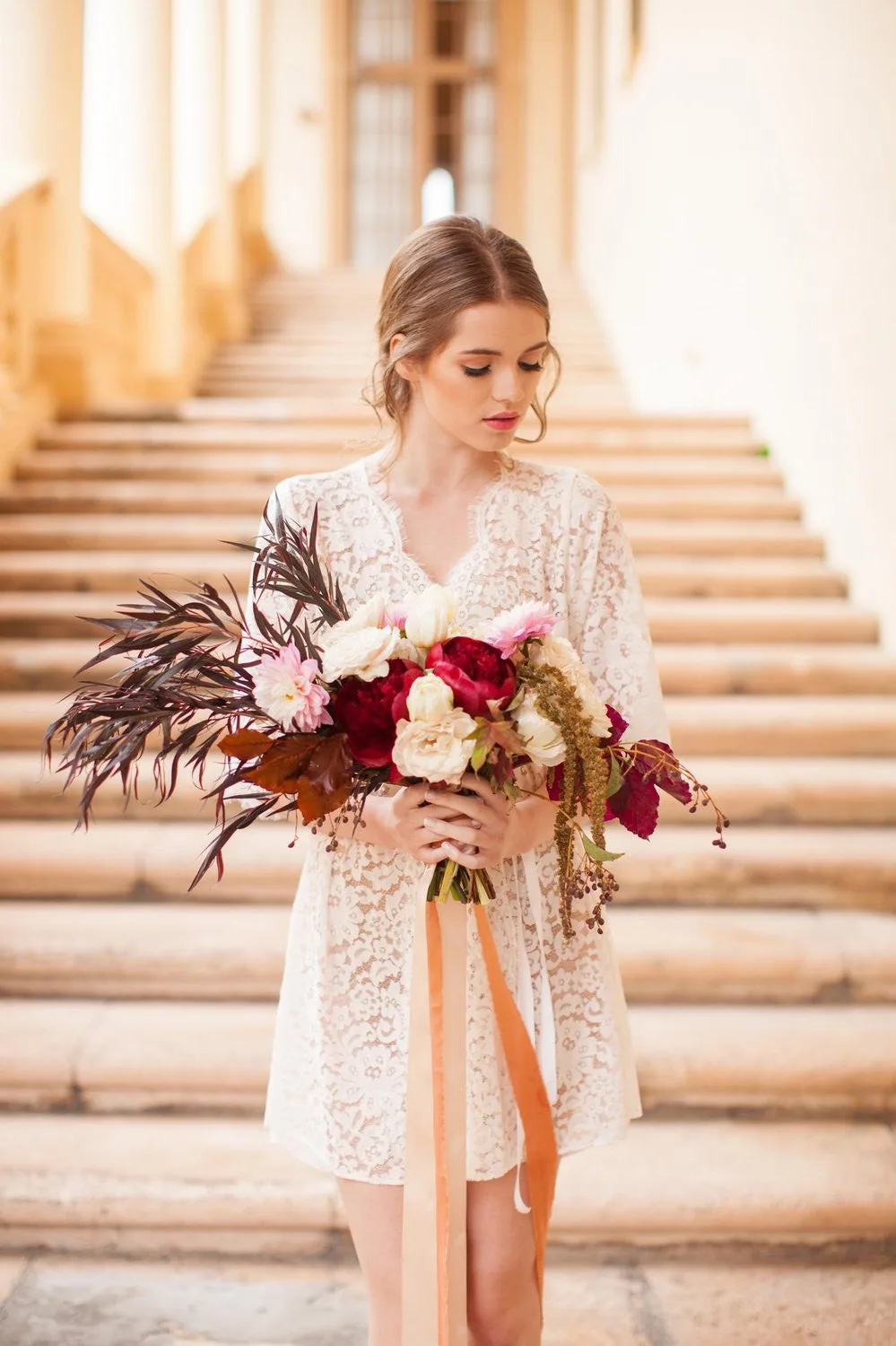
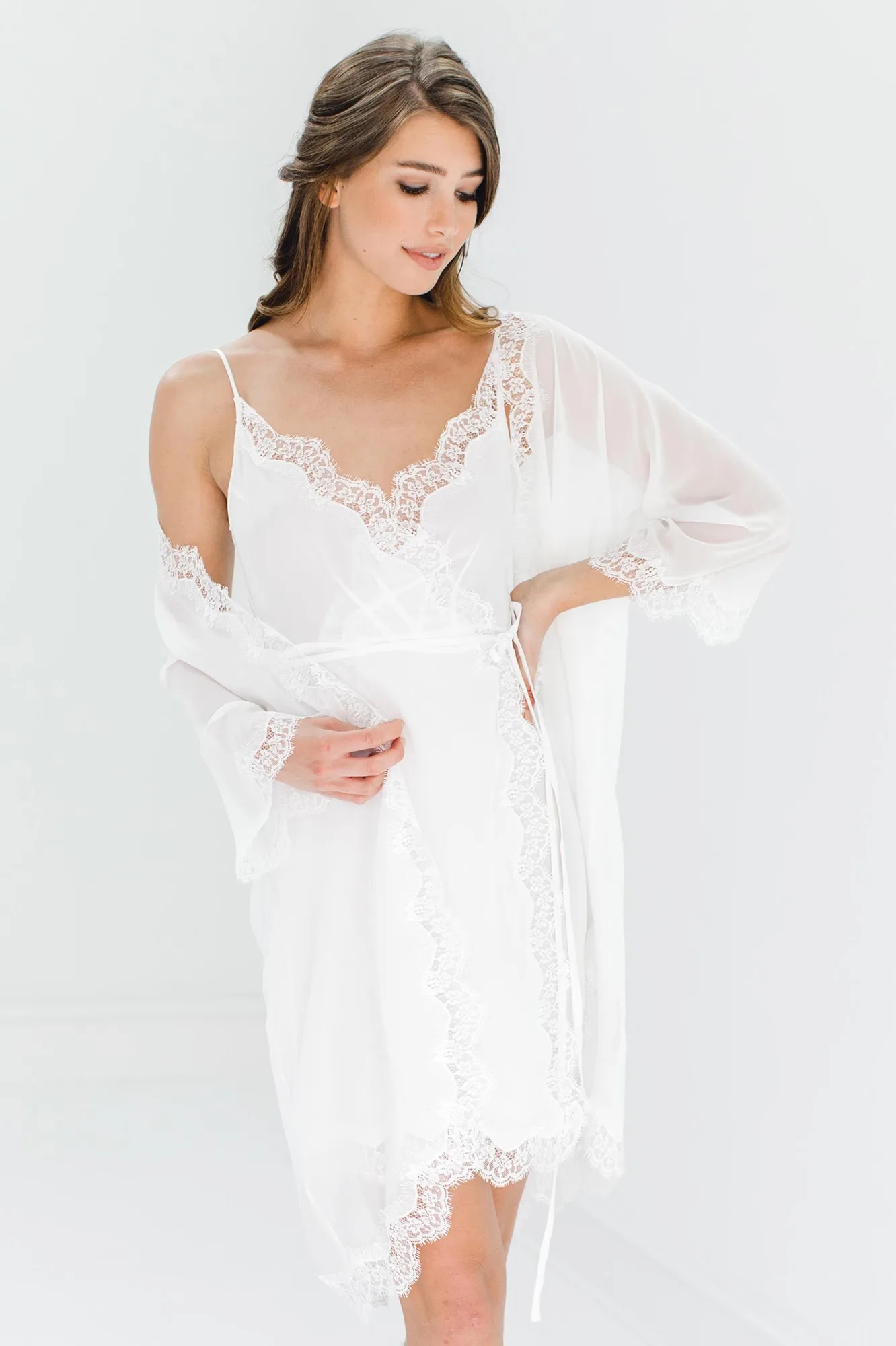
- Elizabeth Lace Robe in ivory: Soft cotton lace with a floral pattern, scalloped lace and floral eyelash trims at the neckline and sleeves, a semi-sheer wrap with a lightly gathered hi-low back, available in multiple colors and sizes. The wrap style and gathered back suit bridesmaids who want lace texture with an adjustable fit, and the size range helps you match each person rather than ordering one size.
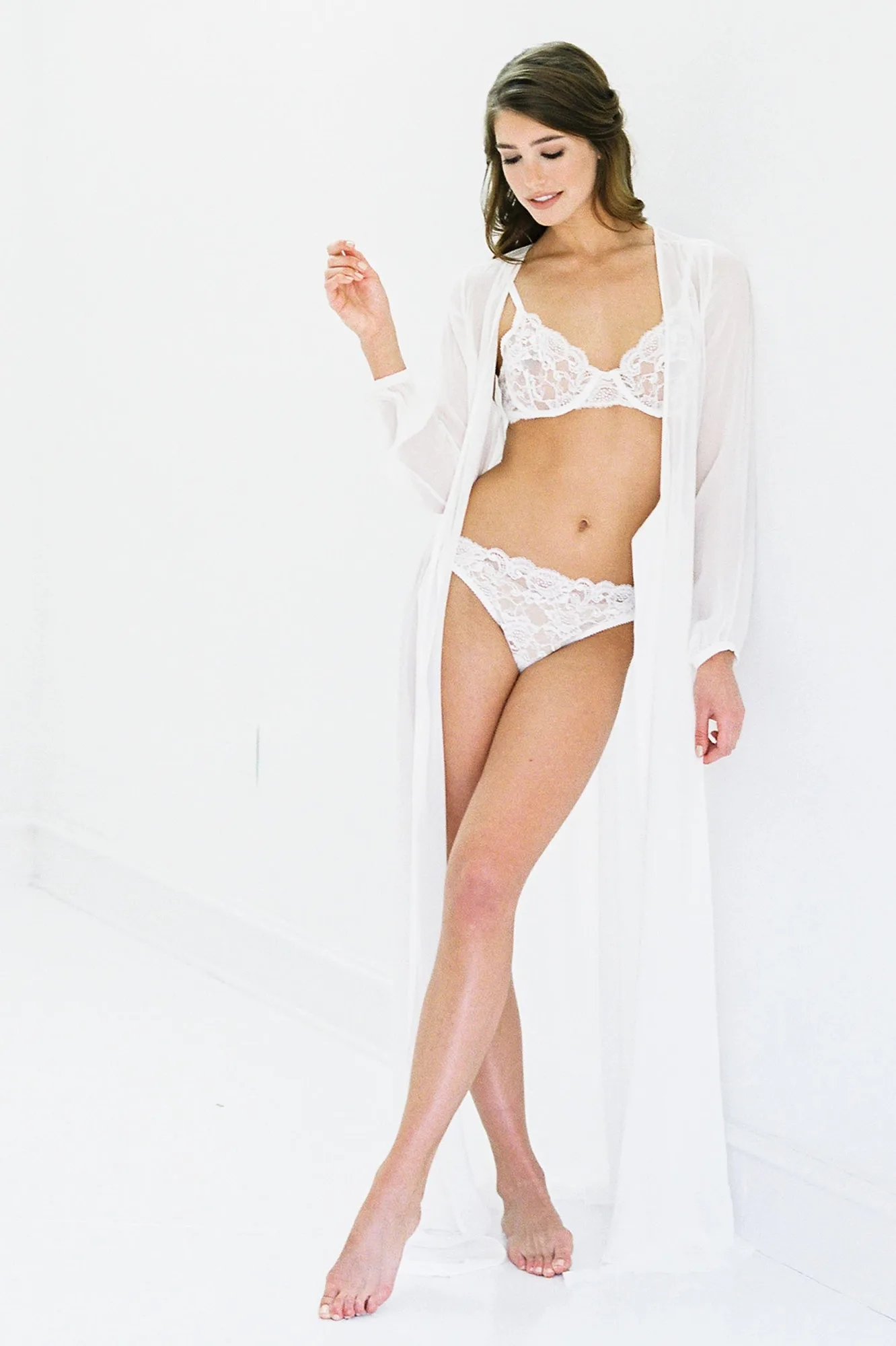
- Nina Silk Chiffon Wrap Robe in Ivory: A floor-length silk chiffon robe with a wrap style, silk charmeuse belt, vintage-inspired sleeves, French seams, and silk-covered buttons, available in sizes and colors. The floor-length drape creates a long vertical line that flatters petite and tall bridesmaids, and the belt adjusts the waist for different shapes.
Who these robes suit
Best for
- Brides who want matching bridesmaid robes that still flatter each person
- Groups with mixed heights and body types who need one coordinated look
- Bridesmaids who want a robe they can rewear as loungewear
Not for
- Shoppers who want a single one-size-fits-all robe for the whole party
- Groups who prefer structured, tailored robes over draped fabrics
- Anyone looking for a non-adjustable, belt-free robe in a stiff fabric
Choose one fabric and color, then let each bridesmaid pick her size and the silhouette that fits her best. Draped silk and silk chiffon flatter the widest range of body types, while lace adds texture for those who want it. Confirm the robe opens fully in front, check hem placement on each person, and pick a color your bridesmaids will happily wear again.