Quick answer
Choose buttons by matching scale and weight first, then color. A button that is too small for a heavy coat or too large for a delicate blouse will look off no matter how good the color is. For most garments, a button diameter of 15–20 mm works for shirts and blouses, 20–25 mm for jackets and coats, and 10–15 mm for cuffs and children's wear. When in doubt, buy one pack, baste it on, and check the drape before committing.
Buttons are the punctuation of a handmade garment. They can quietly finish a project or call attention to themselves as a design feature. The trick is knowing which job you want them to do before you buy.
This guide walks through the decisions that matter most: scale, weight, color, and function. You will also find a simple button size guide and practical rules for matching buttons to fabric without overthinking it.
Start with scale, not color
Button size should relate to the garment's scale, not just the buttonhole. A large button on a delicate silk blouse can distort the fabric and pull the buttonhole out of shape. A tiny button on a wool coat can look lost and may not hold the overlap securely. As a rule, the heavier the fabric and the larger the garment, the larger the button should be.
For a standard button-down shirt, 15–18 mm is a safe range. Blouses and children's clothes often use 11–15 mm. Jackets and coats typically use 20–25 mm. Cuffs and collars can go smaller, around 10–13 mm. If you are working with a pattern, check whether it specifies a button size; if it does not, measure the buttonhole or the overlap and choose accordingly.
- Lay a few candidate buttons on the fabric and step back—scale is easier to judge from a distance.
- If the buttonhole is already sewn, the button should pass through with slight resistance, not fall through.
Match button weight to fabric weight
A heavy metal or resin button on lightweight fabric will drag the front of a garment down and create a gap between buttonholes. A thin, flat button on a heavy coat may not support the fabric's weight and can slip out of the buttonhole. The goal is a button that feels proportional to the cloth.
For lightweight fabrics like lawn, voile, or silk, choose flat, lightweight buttons—small shell or thin plastic styles work well. For midweight fabrics like quilting cotton, linen, or flannel, standard two- or four-hole buttons are fine. For heavy fabrics like wool coating, denim, or canvas, choose larger, thicker buttons with a secure shank or a four-hole design that distributes stress.
- Test drape: pin the button to the fabric and hold it up. If the fabric sags, go lighter or smaller.
- For knits, consider a shank button or sew a button with a thread shank to allow the fabric to move.
Use color to support the fabric, not fight it
Button color matching is about relationship, not exactness. A button that matches the fabric exactly can disappear, which is fine for a clean, minimal look. A contrasting button becomes a focal point. The safest approach is to pull a color from the fabric's print or from a secondary color in the garment.
If the fabric has a busy print, choose a solid button in one of the print's quieter colors. If the fabric is a solid, you can go tonal for subtlety or choose a complementary color for a deliberate accent. Neutral buttons—cream, tan, gray, black—are versatile and forgiving, especially for garments that will be worn often.
- Hold buttons against the fabric in natural daylight; indoor lighting can shift colors.
- If you cannot decide, buy two options and return the one that does not work—most shops allow this.
Decorative buttons: when the button is the point
Some projects call for decorative buttons that do more than fasten. Shaped buttons, such as daisies or tomatoes, can add a whimsical touch to a bag, a child's garment, or a quilted project. In these cases, the button is a design element, so scale and placement matter more than strict color matching.
Decorative buttons still need to function if they are used as closures. Check that the shank or holes allow the button to sit flat and that the button is not so heavy that it pulls the fabric. If the button is purely ornamental, sew it on securely with a few extra passes of thread and consider a small backing button inside the garment to reinforce the area.
- Use decorative buttons in odd-numbered groupings for a balanced look.
- Avoid placing heavy decorative buttons on lightweight fabrics without interfacing behind the fabric.
Practical button size guide
Use this quick reference to narrow your options before you sew. These are general ranges; always check your pattern and buttonhole size. For shirts, 15–18 mm; blouses, 11–15 mm; jackets, 20–25 mm; coats, 23–28 mm; cuffs, 10–13 mm; children's wear, 11–15 mm; bags and accessories, 15–25 mm depending on scale.
If you are between sizes, choose the larger size for outerwear and the smaller size for fitted garments. For garments that will be washed frequently, consider a smooth, rounded button that will not snag. For dry-clean-only or special-occasion pieces, you can choose more delicate or ornate buttons.
- Always buy one extra button for each project—buttons get lost.
- Check that the button fits through the buttonhole before you sew the whole pack.
Decision rules for choosing buttons
- Rule 1: Match button scale to garment scale: Use 11–15 mm for blouses and children's wear, 15–18 mm for shirts, 20–25 mm for jackets, and 23–28 mm for coats. If the button looks too small or too large from a few feet away, it probably is. Checkpoint: hold the button against the garment from a distance before sewing.
- Rule 2: Match button weight to fabric weight: Lightweight fabrics need flat, light buttons. Heavy fabrics need larger, thicker buttons. If the fabric sags when you pin the button on, choose a lighter option. Checkpoint: pin and drape test before committing.
- Rule 3: Use color to support the design: Tonal buttons blend in; contrasting buttons stand out. Pull a color from the fabric's print or choose a neutral that works with many projects. Checkpoint: view buttons in natural daylight against the fabric.
- Rule 4: Decide if the button is functional or decorative: Functional buttons must fit the buttonhole and hold the garment closed. Decorative buttons can be larger or shaped, but they still need secure attachment. Checkpoint: if decorative, reinforce with a backing button or interfacing.
Product facts to know
- Yellow Daisy Large 1" Buttons: Made from eco-friendly cellulose acetate, they feature a daisy design with a pearly white center and mustard yellow petals. Sold in packs of 6 buttons. These are a decorative option for projects where the button is meant to be seen. The 1-inch size makes them suited to bags, quilts, or garments with a whimsical style, but they may be too large for a standard shirt placket.
- Orange Heirloom Tomato Large 1" Buttons: Made from eco-friendly cellulose acetate with a sweet tomato shape and green leaf detail. Sold in packs of 6 buttons. A playful choice for summer garments, aprons, or bags. The 1-inch size is best for projects with larger buttonholes or where the button is a focal point rather than a functional closure.
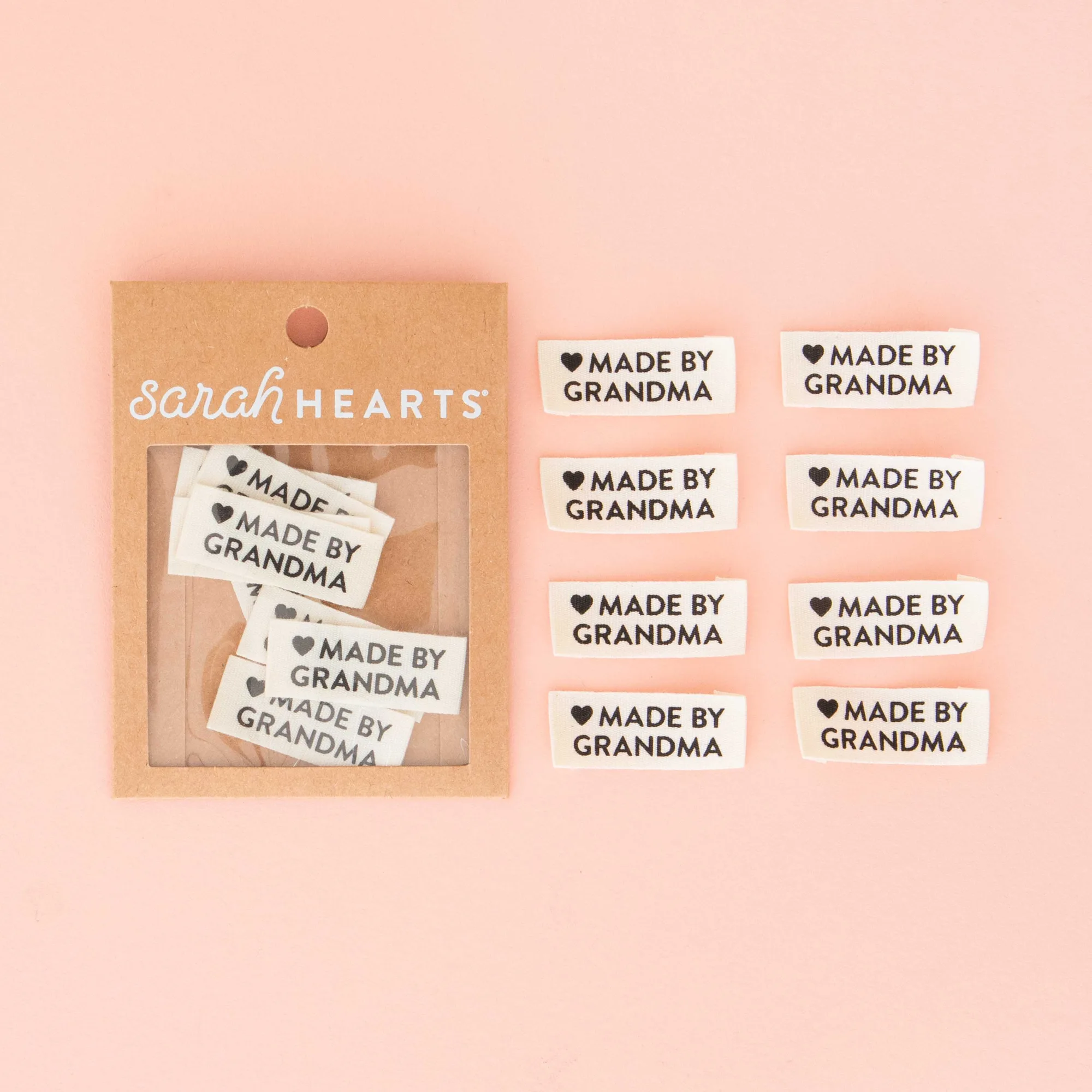
- Made by Grandma Organic Cotton Sewing Labels: Soft, washable woven labels that can handle the heat of the dryer. Sold in packs of 8 labels. Manufactured ethically in China and OEKO-TEX Standard 100 certified. A good finishing touch for baby, kids, and quilt projects. The organic cotton and washable construction make them practical for items that will be laundered often.
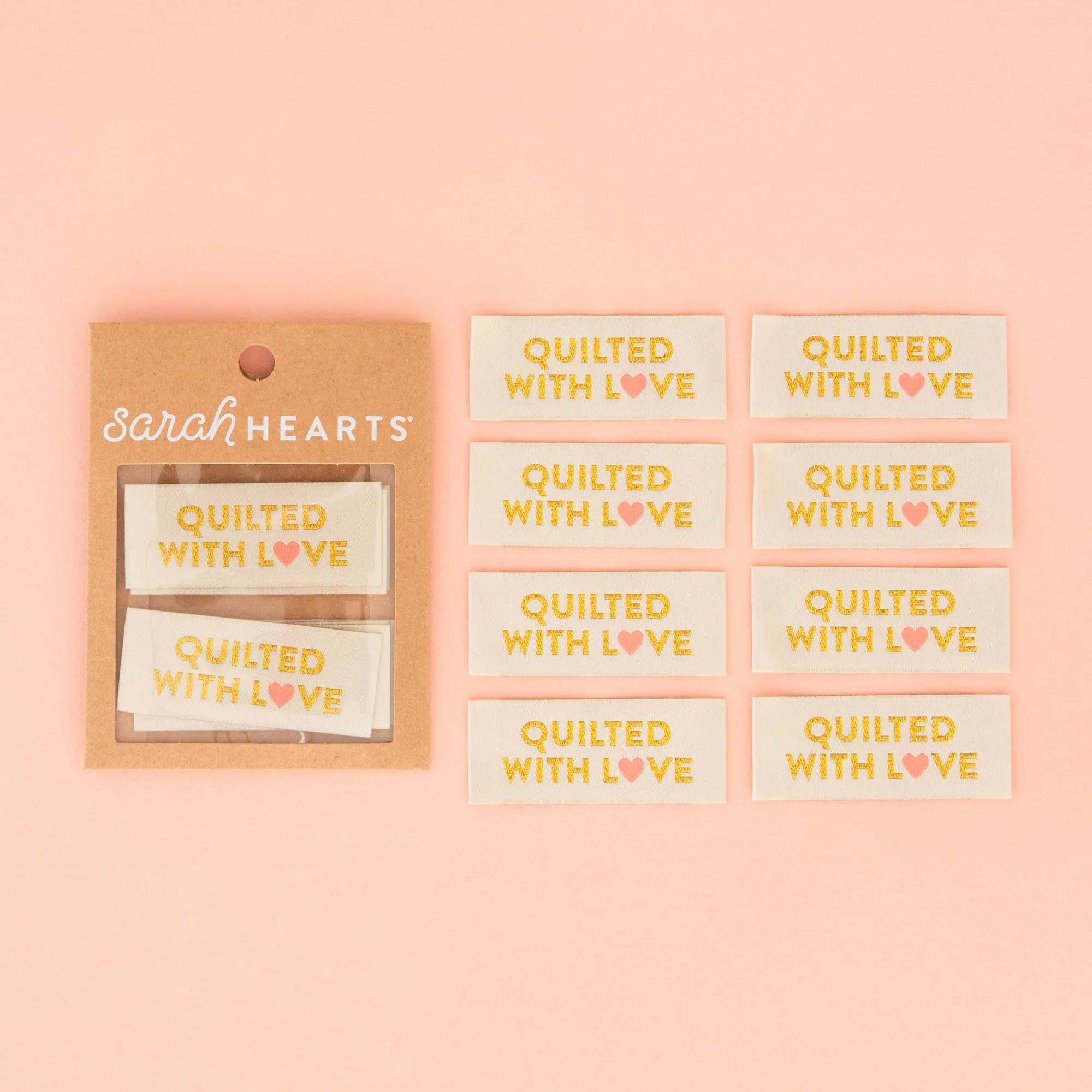
- Quilted with Love Gold Woven Sewing Labels: Metallic gold label with a coral pink heart, designed as an end fold label for easy application. Super soft and fully washable. Sold in packs of 8 labels. These labels add a polished, giftable finish to quilts and quilted garments. The end fold design means you sew along the short sides, which is quick and secure.
Best for and not for
Best for
- Sewists choosing buttons for garments, bags, and quilts who want a clear decision process.
- Makers who want to use decorative buttons without compromising fit or function.
Not for
- Projects that require specialized closures like snaps, hooks, or zippers.
- Vintage or antique button restoration where original materials and sizes must be matched exactly.
Choosing buttons gets easier when you prioritize scale and weight over color. Pick a size that suits the garment, a weight that supports the fabric, and a color that either blends or intentionally contrasts. Buy one extra, test the buttonhole, and your finished piece will look considered from the first wear.